Nuro and Uber launch driverless testing in San Francisco


Add Axios as your preferred source to
see more of our stories on Google.
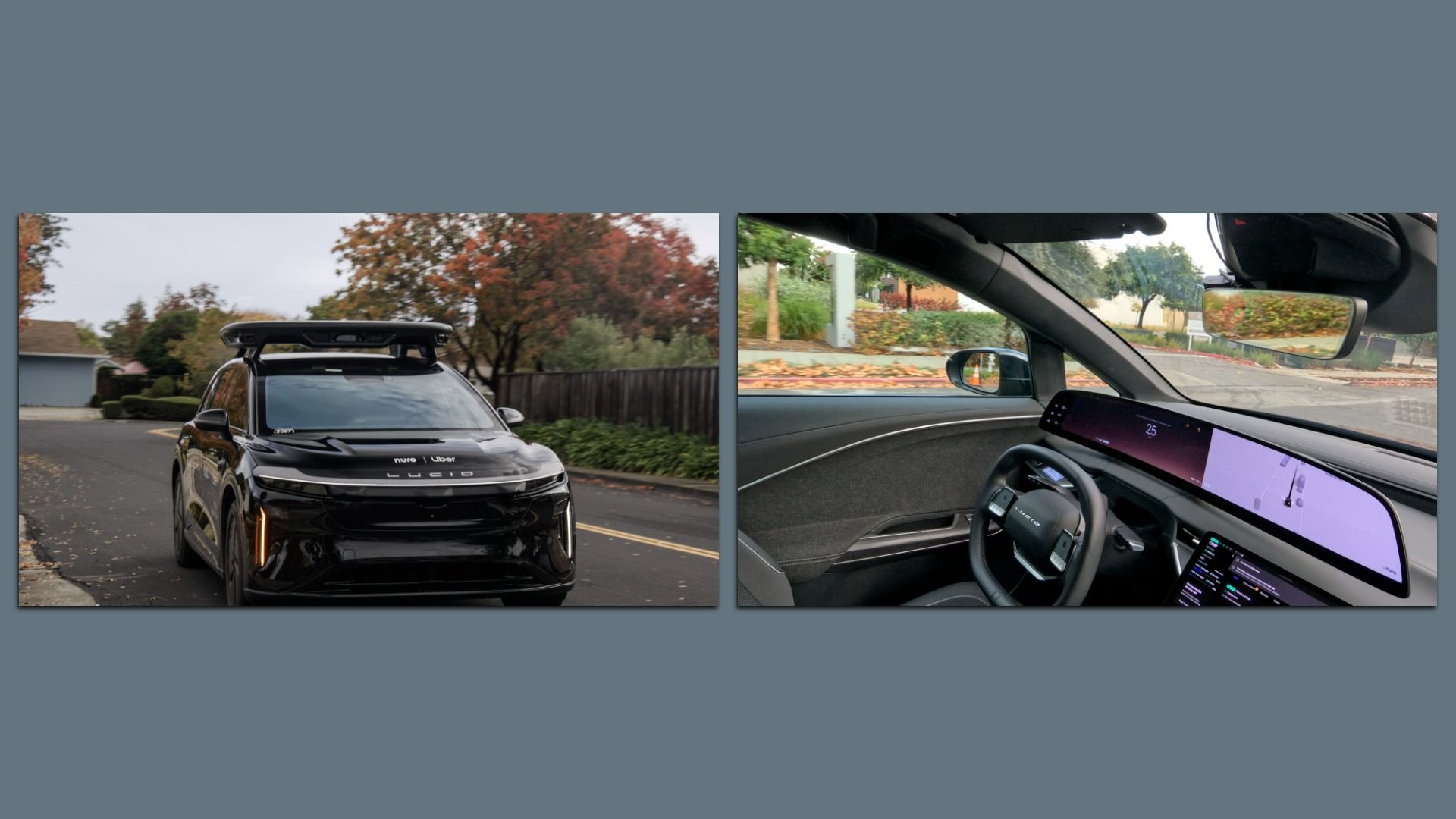
Uber is now testing fully driverless Lucid robotaxis equipped with Nuro's self-driving technology. Images courtesy of Nuro
Nuro and Uber have started testing fully driverless vehicles on public roads in the San Francisco Bay Area, an important step ahead of their commercial launch, now slated for early 2027.
Why it matters: As Uber assembles a network of autonomous vehicle providers to challenge Waymo's dominance, its robotaxi partners could increasingly find themselves competing against one another.
Between the lines: Uber is partnering with more than 30 AV companies worldwide, but it has placed an especially big bet on Nuro and Lucid.
- The ride-sharing company has committed about $500 million each to the two companies and says it plans to deploy at least 35,000 Lucid vehicles with Nuro's autonomous tech in the coming years.
- Uber expects to have at least 2,000 fully driverless vehicles on its platform by the end of next year, setting up potential competition between partners including Zoox, Motional and Nuro.
Catch up quick: Nuro, an early player in autonomous delivery, has been testing self-driving Lucid Gravity robotaxis — with a safety driver — in the Bay Area since December 2025.
- Lucid has delivered more than 100 vehicles for testing, and employees will soon begin taking driverless rides.
- In June, the companies announced Houston as their second planned commercial market.
They originally planned to launch commercial service by year's end but pushed that target to early 2027 as they finesse the product and work through final permitting, Nuro Chief Operating Officer Andrew Chapin told Axios.
- "In the context of all that has to come together to actually launch an autonomous service and get across that threshold of actually being fully driver-out, a little bit of a push to the right is not something substantial," Chapin said.
State of play: Uber is facing competition in robotaxis from Lyft, which just launched Waymo rides on its platform in September, and Tesla, which operates its own network.
- Uber offers Waymo rides in Austin and Atlanta, but the companies' exclusive agreement is set to end in early 2028.
The bottom line: Getting the driver out is a major milestone for Nuro. Its next challenge is proving it can compete in an increasingly crowded robotaxi market — including within Uber's own robotaxi network.
- "This is one of Uber's big partners," said Grayson Brulte, founder of The Road to Autonomy. "The question is, does Nuro emerge as a favorite child?"
