U.S. gets another D+ on premature births

Add Axios as your preferred source to
see more of our stories on Google.
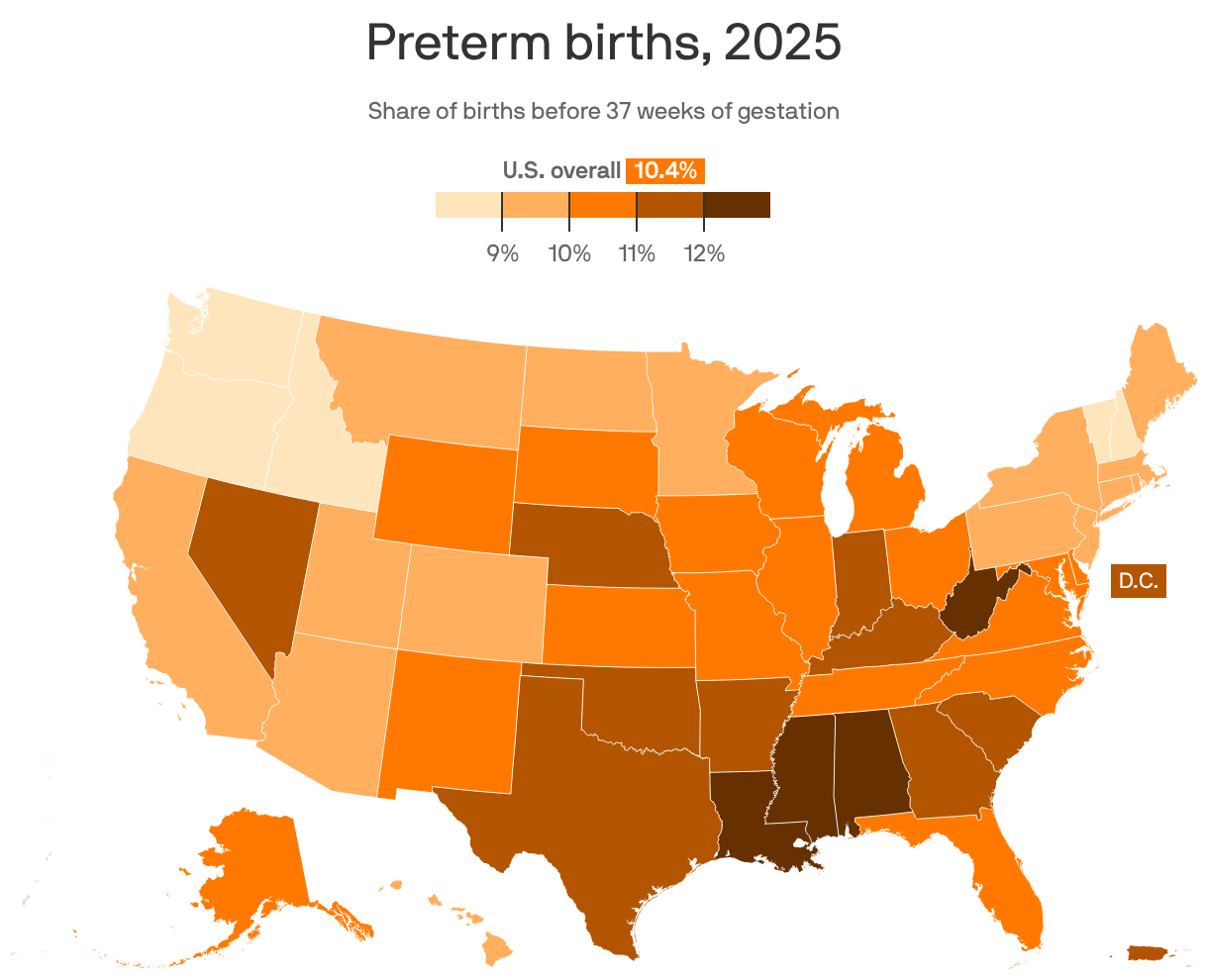
The U.S. earned a D+ for its preterm birth rate yet again, according to the latest March of Dimes report card.
Why it matters: Babies born before 37 weeks of pregnancy face greater risks of serious health complications, hospitalization and death in their first year of life.
By the numbers: The national preterm birth rate remained at 10.4% in 2025 for the fourth year in a row.
- It marked the fifth consecutive year at D+ (which March of Dimes considers 10.4% to 10.7%).
Zoom in: Mississippi had the highest rate at 14.9%. Vermont had the lowest at 8%.
- Rates improved in 23 states and jurisdictions, including D.C. and Puerto Rico, per the report that relies on CDC data.
- But only Idaho, South Dakota and Puerto Rico recorded statistically significant declines.
Between the lines: Rising rates of chronic health conditions before pregnancy are one reason the nation's preterm birth rate remains stubbornly high, Michael Warren, chief medical and health officer of March of Dimes, tells Axios.
- High blood pressure and diabetes became more common among women giving birth in 2025. Both conditions increase the risk of pregnancy complications and premature birth.
What they're saying: "It's not just about improving care during labor and delivery," Warren says. "It's really about improving their health across the life course."
- That means addressing chronic conditions even before pregnancy.
What we're watching: Whether strategies including expanding access to doula care and encouraging low-dose aspirin use among pregnant women at risk for preeclampsia can help bring down preterm birth rates.
