Vance takes a step toward 2028 in MAGA power play



Add Axios as your preferred source to
see more of our stories on Google.
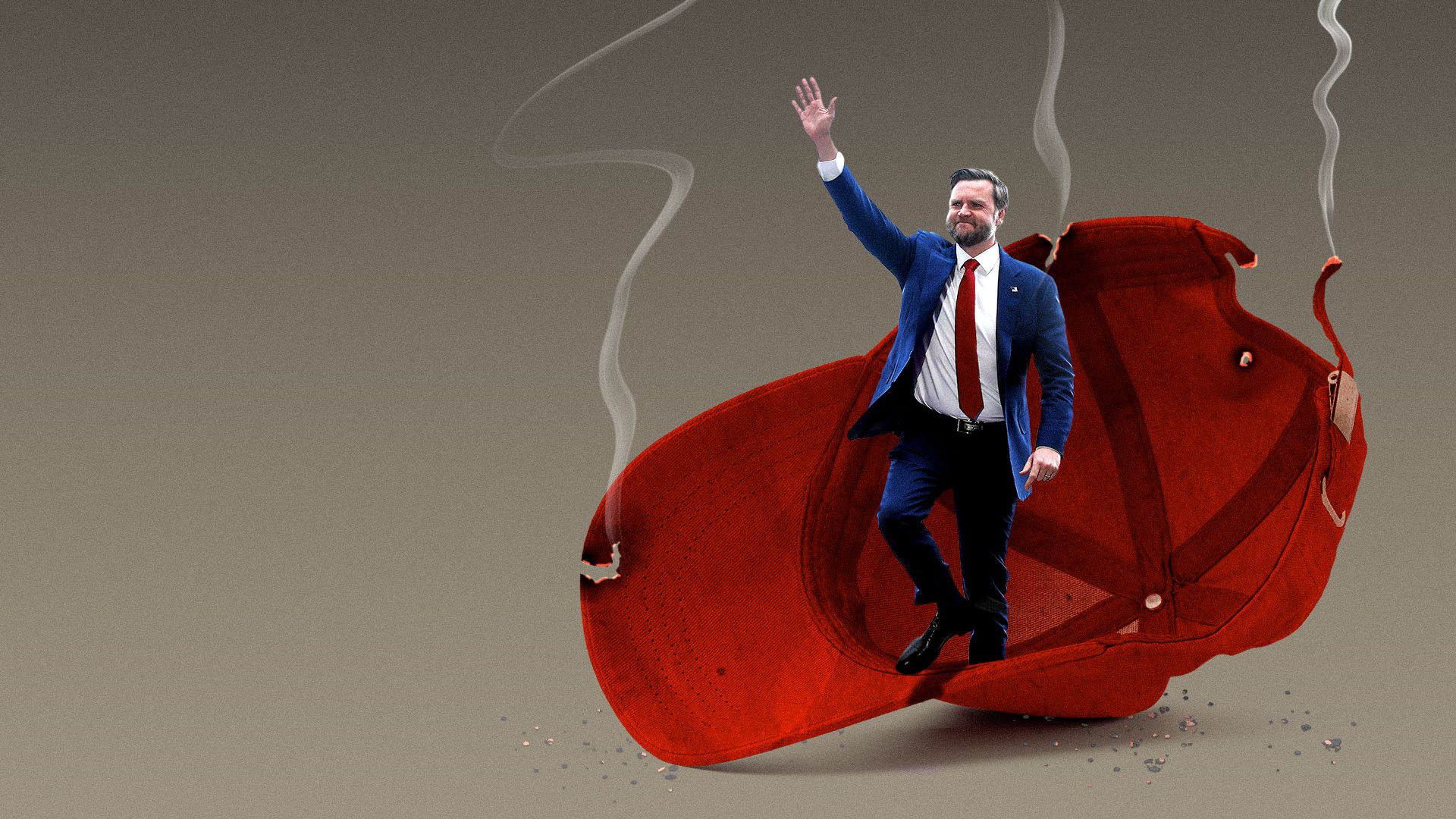
Photo illustration: Aïda Amer/Axios. Photo: Tom Brenner/Getty Images
Vice President Vance stepped out of President Trump's shadow Wednesday, seizing on the GOP's midterm catastrophe to begin the explosive task of claiming MAGA as his own.
- "The reason we lost is the war," Vance wrote in an extraordinary 600-word postmortem on X, blaming Trump's Iran campaign for Republicans' historic collapse.
Why it matters: Vance's presidential ambitions are entangled in the wreckage of a war he privately opposed but publicly defended. His path to 2028 demands a delicate political calculation.
Vance must convince MAGA's disillusioned voters that he understands their sense of betrayal, even as he remains a central figure in the administration responsible for the Iran war.
- His maneuvering will take place under the gaze of a president who doesn't seem particularly eager to leave the stage — and who isn't shy about reining in those on his team who overstep.
- "Today, JD Vance became president — or acted like he wanted to become one," a source close to the administration told Axios.
Zoom in: Vance argued that defections from Trump's 2024 coalition — not lack of turnout — drove the GOP's collapse in Tuesday's midterms. Citing polling of disaffected Trump voters, he identified four demands:
- "End the war."
- "Focus on cost of living/inflation."
- "Put America First."
- "Change our relationship to Israel."
Those happen to be the four hottest topics among top MAGA podcasters and activists. So Vance is aligning with those leaders on topics where MAGA anger with Trump is raging.
What they're saying: "If you'd like to argue [the war] was worth it, that losing the Senate for the next 6 years was worth it, then do so," Vance wrote. "Argue it was a worthwhile cost to pay. Agree or disagree, that's at least honest."
- Trump accepted that challenge Wednesday, acknowledging that the war had hurt Republicans but insisting it was worth the cost. "If I had to do it again, I'd have to do it again," he told reporters. "As far as that war is concerned, I would have done nothing different."
- As for Vance's post, Trump said: "I know how he feels about it. I think it was fine. I thought it was good."
Behind the scenes: Vance's commentary caught some in the White House by surprise. But insiders said the vice president worked with senior administration officials on the post.
- "These were his words and thoughts," one insider said. "He's leading."
- Said another: "It pains me to say this, but Tuesday showed the emperor had no clothes, and Vance knew he should just state the obvious. There are going to be a lot of other Republicans putting a lot more distance between them and the president."
- One Republican consultant representing a potential rival in the 2028 presidential race offered a blunter assessment: "The VP had to show he's not a dead man walking out there."
Zoom out: Trump's second term has been riven by a bitter ideological feud between MAGA's anti-interventionist wing and the pro-Israel hawks who championed the Iran war.
- Vance privately questioned the war's objectives and duration, then publicly defended the campaign and led peace negotiations with Iran. His postmortem now puts him squarely in the anti-interventionists' camp.
- That could help him fend off potential 2028 challengers who also are skeptical of foreign intervention.
- It also gives Vance an opening against more hawkish Republicans, particularly Texas Sen. Ted Cruz. If Cruz runs in 2028, as many expect, and argues that it's time for the party to move on from Trump administration figures, Vance could try to argue that Cruz was on the wrong side of the issue that helped cost Republicans the midterms.
The midterm results have unleashed a fresh wave of recriminations, with MAGA influencers blaming Laura Loomer, Ben Shapiro, Mark Levin and other hawks for betraying Trump's America First promises.
- Those influencers, in turn, have generally accused their critics of antisemitism or disloyalty to Trump.
By the numbers: A GOP political group that surveyed 12 key congressional races in January found that a plurality of voters blamed Democrats for inflation.
- By October, the numbers flipped and Trump and Republicans bore the blame.
- "What changed? The war in Iran. The cost of gas. It's that simple," a Republican consultant who provided the polling to Axios said.
The intrigue: Donald Trump Jr., an influential voice in MAGA's grassroots movement, threw his weight behind Vance's postmortem, writing on X: "Every word of this is 💯 💯 💯."
Between the lines: For all his professed straight talk, Vance's postmortem is strikingly selective.
- He blames the Iran war and acknowledges voters' anger over inflation, but makes no mention of Trump's tariffs, corruption controversies or fixation on White House construction projects as Republicans' political fortunes collapsed.
- The omissions are revealing: Vance offers a diagnosis of the defeat that validates MAGA's "America First" wing, while shielding Trump from a broader reckoning with his presidency.
What to watch: Trump has yet to anoint Vance as his successor, and the Republican collapse is already exposing the contours of a potential succession fight.
- Asked Wednesday whether he had discussed a presidential run with Vance, Trump said the two talk about "a lot of things," before adding: "Maybe he won't run. I don't know who's going to run."
Florida Gov. Ron DeSantis (R), a Trump primary rival in 2024, seized on his state's narrow Republican victories — a rare GOP bright spot amid Tuesday's rout — to offer his own diagnosis of the party's failures.
- "This is close to an extinction-level event for Republicans," DeSantis said at a news conference.
- "In January, when everyone in office leaves, who were either term-limited or got voted out of the 10 largest states in this union, only one state will have Republican control of their state — the state of Florida."
