Progressive religious leaders reshape the faith debate

Add Axios as your preferred source to
see more of our stories on Google.
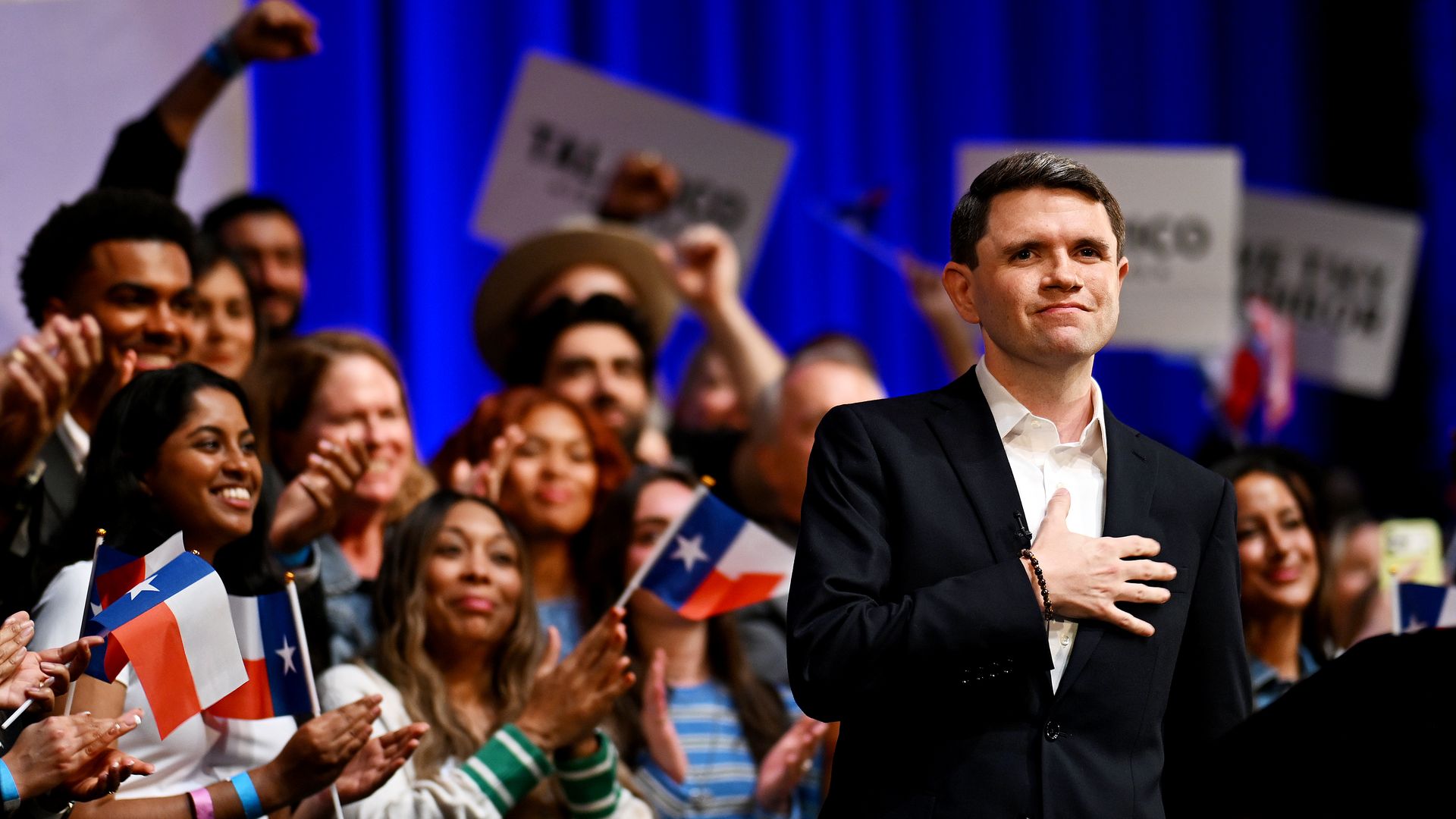
U.S. Senate-elect James Talarico (D-Texas) at a midterm election event in Austin, Texas, on Tuesday. Photo: Brandon Bell/Getty Images
At least five progressive faith leaders won midterm elections in traditionally Republican states, bringing new religious voices into elected office
Why it matters: Democrats' sweeping congressional victory suggests progressive candidates can use religious messaging to reach voters in states where Republicans have traditionally dominated faith-based political appeals.
State of play: This election in particular presented an opening for religious Democrats, in part because the Trump administration's use of religion in political messaging has alienated some voters, says Doug Pagitt, co-founder and executive director of Vote Common Good, a political nonprofit dedicated to inspiring people of faith to engage in civic life.
- The victories also come at a time when Democrats are becoming more comfortable and effective at talking about their faith publicly, he tells Axios.
- Texas state Rep. James Talarico, a 37-year-old part-time seminary student who won a U.S. Senate seat in Texas, frequently spoke about his faith while campaigning, using scripture to advocate for vulnerable populations and challenging Christian nationalism.
- And Iowa state Rep. Sarah Trone Garriott, an Evangelical Lutheran pastor who won in one of the nation's most-watched swing House races in 2026, has emphasized the need for separation of church and state.
Yes, but: It's likely too soon to characterize these victories as evidence of a fully organized left religious movement — and Pagitt cautions against doing so, even if more candidates win in elections to come.
- "Frankly, it would be better if religious communities and activist groups saw themselves, not as their own stand alone, subset of democracy supporting movements of politics but more integrated in it."
What we're watching: Pagitt predicts conservative Republicans could respond to the victories by questioning the religious credentials of progressive candidates.
- While some GOP leaders use a fundamentalist interpretation of the Bible to support their stances, progressive faith leaders have relied on scripture to reach a different audience and challenge Republicans' faith-based talking points.
Between the lines: Some Christians have distanced themselves from MAGA and Christian nationalism without abandoning their religious beliefs.
- "People not attending church or religious communities is not the same thing as the person not feeling that their religion or faith is meaningful to them," he said.
- The candidates who campaigned openly about their faith are also "keenly aware" of the need to balance their religious identities with representing a religiously diverse electorate, Pagitt said, and are actively working to bring their personal values into politics without making government an extension of their religious beliefs.
Flashback: Democratic Sen. Raphael Warnock, senior pastor of Ebenezer Baptist Church, won his Georgia Senate seat in 2021.
The bottom line: The victories give Democrats new examples of candidates campaigning openly on their faith, though the emergence of a broader progressive religious movement remains uncertain.
Go deeper: "Shocking" number of white clergy run as Democrats in 2026
