Trump administration turns to SCOTUS in California ballot case

Add Axios as your preferred source to
see more of our stories on Google.
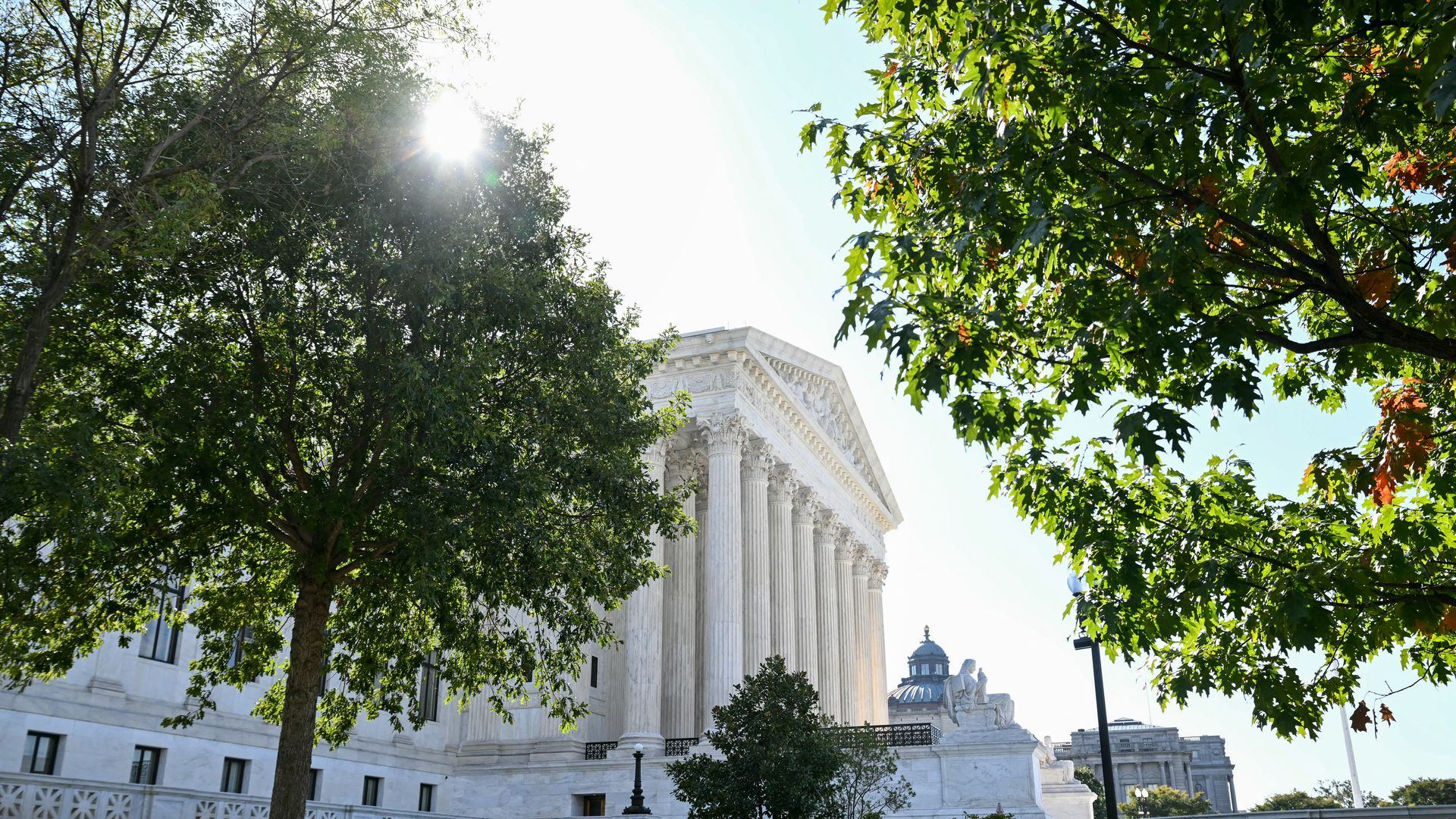
A view of the Supreme Court in Washington, D.C., on October 14. Photo: Saul Loeb / AFP via Getty Images
The Trump administration asked the Supreme Court to mandate that California separate ballots of more than 20,000 voters the government suspects are "likely" non-citizens.
The big picture: A federal appeals court rejected the administration's bid to set aside mail ballots last week, erecting another roadblock in the DOJ's pre-election quest to demand the state root out claims of voter fraud in the final days of the midterm elections.
Driving the news: "Once California commingles the challenged ballots with lawful ones, there is no way to get the challenged ballots back," the DOJ wrote in an application filed to the high court.
- "The only way to preserve the district court's ability to grant relief to the United States after a full merits proceeding, therefore, is to segregate the challenged ballots now," the application, signed by Solicitor General D. John Sauer, continued.
- The DOJ's initial lawsuit came after the administration threatened California officials with emergency court action unless it probed potential ineligible voters over 48 hours and set aside ballots.
Yes, but: California officials said in a court filing that Los Angeles County's sampling of the federal government's list of supposed noncitizens showed it was "deeply flawed."
- Less than half the listed people had active voter registration records, the state said. Over a third had canceled registrations, and nearly three-quarters had never voted. Of those for whom birthplace was reported, over a third indicated they were born in the U.S., the state said.
Zoom in: "The litigants, to be sure, dispute whether the individuals identified by the United States are registered voters in California who are actually aliens," Sauer's application said, but he argued the government doesn't need to prove it will win at trial in order to force California to segregate ballots now.
Catch up quick: A federal appeals court and a federal judge stymied the administration's bid.
- U.S. District Judge David Carter cast doubt on the government's voter lists in a late October order denying the administration's request for a temporary restraining order, citing the "vagueness" of the government's "descriptions of its procedures and the unreliability of its similar claims in other states."
- And in last week's 2–1 ruling, a federal appeals court found that granting the request "would provoke catastrophic change, upending the administration of the election."
What they're saying: "We will continue pursuing every available legal avenue to protect the integrity of our elections and ensure federal law is enforced," acting Deputy Attorney General Trent McCotter said in a statement shared to X.
- The California Secretary of State's office did not immediately respond to Axios' request for comment.
Go deeper: Election Day isn't here, but the ballot battles are
