Iran's supreme leader orders "maximum" response to any U.S. attack

Add Axios as your preferred source to
see more of our stories on Google.
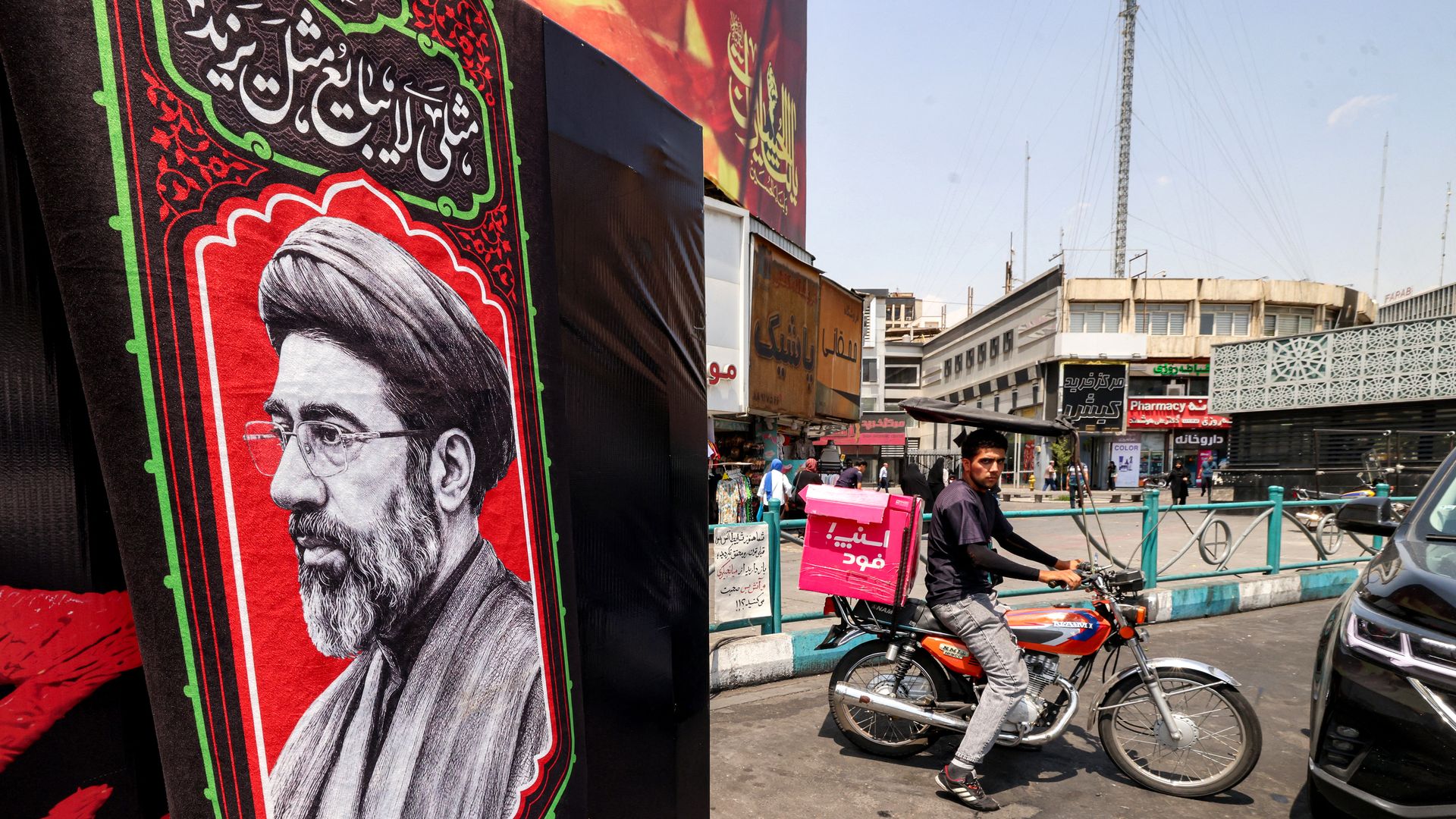
A delivery person rides a motorcycle near an image of Iran's Supreme Leader Mojtaba Khamenei. Photo: Atta Kenare/AFP via Getty Images
Iran's Supreme Leader Mojtaba Khamenei told the country's top three military commanders that a renewed attack by the U.S. and Israel ״must be met with an immediate and effective response, without geographical limitations״ in order to achieve "maximum deterrence," according to a statement from his office.
Why it matters: This is the first publicly disclosed meeting between Khamenei and all the top commanders of Iran's armed forces since the war began. It comes as President Trump weighs major strikes on Iran after the midterm elections.
- Khamenei hasn't been seen or heard in public since he was wounded in an Israeli strike on the first day of the war. He has only issued written statements, which raised questions about his condition.
- The unusual apparent meeting took place a day after Qatari mediators held talks in Tehran for more than 12 hours in an effort to reach a deal to restart direct negotiations between the U.S. and Iran and avoid an outbreak of war after the midterms.
- The discussions continued in Doha, Qatar, on Saturday.
What he's saying: "If the enemies once again launch military or terrorist attacks, it will be the Islamic Republic of Iran's Armed Forces and the Iranian nation that determine when and under what conditions those hostilities will end," Khamenei told the commanders, according to the statement.
Zoom in: According to the statement, the meeting included armed forces chief of staff Gen. Ali Abdollahi, army commander Maj. Gen. Amir Hatami and Islamic Revolutionary Guard Corps commander Maj. Gen. Ahmad Vahidi.
- The commanders briefed Khamenei on the state of military readiness along the Gulf coastline and around the Strait of Hormuz, the Gulf of Oman, and Iran's northwestern and southeastern borders.
- They also reported "a several-fold increase" in production of various types of ammunition and reconnaissance, support, and combat weapons.
- Khamenei instructed the commanders that the "target bank" must be updated "so that all types of the American-Zionist enemy's material and non-material assets fall within the reach of the Armed Forces."
- Khamenei praised "the intelligent steadfastness" of Iran's proxies across the region and stressed "the unity of the different arenas" as a "decisive and strategic" element for Iran.
Reality check: Iranian Foreign Minister Abbas Araghchi told Al Jazeera that senior-level officials have discussed a proposal from Vice President Vance and called the U.S. effort to open talks a "positive step."
- But he made a strict set of demands for an agreement: lifting sanctions, reducing the U.S. military presence in the region and recognizing a Strait of Hormuz shipping route agreed to with Oman.
- Araghchi also told Al Jazeera that reopening the strait on Iran's terms could pave the way for direct negotiations. Iran is examining mediators' proposals to address its nuclear program, a bottom-line issue for the U.S.
