Lula's victory has stakes far beyond Brazil

Add Axios as your preferred source to
see more of our stories on Google.
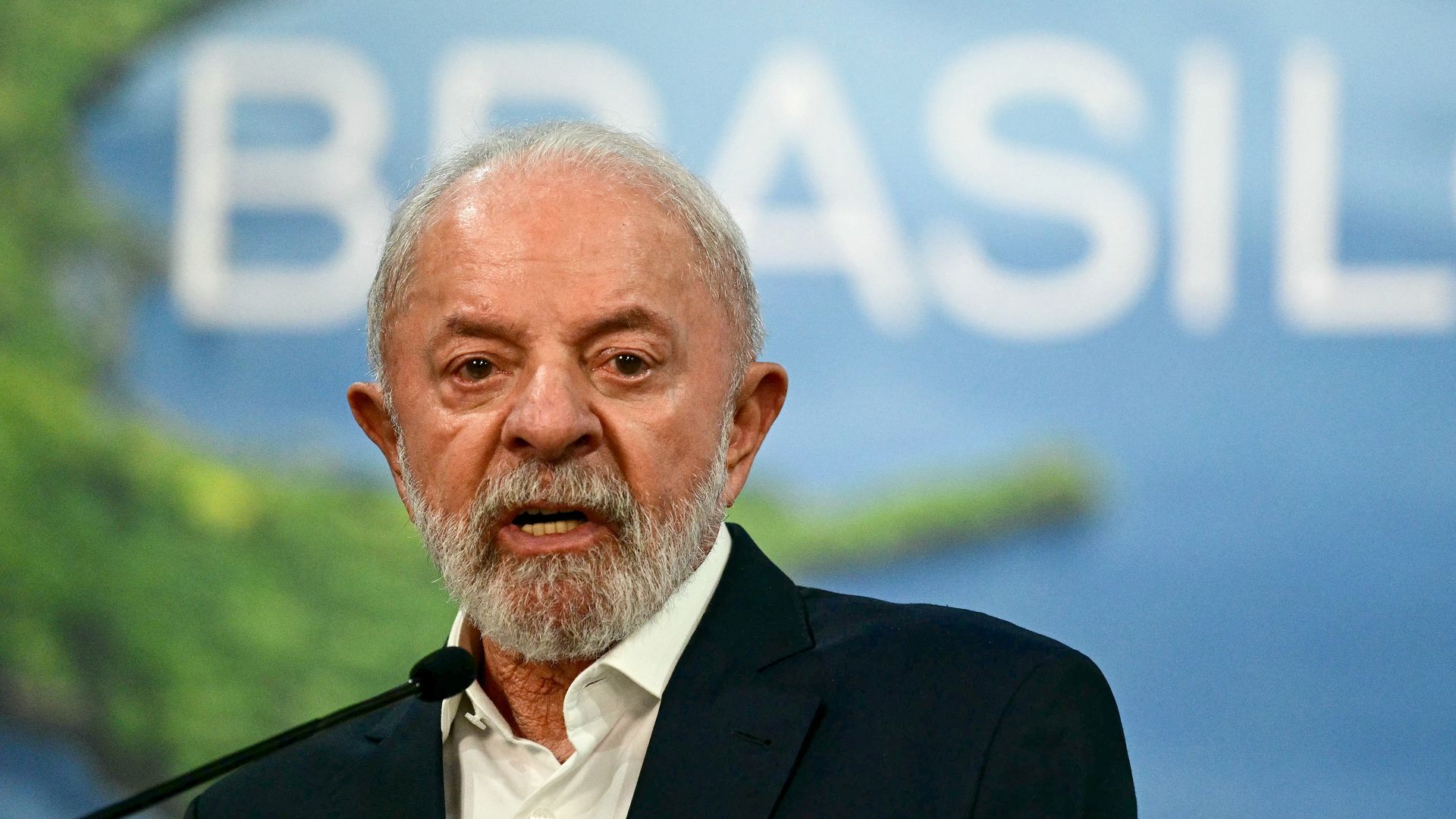
Brazilian President Luiz Inácio Lula da Silva at the COP30 UN Climate Change Conference in Belem, Para state, Brazil, last November. Photo: Pablo Porciuncula/AFP via Getty Images
Brazilian President Luiz Inácio Lula da Silva's reelection carries consequences far beyond Brazil's borders.
Why it matters: Lula faces challenges including strained relations with the U.S. over trade and the Bolsonaro family as he pursues an ambitious climate agenda that includes a commitment to ending Amazon deforestation.
- His defeat of Flávio Bolsonaro, who fled to the U.S. this week, also interrupts a series of electoral victories for the right across Latin America, as Lula pushes for Brazil to play a more prominent role in global politics.
What Lula's victory means for global politics
The big picture: Lula's win preserves Brazil's commitment to BRICS, the emerging-economies bloc that includes China, Russia and India. Flávio Bolsonaro had floated reconsidering Brazil's membership.
- Valentina Sader, a Brazil expert at the Atlantic Council, tells Axios that Lula is likely to continue balancing Brazil's relationships with Washington and Beijing rather than choosing between them.
- China is Brazil's largest trading partner, while the U.S. is its leading foreign direct investor, making both relationships strategically important. Sader says Lula will also seek to diversify Brazil's export markets and investment opportunities.
Tensions between Brasília and Washington have been heightened since the prosecution of former Brazilian President Jair Bolsonaro, Flávio's father, for plotting a coup to overturn the 2022 election. He is serving a 27-year sentence under house arrest on health grounds.
- Trump cited Jair Bolsonaro's prosecution when he imposed an additional 40% tariff on Brazilian goods in 2025. After the U.S. Supreme Court struck down those tariffs, Trump imposed new 25% tariffs in July.
- Tensions escalated this week when Flávio Bolsonaro left Brazil despite a court order to surrender his passports amid a money laundering investigation. He has denied wrongdoing.
Lula's climate change ambitions
Under Lula, Brazil has sought to position itself as a climate leader for the Global South, hosting last year's COP30 summit and promoting international cooperation on rainforest protection and clean energy.
Yes, but: Lula's government's support for expanding oil production raises questions about how far Brazil can go in tackling climate change.
- Carlos Nobre, a leading Brazilian climate scientist, tells Axios that Lula emphasized renewable energy in his post-election speech. "Let's hope he will do that," Nobre says, warning that continued fossil fuel expansion could make it "almost impossible to save the Amazon."
- Sader says Lula's ability to advance his environmental agenda will also depend on his choice of environment minister and success in navigating a more conservative National Congress.
What does Lula's victory mean for the Amazon?
Lula's reelection is crucial to protecting the Amazon, Nobre says, but continued deforestation and global warming threaten the rainforest's future.
Context: Brazil contains roughly 60% of the Amazon, but the rainforest extends across national borders, and Brazil cannot guarantee its survival alone.
- Nobre warns that if Amazon deforestation reaches 20%–25% and global temperatures rise 2°C above preindustrial levels, the rainforest could cross an ecological tipping point, eventually causing up to 70% of the forest to become severely degraded.
- Brazil's Arc of Restoration program aims to restore 6 million hectares of degraded Amazon forest by 2030 and 24 million hectares by 2050.
What we're watching: Nobre warns that political shifts across neighboring Amazonian countries could undermine regional efforts to protect the rainforest.
- He also expresses concern about U.S.-backed oil expansion in Venezuela and its implications for tackling global warming.
The bottom line: Nobre says halting deforestation and forest fires, alongside large-scale restoration, is essential to preventing an ecological tipping point. "If we do that, we save the Amazon."
Go deeper: Brazil's election ignites MAGA's midterm warnings
