Top U.S. Middle East commander briefs Trump on Iran blockade

Add Axios as your preferred source to
see more of our stories on Google.
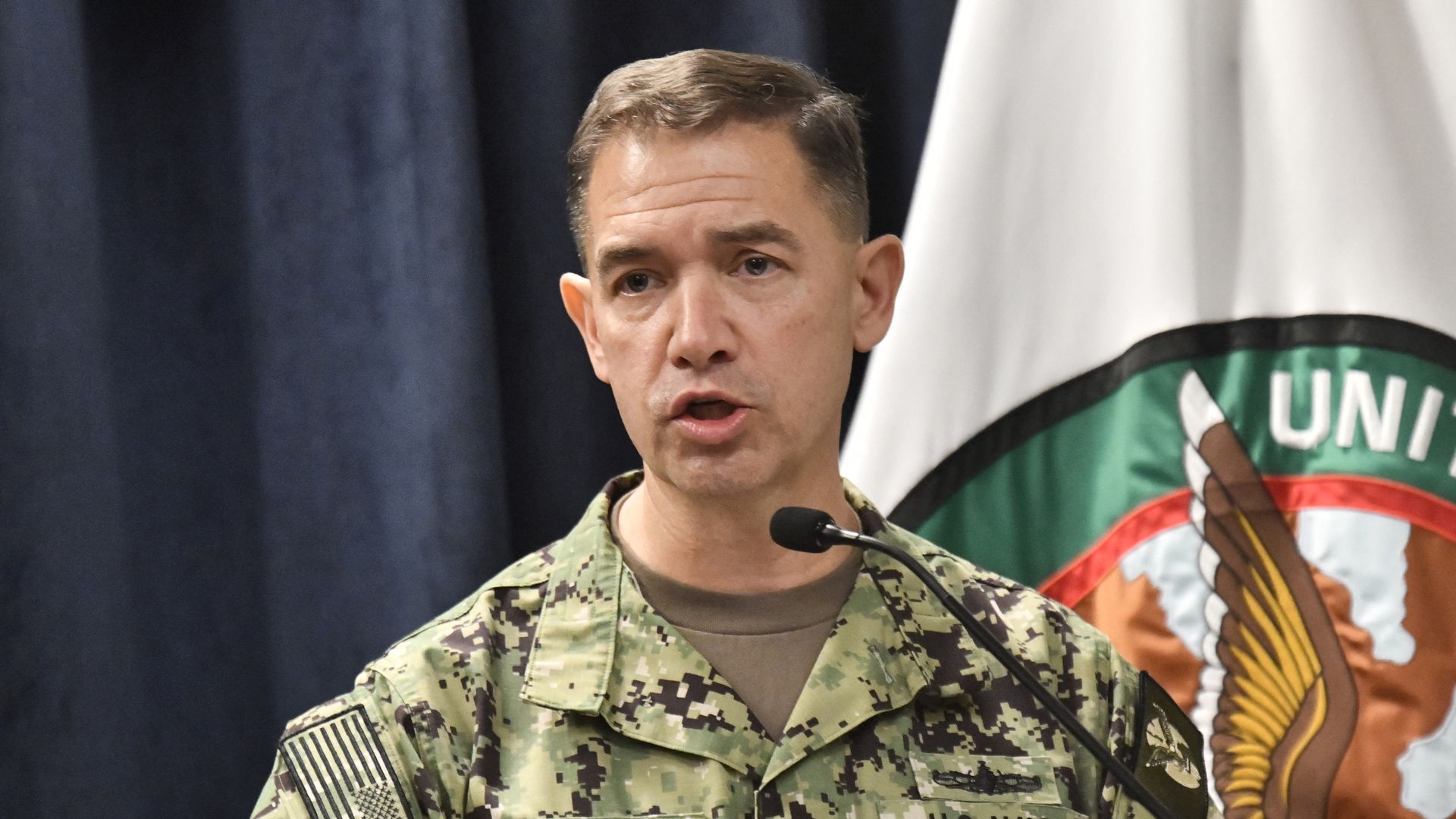
U.S. Central Command chief Adm. Brad Cooper speaks at a press conference in March. Photo: Octavio Jones/AFP via Getty Images
U.S. Central Command chief Adm. Brad Cooper, the commander of forces in the Middle East, briefed President Trump Thursday on the state of the Iran war, with a focus on the ongoing naval blockade, according to two U.S. officials.
Why it matters: As he did before Operation Midnight Hammer in June 2025 and Operation Epic Fury in February, Trump is pursuing dual tracks — trying to reach a deal to restart peace talks while also preparing for a possible resumption of major combat operations after the midterms.
Behind the scenes: Trump wanted to hear directly from the CENTCOM head on whether the naval blockade is working, the U.S. officials said.
- Cooper also briefed Trump on the military operation for guiding oil tankers out of the Strait of Hormuz to global energy markets.
- And he updated Trump on the economic pressure campaign the military is conducting in concert with the Treasury Department.
- Defense Secretary Pete Hegseth, Treasury Secretary Scott Bessent, Chairman of the Joint Chiefs of Staff Gen. Dan Caine, White House envoy Steve Witkoff and other senior officials also attended the meeting, the officials said.
- The White House and CENTCOM declined to comment.
- The Wall Street Journal first reported the meeting.
Driving the news: A group of regional mediators led by Qatar is trying to get the U.S. and Iran to head off a resumption of war after the midterms in favor of negotiations.
- "The mediation is at a very sensitive stage," a regional source said.
- Qatari mediators recently delivered a letter from Vice President Vance to Iran's Secretary of the Supreme National Security Council, Gen. Mohsen Rezaei.
- Vance proposed restarting negotiations but stressed that any talks would have to address Iran's nuclear program.
- Trump and Vance met Wednesday to discuss a possible gesture of goodwill toward Iran, such as sending humanitarian goods like food and medicine, according to a source with knowledge. Later in the day, Trump publicly backed the idea.
What they're saying: U.S. Ambassador to Turkey Tom Barrack told CNN on Thursday that the U.S. and Iran are "very close" to a deal to deescalate tensions.
- "I think we're very close to finally getting to a place where we can say, 'Let's just have a timeout,'" he said. "We're not going to have an overall solution immediately, but we can allow the region to find its own pace."
The other side: Iranian officials on Thursday continued to demand the U.S. take a series of steps — such as lifting the blockade, releasing Iranian frozen funds and allowing Iran to sell oil — before resuming negotiations on their nuclear program.
