Fed leaves rates steady as governor Lisa Cook dissents

Add Axios as your preferred source to
see more of our stories on Google.
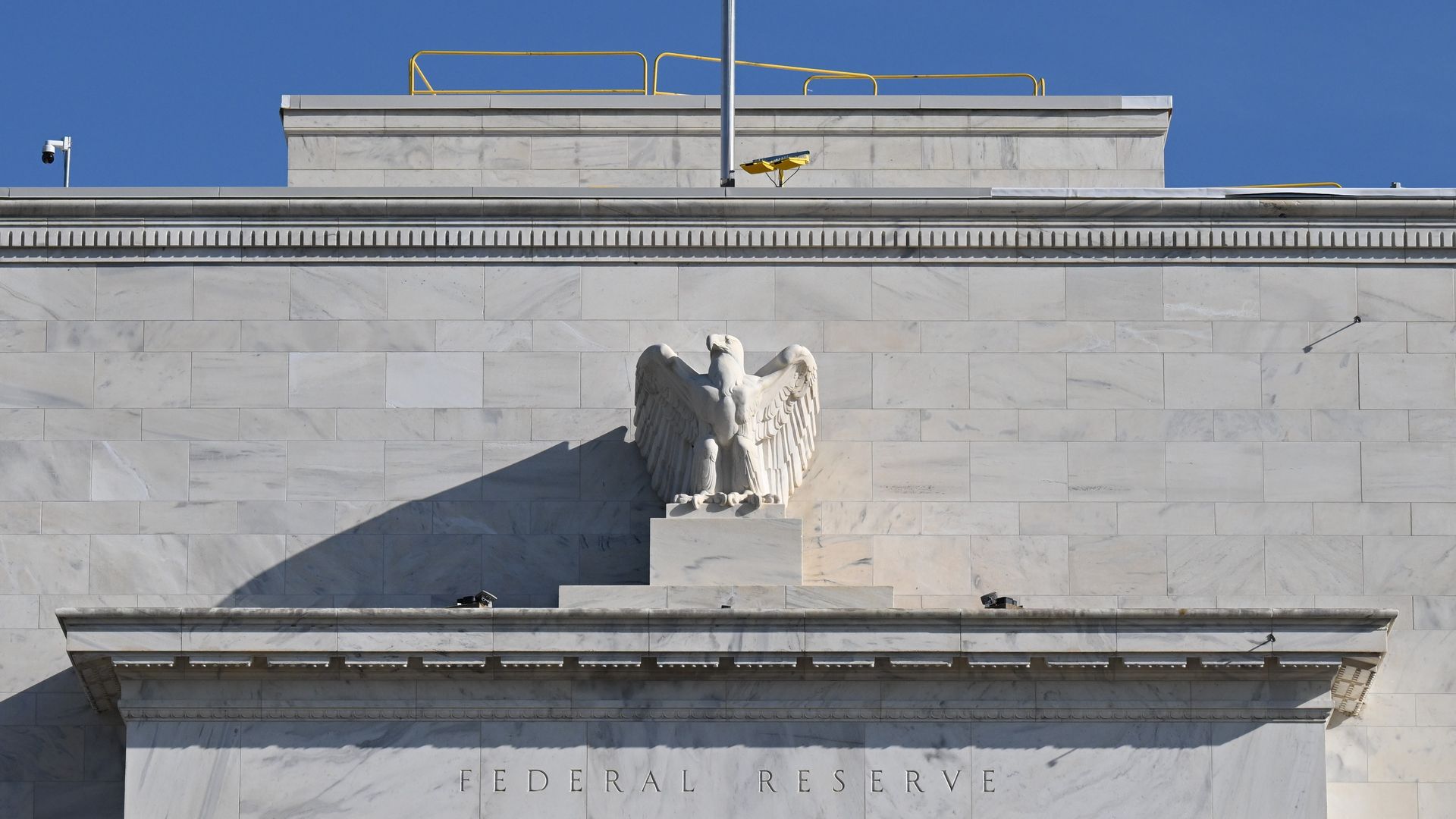
The Federal Reserve building in Washington, DC. Photo: Li Rui/Xinhua via Getty Images
The Federal Reserve elected to leave interest rates unchanged at a policy meeting that concluded Wednesday, with two officials dissenting — including Lisa Cook, the governor President Trump is seeking to fire.
Why it matters: Fed officials have signaled that while they may well raise interest rates again by year-end, they are in no hurry and prefer to move gradually and with more data in hand.
What's new: Speaking to reporters, Fed chairman Kevin Warsh announced a shake-up of the central bank's meeting schedule.
- Starting next year, one of the Fed's eight annual meetings will be devoted exclusively to "broad monetary policy strategy," with no interest rate decision or policy statement expected.
- Warsh said that he expects that in 2028, two of the meetings will focus on that strategy, leaving six for interest rate decisions.
- "It's equally important we reserve time and space as an intellectually diverse group for strategic deliberations — for thinking anew about big questions, looking out over longer time horizons," Warsh said.
Zoom out: The policy-setting Federal Open Market Committee left its target for the federal funds rate at a range of 3.75% to 4%.
- Both Cook and Cleveland Fed president Beth Hammack dissented, preferring to raise interest rates a quarter-point.
- "The accumulation of more information will help the Committee determine the policy stance appropriate to ensure a timely return of inflation to the Committee's 2 percent goal," the FOMC said in its statement.
- It also said economic activity is expanding at a "strong" pace, better than the "solid" pace noted in September.
The intrigue: It was Cook's first dissent as a Fed official, and comes as the White House prepares to hold a hearing soon over her potential dismissal for alleged mortgage fraud.
- The Supreme Court sided with Cook in an earlier Trump attempt to remove her from office, and her lawyers say the mortgage allegations are a blatant pretext for firing her.
- Trump has often claimed in social media posts that Biden-appointed governors are standing in the way of the interest rate reductions he seeks, motivated by politics.
- For the most part in recent decades, presidentially appointed governors based in Washington have not dissented from monetary policy decisions, instead following the chair's leadership. That norm has broken down since 2024, however.
What to watch: Warsh pushed back on the notion that the AI investment boom is insulated from higher interest rates, pointing to widening credit spreads and signs that investors are becoming more selective.
- "Interest rates get in the cracks. Interest rates affect directly or indirectly almost everything," Warsh told reporters.
- "I don't believe that they're somehow divorced from the rest of the economy," he added, referring to the technology investment surge.
State of play: Traders are betting on a rate hike at the central bank's final meeting of the year in mid-December — 86% odds as of this morning, per the CME's FedWatch tool.
- It comes as inflation has remained persistently above the Fed's 2% target. The Personal Consumption Expenditures Price Index is due out Thursday morning, and analysts expect it to show a 3.6% rise in prices for the 12 months ended in September.
- An increasingly vocal hawkish wing of the Fed policy committee that includes Hammack has argued that inflationary pressures are becoming broader and more entrenched, warranting higher interest rates.
Editor's note: This story has been updated with details from Federal Reserve chairman Kevin Warsh's news conference.
