Where breast cancer death rates are highest in the U.S.

Add Axios as your preferred source to
see more of our stories on Google.
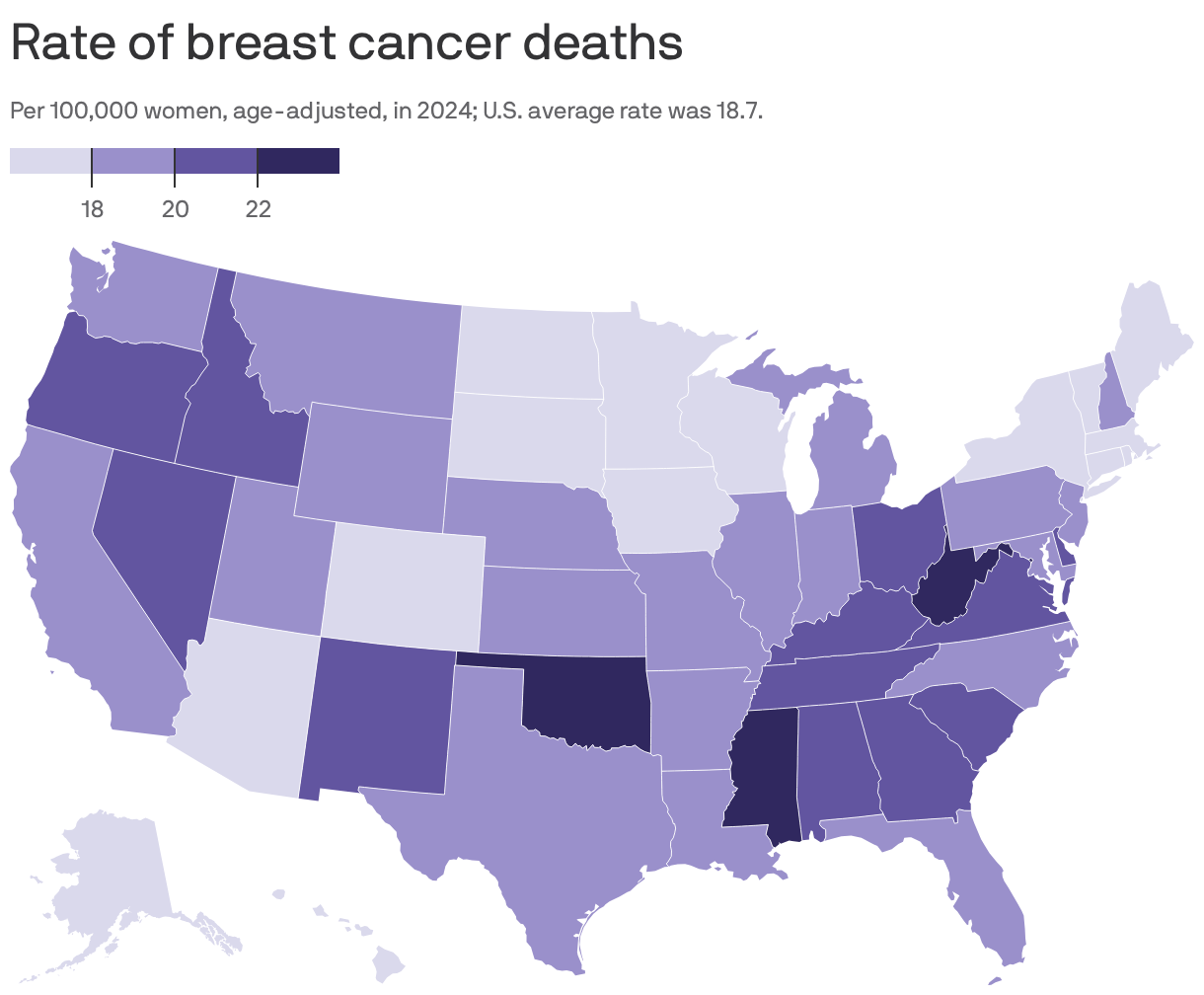
Breast cancer mortality has fallen nationally over the past decade, but where women are most likely to die from the disease hasn't changed much.
Why it matters: Breast cancer death rates remain disproportionately high in lower-income states, particularly across the Southeast, David Radley, a senior scientist at the Commonwealth Fund, tells Axios.
By the numbers: The U.S. recorded 18.7 breast cancer deaths per 100,000 women in 2024, according to the latest CDC data. (Fewer than 1% of breast cancers in the U.S. occur in men, per the American Cancer Society.)
- Highest rates: D.C. (24.1), Oklahoma (22.5), Mississippi (22.5) and West Virginia (22.4).
- Lowest rates: Rhode Island (14.4), North Dakota (15) and Massachusetts (15.2).
- The national death rate has declined by roughly 2 per 100,000 women over the past decade, per government data.
The big picture: "That pattern [shown in the new CDC map] more or less has existed for as long as we've been tracking this kind of data," says Radley, who is analyzing breast cancer mortality for an upcoming state health report.
Between the lines: More mammograms alone won't close the gap.
- Black women have relatively high breast cancer screening rates but are more likely to die from the disease than white women, the Commonwealth Fund's recent report finds.
- Longer delays between an abnormal screening and follow-up care can give cancer more time to progress.
- Lack of insurance, high deductibles, and difficulty accessing specialists may help explain the disparities, particularly for rural and lower-income women, Radley says.
What we're watching: Whether states broaden insurance coverage to make breast cancer follow-up care and treatment more affordable.
- Radley points to Massachusetts, which has used state subsidies to extend affordable insurance to more residents.
