GM unveils sweeping tech and self-driving overhaul

Add Axios as your preferred source to
see more of our stories on Google.
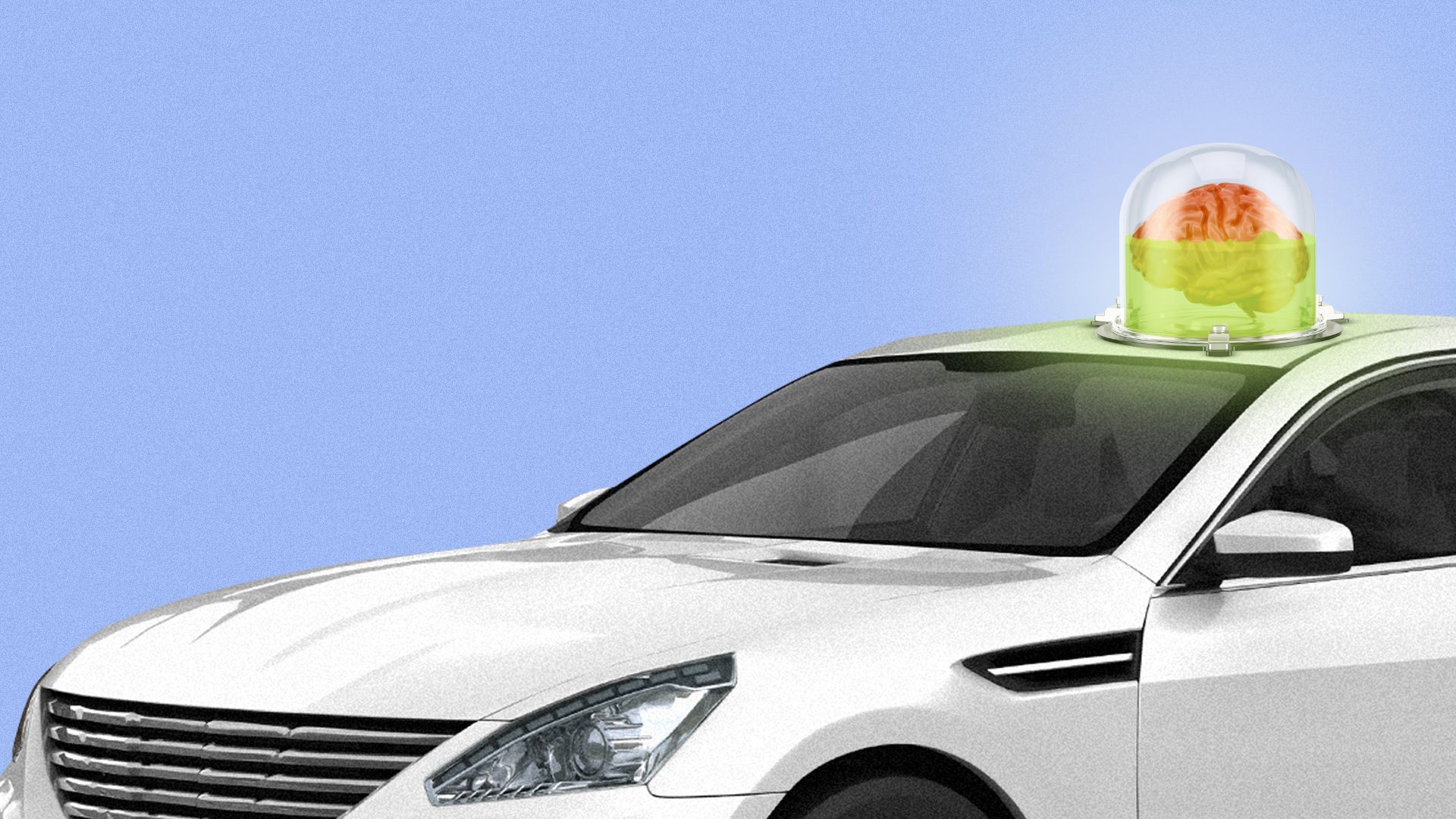
Illustration: Aïda Amer/Axios
General Motors envisions a future where you can dispatch your car to pick up groceries, take your kids to soccer practice and handle other errands — all without you behind the wheel.
Why it matters: As software, AI and autonomous driving reshape the auto industry, GM is taking a big swing amid growing competition from Chinese rivals and leaders in the race toward self-driving cars.
Driving the news: GM on Wednesday unveiled a sweeping technology strategy combining autonomous driving, artificial intelligence and a new centralized computing system that will underpin much of its future lineup.
Among the highlights:
- Its autonomous "eyes-off" highway-driving technology, slated to debut on the Cadillac Escalade IQ in 2028, will extend to its most popular gas-powered SUVs and pickups and its next crop of electric vehicles, too.
- OnStar, GM's 30-year-old emergency call service, is becoming an intelligent AI assistant to deliver more personalized, proactive experiences to passengers.
- And the company is leveraging AI and virtual engineering in an effort to halve the time it takes to develop new vehicles, crucial to competing more effectively with faster-moving Chinese rivals.
Among the most intriguing announcements is GM's new all-or-nothing approach to autonomous driving tech.
- Rather than offering increasingly capable driver assistance everywhere, GM is starting with fully autonomous driving on highways before expanding later to other types of roads.
- It's a guard against driver complacency, said GM chief product officer Sterling Anderson, who helped develop Tesla Autopilot.
Zoom in: Anderson argues that driver assistance systems that require constant supervision — like Tesla's FSD — often lead to drivers trusting the system more than they should.
- GM's fully autonomous highway system won't require drivers to monitor the road or suddenly retake control in an emergency. They'll be free to catch up on email or watch a show while cruising down the highway.
- "They can be complacent, and we will be safe," Anderson says.
GM's longer-term ambition is what Anderson calls "Mission Mode" — turning personal vehicles into autonomous assistants that can complete tasks for their owners — like picking up a friend from the airport or dropping off the dry cleaning.
- "Mission Mode is what we perceive as one of the killer apps of autonomy," Anderson told Axios.
A powerful new brain
Making this leap requires a more modern electrical and computing architecture in GM vehicles.
- The company is replacing dozens of scattered electronic control systems with a powerful central computer that can coordinate everything from propulsion and safety to AI and autonomous driving.
- The new architecture delivers 40 times more computing power with 30% less wiring, the company says.
OnStar is getting an AI makeover, becoming more proactive, GM says, by helping busy parents coordinate kid pickups or order takeout when everyone's running late, for example.
- Drivers will also be able to ask questions about their vehicles, troubleshoot problems or control features using natural language.
- Altogether, the new brain will enable the car to think and get smarter over time, the company says.
What's next: The OnStar AI Assistant debuts in the 2027 Cadillac Lyriq through a software update, with more models to follow.
- An OnStar smartphone app will replace GM's existing Chevrolet, Buick, GMC and Cadillac brand apps.
- GM's autonomous "eyes-off" highway-driving technology will appear first with the 2028 Escalade IQ, and will then be incorporated into GM's popular pickups, large SUVs and next-generation EVs.
The bottom line: GM is leaning into technology as it struggles to find new paths to growth.
