Trump announces major diesel deal with Putin, infuriating Ukraine

Add Axios as your preferred source to
see more of our stories on Google.
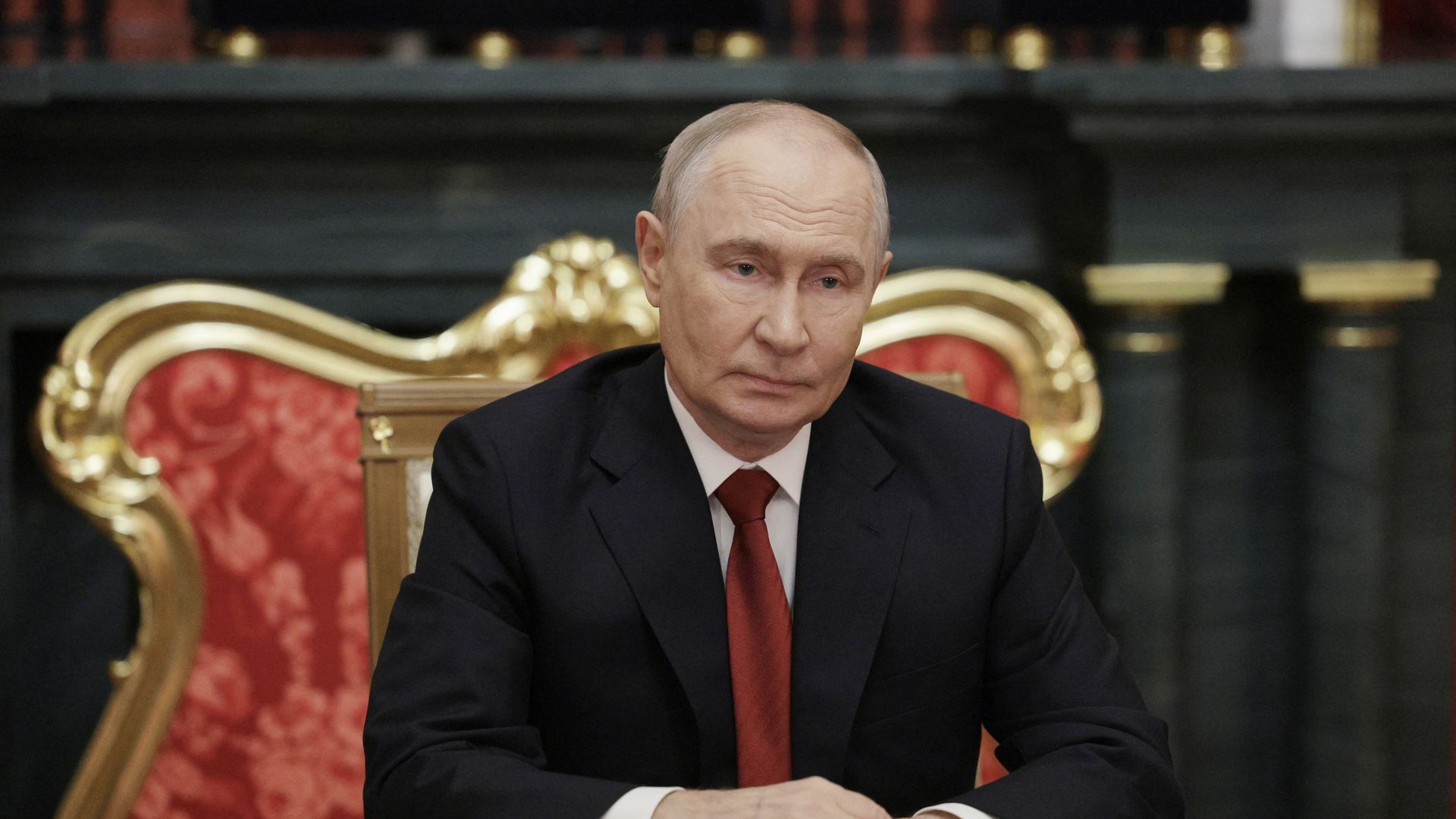
Russian President Vladimir Putin attends a meeting with White House envoys Steve Witkoff and Jared Kushner in Moscow on Sept. 5. Photo: Gavriil Grigorov/POOL/AFP via Getty Images
President Trump announced Friday that he's reached a deal with Russia to increase the supply of diesel to the U.S. and global markets — angering Ukraine, which called it a gift to Vladimir Putin in the midst of their war.
Why it matters: The announcement, which includes a waiver on some U.S. energy sanctions against Russia, took place as Ukrainian and European diplomats arrived in Miami for talks on ending the war with Russia.
What he's saying: "I have just concluded a highly successful discussion with President Vladimir Putin, of Russia, wherein it was agreed that Russia will immediately supply over 300,000 Tons of Diesel Fuel to the American and Global Marketplace, another 500,000 Tons during the month of November, and 1,000,000 Tons immediately thereafter," Trump wrote on Truth Social.
- Trump added that Russia will deliver," within a short period of time, 3,000,000 Tons of Diesel Fuel."
- Combine with oil coming out of the Strait of Hormuz, Trump wrote, "Diesel Prices for Americans and, indeed, the World, will be COMING DOWN, IN RECORD NUMBERS, AND FAST!"
- "Today, at President Trump's direction, the Office of Foreign Assets Control (OFAC) is immediately issuing a temporary general license to allow the supply of Russian diesel to the global market," the Treasury Department said in a statement.
Friction point: Ukrainian President Volodymyr Zelensky responded angrily to Trump's announcement, writing on X that any sanctions relief for Russia outside of a "lasting de-escalation agreement ... is an obvious weakness."
- "Gifts to Putin will not bring peace or any benefit to the civilized world. Russia will repay the diesel with further terror and perfidy. Allowing Russia to sell petroleum products is an investment in a war that must be ended, not prolonged. What is needed is real de-escalation with Russia on a reciprocal basis," Zelensky wrote.
- Zelensky added that Ukraine told Trump's envoys Jared Kushner and Steve Witkoff that it is "ready to take symmetrical de-escalatory steps" with Russia.
- "Ukraine will not set Russian oil refineries on fire if Russia does not destroy our energy infrastructure. This is the kind of agreement we are proposing to America, and we believe the U.S. has enough power to achieve such a compromise," he said.
The other side: The Kremlin said in a statement that during Putin's call with Trump, "significant attention was devoted to prospects for resolving the Ukraine crisis."
- The Kremlin said the two leaders discussed the situation in global energy markets. "The Russian side confirmed its readiness to supply oil and petroleum products to the U.S. and global markets. I am confident that this will have a positive impact on the global economy as a whole," Putin said during the call, according to the Kremlin.
- Putin special envoy Kirill Dmitriev, who worked on the deal, wrote on X that "Russia-US energy and economic cooperation will continue and benefit global markets and the world."
By the numbers: Ukrainian strikes cut Russia's available refining capacity by as much as 60% over the summer, though the effect varies month to month, per an analysis by two Dallas Fed researchers this week.
- Through a combination of Middle East refinery outages, shipping constraints, damaged Russian refineries and curtailed Chinese refining, the global fuels market has seen reduction of as much as 6 million to 8 million barrels per day of capacity since late spring, or up to 10% of global refining.
What they're saying: "Putin and others are trying to opportunistically shift blame for high diesel prices onto Ukraine, rather than the U.S.-Israel-Iran war devastating global supply chains," said Joseph Webster, an energy and geopolitics analyst with the Atlantic Council, a nonpartisan think tank.
- "These putative Russian export volumes are not only uncertain to materialize but are small in volume and wouldn't address the global diesel shortage," he said via email.
Ben Geman contributed to this report.
