3 years later, Netanyahu faces reckoning over Oct. 7 in Israeli election


Add Axios as your preferred source to
see more of our stories on Google.
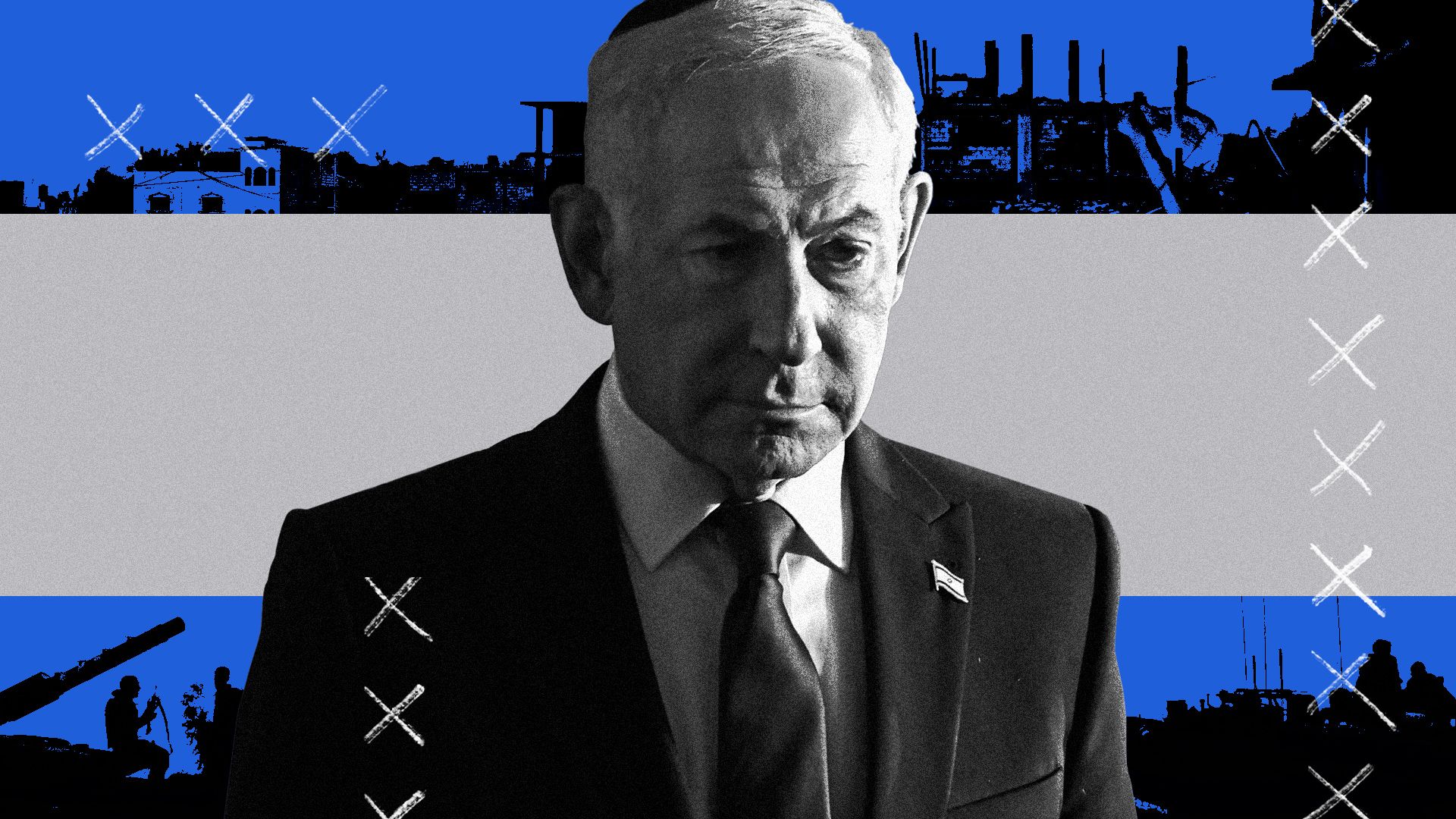
Photo illustration: Aïda Amer/Axios. Photo: Christopher Furlong, Debbie Hill/AFP, Marcus Yam/Los Angeles Times via Getty Images
Israel is marking the third anniversary of the Oct. 7 terror attacks three weeks before an election where Prime Minister Benjamin Netanyahu's personal culpability for the country's worst-ever security failure will be a central issue.
Why it matters: Netanyahu has never looked more politically vulnerable than in the weeks after Oct. 7, but he has defied expectations by keeping his government afloat — presiding over simultaneous wars and an atmosphere of perpetual emergency. Though the polls are tight, they leave a clear path for the ultimate political survivor to hang on yet again.
- But Oct. 7 still looms over the country and his candidacy. The opposition lambasts him for refusing to take responsibility or allow an independent inquiry into the Hamas attacks that killed around 1,200 people.
- Every other senior national security official who was in office at the time of the attacks has resigned, except Netanyahu.
- Netanyahu's chief opponent, former Israel Defense Forces Chief of Staff Gadi Eisenkot, lost his son and two nephews during the war in Gaza. Sources close to Eisenkot say he sees his main mission as replacing the man he holds responsible for allowing the Oct. 7 attacks.
Netanyahu blames the deep state.
- His political and media allies — as well as his wife, Sara — have even spread conspiracy theories implying Israel was betrayed by its own security chiefs.
- Netanyahu himself has claimed those security chiefs deliberately kept him in the dark and suggested he could have prevented the massacre if only they'd woken him up when early warning signs came in.
Driving the news: Recent reporting suggests Netanyahu had at least some warning.
- Haaretz reported that United Arab Emirates President Mohammed bin Zayed warned Netanyahu days before the attacks that Hamas was planning a major operation. Three sources with knowledge confirmed to Axios that UAE intelligence gave a general warning to its Israeli counterparts and that MBZ spoke to Netanyahu to make sure he received it. A former U.S. official said then-CIA Director Bill Burns was told several months later by MBZ that he had warned Netanyahu.
- Other outlets including the New York Times also confirmed the story.
- The Atlantic and the Wall Street Journal reported that Netanyahu received a similar warning ahead of Oct. 7 from Egyptian intelligence chief Abbas Kamel.
- Netanyahu denied ever receiving warnings from the UAE or Egypt and sued several media outlets and journalists that reported he had.
Between the lines: While those stories have been widely discussed in Israel, the three violent years that have passed since Oct. 7 — the leveling of Gaza, the release of the hostages, the attacks on Hezbollah and two wars with Iran — have given Netanyahu ample opportunity to restore his reputation among many Israelis as a strong and decisive leader.
By the numbers: Most polls show Netanyahu's Likud party with 20-22 seats in the Knesset, down from 32, and his right-wing coalition with 50-54 — short of the 61 needed for a majority.
- But the opposition is also unlikely to secure a majority without the support of Arab-Israeli parties, which are projected to win a combined 12-14 seats.
- Polls reported by Netanyahu mouthpiece Channel 14 show the opposite, projecting the prime minister and his coalition winning a decisive 63-seat majority.
- Seizing on the right-wing turn in Israeli society, Netanyahu has pressured his main opposition to rule out forming a coalition with the Arab-Israeli parties. That taboo could keep Eisenkot from taking power, though he could try to cobble together a minority government.
- One possible scenario, if the polls prove accurate, is a hung parliament with Netanyahu staying on as a caretaker prime minister until another election is held.
The vote could determine not just Netanyahu's political survival, but his legal future as well.
- Losing power would also mean losing any levers to delay or influence his ongoing corruption trial.
- But if he wins, Netanyahu could argue he was acquitted by the people of Israel — and take stronger action to thwart the proceedings.
The intrigue: President Trump could give Netanyahu a boost by endorsing him, but so far he's declined.
- Asked several times recently by Time magazine whether he supported Netanyahu, Trump dodged the question. He added, however, that he didn't believe the press reports that MBZ had warned Netanyahu.
- Trump has privately blamed Netanyahu for the Oct. 7 failures, according to two people who have discussed the matter directly with the president. He's also mused about Netanyahu damaging Israel's international reputation.
- However, Trump has stuck close to Netanyahu during the war in Iran and may still endorse him.
What to watch: Israel's election takes place a week before the U.S. midterms. If Democrats take back one or both houses of Congress, that will set up a battle over arms sales to Israel and even over the fate of $3.8 billion in annual military assistance.
- The tenor of that debate may hinge in part on whether Netanyahu remains in power.
