China eyes direct competition with Big Pharma

Add Axios as your preferred source to
see more of our stories on Google.
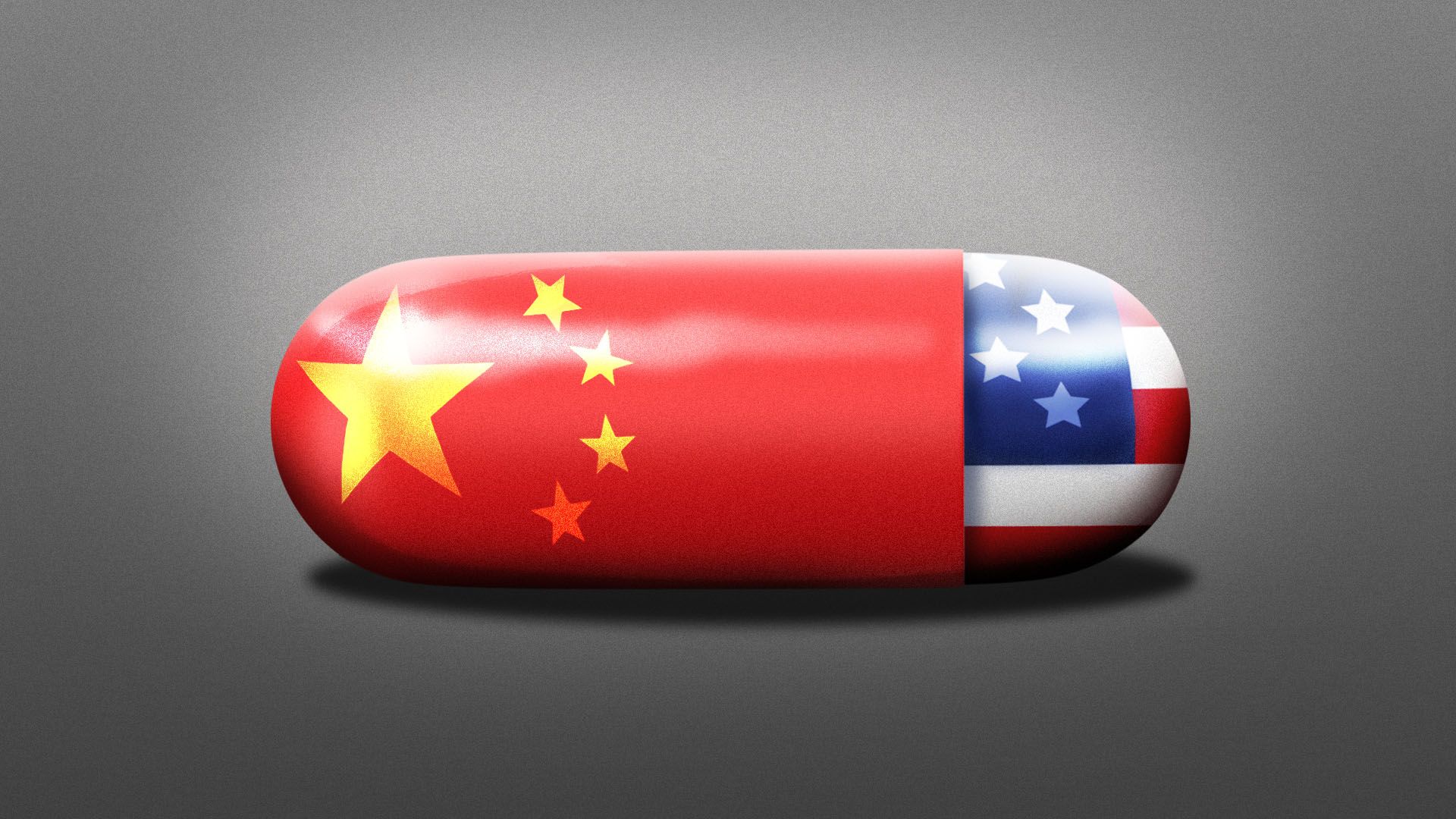
Illustration: Sarah Grillo/Axios
China is making it clear that it wants to become a powerhouse on a par with large Western pharmaceutical companies in the near future, and not just strike licensing deals for promising new drug candidates.
Why it matters: Some experts warn that big drug companies are prioritizing the short-term benefits of partnering with Chinese biotechs over the longer-term risk of China usurping the U.S. as the world's biopharmaceutical superpower.
Driving the news: China's latest five-year plan for its pharmaceutical industry, released last month, calls for "a major leap in the core competitiveness and international influence of China's pharmaceutical industry from 2026 to 2030."
- "This move signals the country's resolve to turn drug innovation into a strategic strength," according to a summary of the plan.
- It calls for first-in-class drugs developed in China to make up a quarter of the global total and expects the "innovative drug sector" to grow at an average annual rate of at least 20%.
- It envisions 50 companies with annual revenues exceeding roughly $1.5 billion and at least five Chinese drugs with global sales exceeding $1 billion.
The big picture: China has gotten really good at making new drugs, a huge government-designed shift from its history as a supplier of pharmaceutical ingredients and generics.
- China's rise has come at an ideal time for large pharma companies whose blockbusters are losing patent protection and who are looking to shore up their product pipelines.
- But some China hawks are warning that the U.S. is sleepwalking into a dual threat. It not only is offshoring large portions of manufacturing and R&D but is creating a national security threat if China can leverage its control over the U.S. drug supply.
- China has "demonstrated consistently a willingness to restrict or even block entirely exports of certain types of technology to the United States when it is in their geopolitical or trade interest to do so," Caitlin Frazer, executive director of the National Security Commission on Emerging Biotechnology, said at an Axios biotech event last week.
- "We're not there yet on medical products, but that is the kind of leverage that I think the CCP could gain if we play this current trajectory out."
Where it stands: Though some experts and policymakers have called for more protectionist policies around Chinese biotechs, the Treasury Department is drafting rules that are expected to allow most pharmaceutical licensing deals to continue, Reuters recently reported.
- The value of overseas licensing deals for Chinese drugs has already exceeded $120 billion this year, according to the Chinese government.
- But the language the Chinese use suggests "that eventually the Chinese government would like to not have to work with us on biotech. Not today, but perhaps in the future," Frazer added. "You see that show up in increasing levels of intensity and confidence in their ... five-year plans, including the most recent one."
Between the lines: The licensing deals are further enabling China's rise as a direct competitor, some experts say.
- They allow Chinese manufacturers to learn directly from Western pharmaceutical companies how to develop and commercialize world-class drugs.
- It's the same dynamic that's played out in other industries like electric vehicles. While European automakers initially welcomed partnerships with Chinese companies, they're now under immense economic pressure as Chinese EVs capture growing market shares.
What they're saying: China's ambitions put the onus on the U.S. to bolster its own pharmaceutical sector and make it more competitive, most experts say. Some go further, rejecting protectionist measures.
- "What we have to [do in] the United States is not restrict China; we have to outcompete China," said Genentech senior vice president Fritz Bittenbender, who is also chair of the Biotechnology Innovation Organization, at the Axios event.
- "And we need to look at what they're doing. We need to have a plan for our country how we're going to ... continue to be the global leader in bioscience."
- "China's latest plan highlights again how the global race for biopharmaceutical leadership is accelerating," said Chanse Jones, a spokesperson for the drug industry trade group PhRMA.
- "We have long led the world in medical innovation, and maintaining that leadership means ensuring America is the most attractive place to discover, develop and deliver the next generation of treatments and cures so U.S. patients continue to get medicines first."
The bottom line: Innovative new medicines aren't just economic or national security factors. They potentially save lives.
- But even prioritizing patient access doesn't present a clean solution.
- While anti-restrictionists argue patients should have access to any and all new drugs, regardless of where they originate, hawks say it's dangerous to let patients become reliant on medications that are dependent on international relations.
