Axios interview: UAE's Dr. Sonia Ben Jaafar on a modern model for global nonprofits

Add Axios as your preferred source to
see more of our stories on Google.
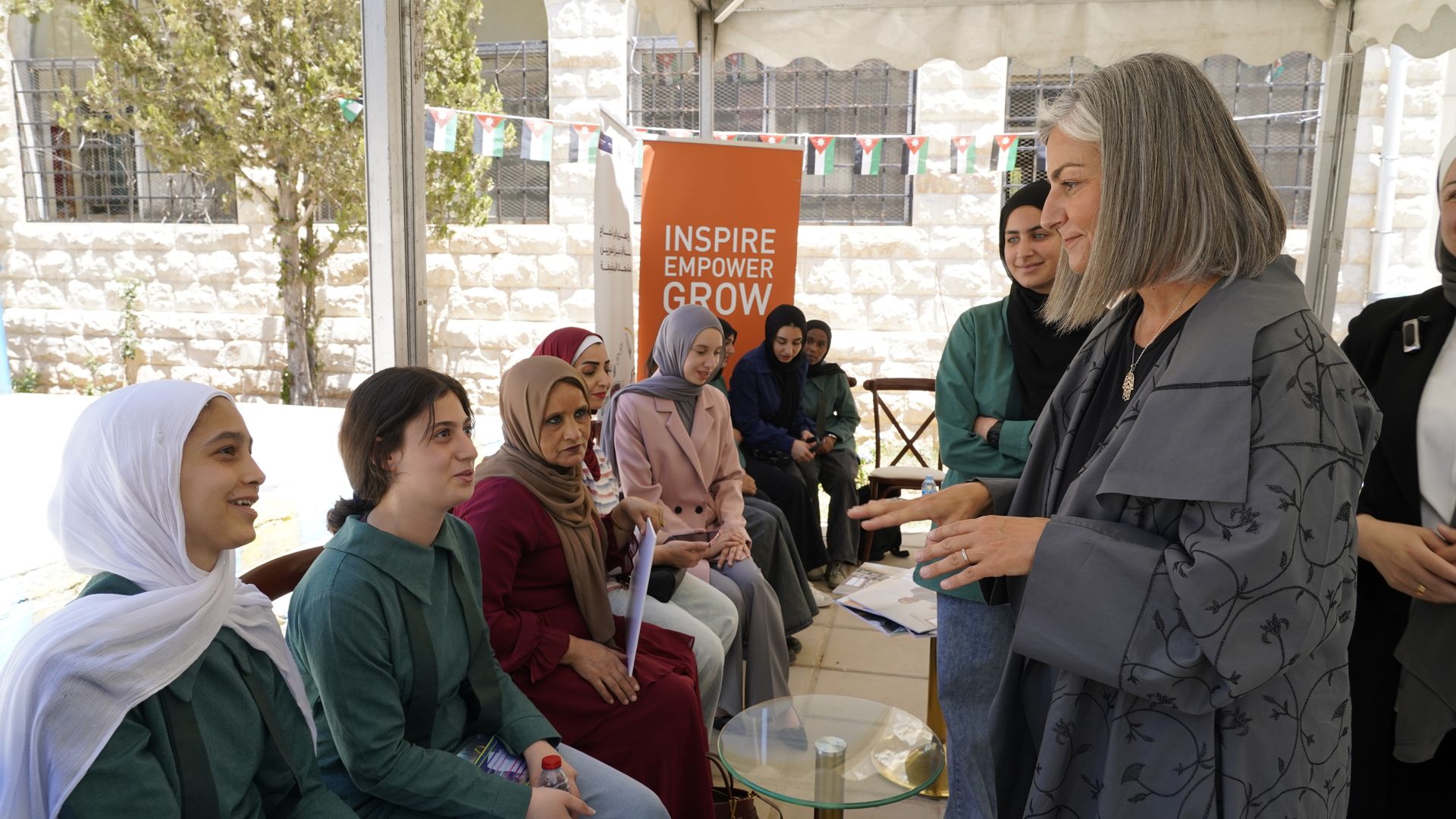
Dr. Sonia Ben Jaafar talks with learners benefiting from Abdulla Al Ghurair Foundation funding. Photo: AGF
NEW YORK — Dr. Sonia Ben Jaafar, CEO of the UAE-based Abdulla Al Ghurair Foundation (AGF), used a flurry of engagements during UN General Assembly week to spread the word about a nonprofit model that emphasizes long-term relationships over fill-the-gap gifts.
Why it matters: Ben Jaafar, who holds a Ph.D. in educational leadership, is a global face of an approach to giving that, as she puts it, uses "philanthropic capital as something where we're building models that other people can then take and continue on."
"The old models of philanthropy," she told me during an interview at Axios House, our Axios Live pop-up for the week, "have been about: 'Here is what we are going to do; we have run out of a little bit of money. Philanthropy, can you just come on in and go ahead and fund this little hole that we have got, this little funding gap?' And that's nice; it's just not enough."
- "What we are now seeing with the shift," she continued, "is: 'Philanthropic actors, would you sit at the table with government actors and the private sector so that we can collaborate to build a new architecture so that your philanthropic capital can unlock more capital?'"
The backstory: AGF, focused on education and youth development, was founded by Abdulla Ahmad Al Ghurair, an Emirati businessman and philanthropist, and is chaired by his son, His Excellency Abdul Aziz Al Ghurair.
- The foundation says it has reached 500,000 people since launching in 2015.
Case in point: As an example of the foundation's approach, Ben Jaafar pointed to the Abdulla Al Ghurair Hub for Digital Teaching and Learning at the American University of Beirut.
- "We created a hub space there for innovation and online education ... because not everybody can afford to go to the campus," she told me. "Fast forward: In Year 5, they became financially self-sufficient. So now they no longer have to ask for more grants."
- "The funding cycle needed to be longer," Ben Jaafar explained. "Their expertise and our expertise came together. They are now offering these programs across 22 countries online. And that was not something that they even dreamed of at the very beginning. So it's really nice to see this evolution."
The bottom line: "Whatever shift is happening," Ben Jaafar said, "human capital is at the heart of anything working."
