Former TV anchors reflect on the great unbundling of news

Add Axios as your preferred source to
see more of our stories on Google.
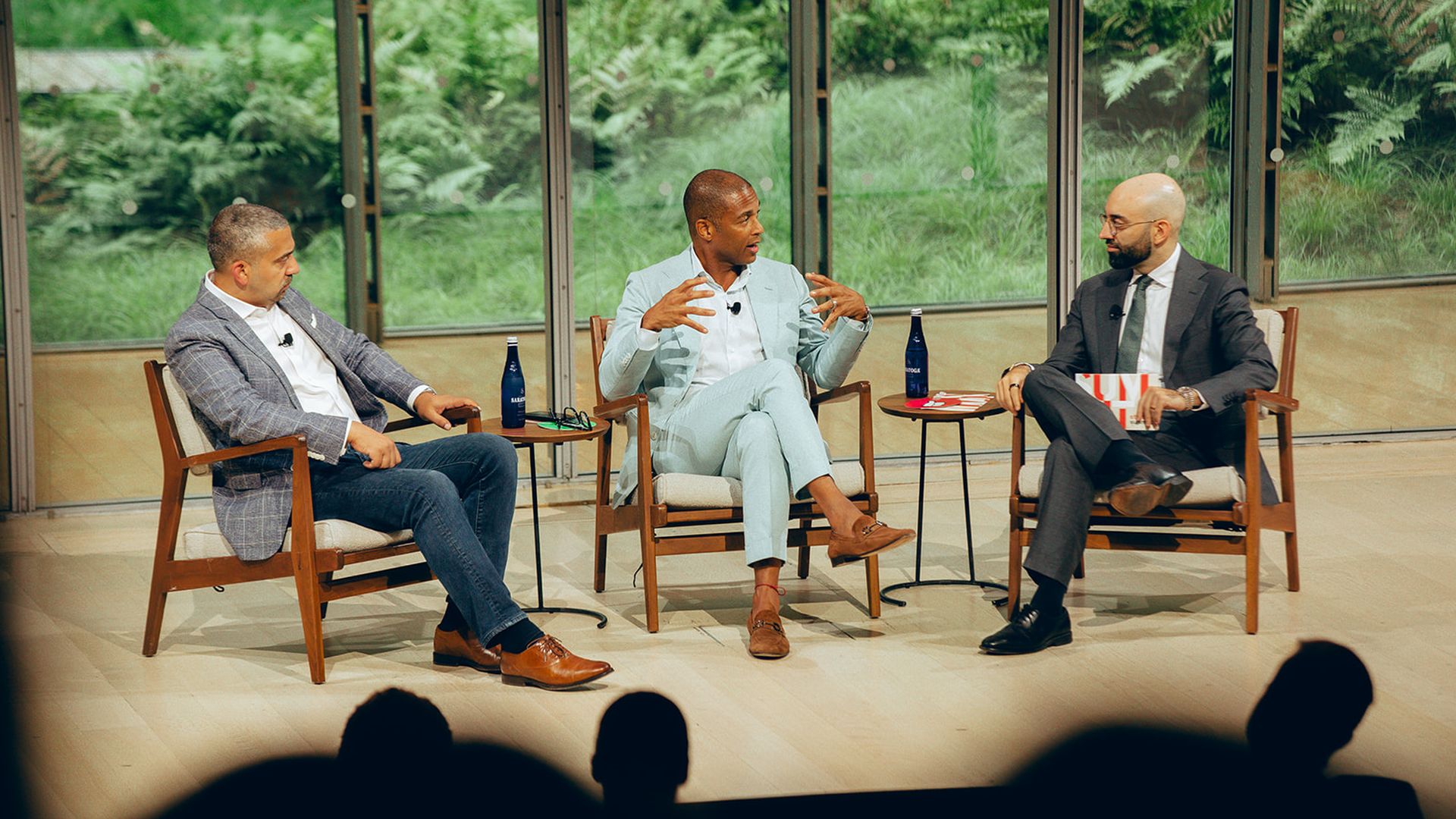
Zeteo founder Mehdi Hasan, Don Lemon and Status founder Oliver Darcy onstage at the Status Summit in New York on Sept. 9. Photo: West Third Films for Status
Former news anchors say they're reaching younger audiences and have more editorial independence after striking out on their own.
Why it matters: New tools have made it easier for TV talent with massive followings to go independent online.
- Former anchors with strong points of view are finding success on short-form video platforms where algorithms reward provocative content.
Zoom in: The startups show former TV stars can diversify and monetize the followings they've built through networks with wide distribution.
- Speaking to Status founder Oliver Darcy, former CNN anchor Don Lemon said his audience is younger now that he's independent and that he gets recognized by many more people from videos on Instagram and TikTok.
- Lemon launched Lemon Media Network, a company that produces his social media program, "The Don Lemon Show," after he was let go by CNN in 2023. He has nearly 7 million followers across Instagram, YouTube and TikTok.
Case in point: Mehdi Hasan launched his own media company, Zeteo, upon leaving MSNBC in 2024.
- His email newsletter, published on Substack, has over 700,000 free subscribers. He wrote in April 2025 that he had over 45,000 paid subscribers.
- He told Darcy he believes his profile has risen since striking out on his own, in part because of the opportunities he can take advantage of as an independent journalist.
- "Not being at legacy media allows you to take experiments and risks and do the kind of things I've done ... and allows you to reach audiences that cable news can never reach," he said.
Zoom out: TV journalists are taking notice of the shifting dynamics around cable news.
- MS Now anchor Nicolle Wallace said her team has invested more in podcasts and YouTube to expand her cable show's audience.
- MS Now president Rebecca Kutler, remarking on the recent launch of MS Now's membership, said the network aims to reach people "in their 20s, 30s, and 40s who might be super consumers of news content" and "are very much in the pro-democracy space, but they don't have cable."
The bottom line: "I think the collapse of the traditional media superstructure, the network system that reared me from infancy until I left MSNBC ... has created opportunity that nobody could have imagined four years ago, three years ago," veteran cable producer Jonathan Wald told Darcy, referencing new newsletter platforms and digital upstarts.
