California attempts to crack down on health spending

Add Axios as your preferred source to
see more of our stories on Google.
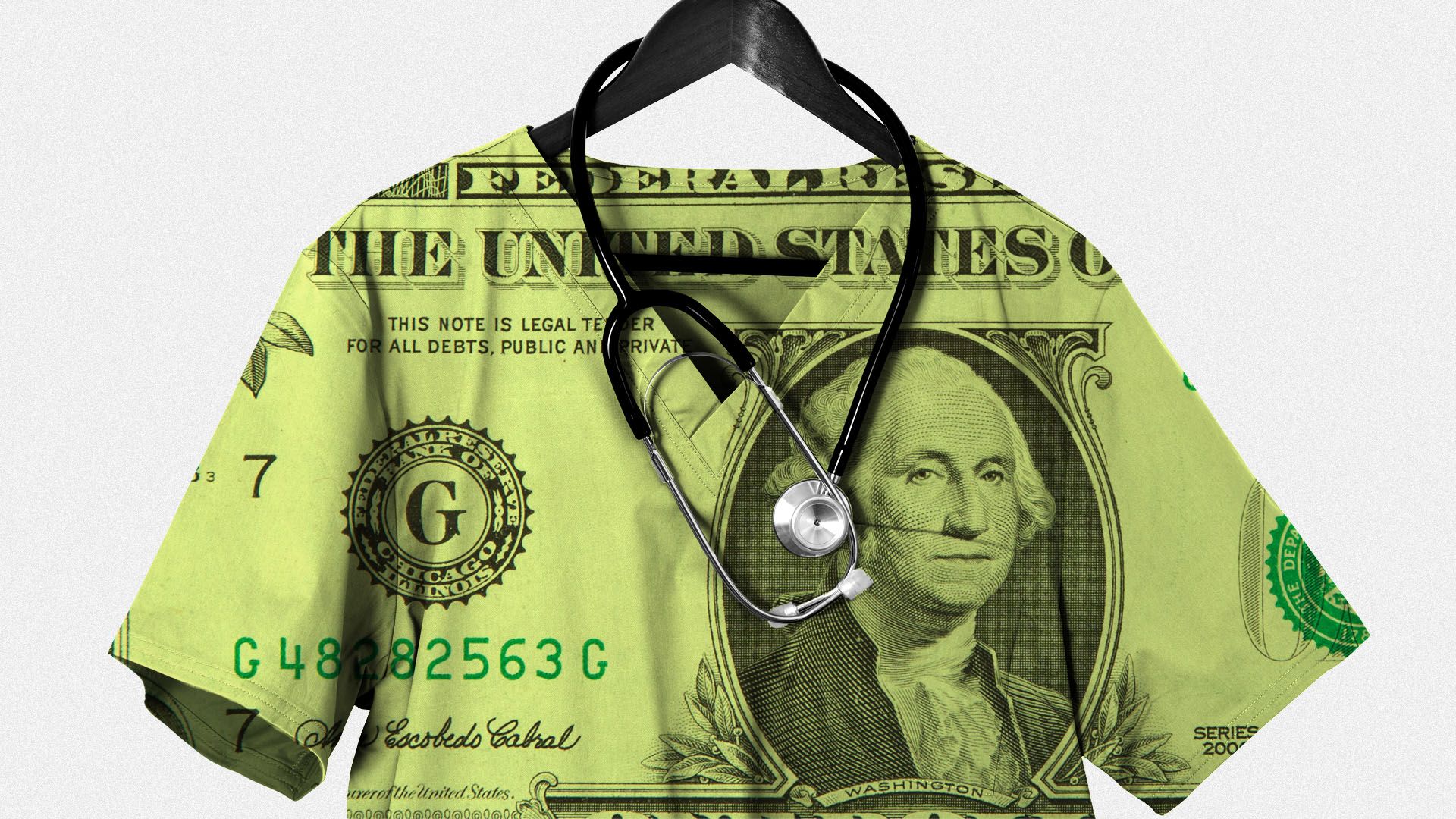
Illustration: Sarah Grillo/Axios
California has decided to play hardball with health care costs, adding steep penalties to enforce state-directed caps on per capita spending increases.
Why it matters: The move could prompt other states to follow, but also serve as a warning of the trade-offs that come with forcing providers to make do with less money.
- There's no assurance the penalties will even get off the ground: Industry opposition is thick, and the California Hospital Association has already sued to block the state's caps.
Driving the news: California recently adopted steep penalties for hospitals, physician groups and insurers that exceed previously set caps on health spending.
- Violators will pay up to 125% of the amount they spend over the limit, with the earliest fines in 2028, CalMatters reports.
- The state's annual spending growth cap started at 3.5% in 2025 and gradually drops to 3% in 2029, with seven "high-cost" hospitals facing lower targets.
The big picture: Caps are one of the ways that states are responding to ever-increasing health care costs — and the affordability issues compounded by those increases.
- California's spending growth target isn't unique. Its new enforcement mechanism could be, if implemented.
- Nine states have instituted health spending growth benchmarks since 2013, but research has shown them to have limited — if any — effect.
- "States may need to pair benchmarks with more rigorous enforcement or additional policies to meaningfully influence health care spending," one study in JAMA concluded earlier this year.
- "I think there's now more pressure on lawmakers and policymakers to do something about health care affordability, so states may start taking a tougher line, but so far it's been a little milquetoast," said Sabrina Corlette, a research professor and co-director at Georgetown's Center on Health Insurance Reforms.
Yes, but: California's approach could wind up being more heavy-handed than those other states have taken.
- "The key to making health spending caps real is an enforceable penalty, and California seems willing to pull the trigger," KFF executive vice president for health policy Larry Levitt wrote in an email.
- "The proof will come when California policymakers are able to resist political pressure and actually impose penalties on health systems that bust the caps."
The other side: Hospitals are warning that the growth caps will come with steep consequences, particularly regarding access to care.
- The way the spending target and penalties are structured risks negative consequences for "access, quality and workforce stability," said California Hospital Association vice president Victoria Valencia.
- Hospitals' total operating expenses grow, on average, 5%–6% per year in the state, she said.
Between the lines: Hospitals' financial situations vary significantly, and wealthier systems are much better situated to weather financial pressure than those with already-stretched margins.
- And some experts have long said that hospitals have a greater ability to adjust their costs than they let on.
- "One important thing to keep in mind is that hospital cost structures are not a law of nature," Levitt said.
- "Slowing hospital spending will require hospitals to adjust their costs. There is a huge range in hospital prices within most markets, suggesting some hospitals are operating much more efficiently than others."
The state hospital association argues that most of hospitals' costs are outside of their control, meaning there are limited areas where they can find efficiencies.
- "Hospitals do make do with what happens, in terms of changes on the federal level, in terms of payments, and hospitals can adapt their cost structure somewhat," Valencia said. "But at some point, it does become a danger to quality, access and workforce stability."
What we're watching: Whether other states follow suit — or whether the industry pushback scares them off.
The bottom line: "It's crystal clear we have an affordability crisis in this country," Corlette said. "You have to look at where the money is in the system, and the number one culprit here is hospital prices, and it's been that way for quite some time."
