How to fight more artfully

Add Axios as your preferred source to
see more of our stories on Google.
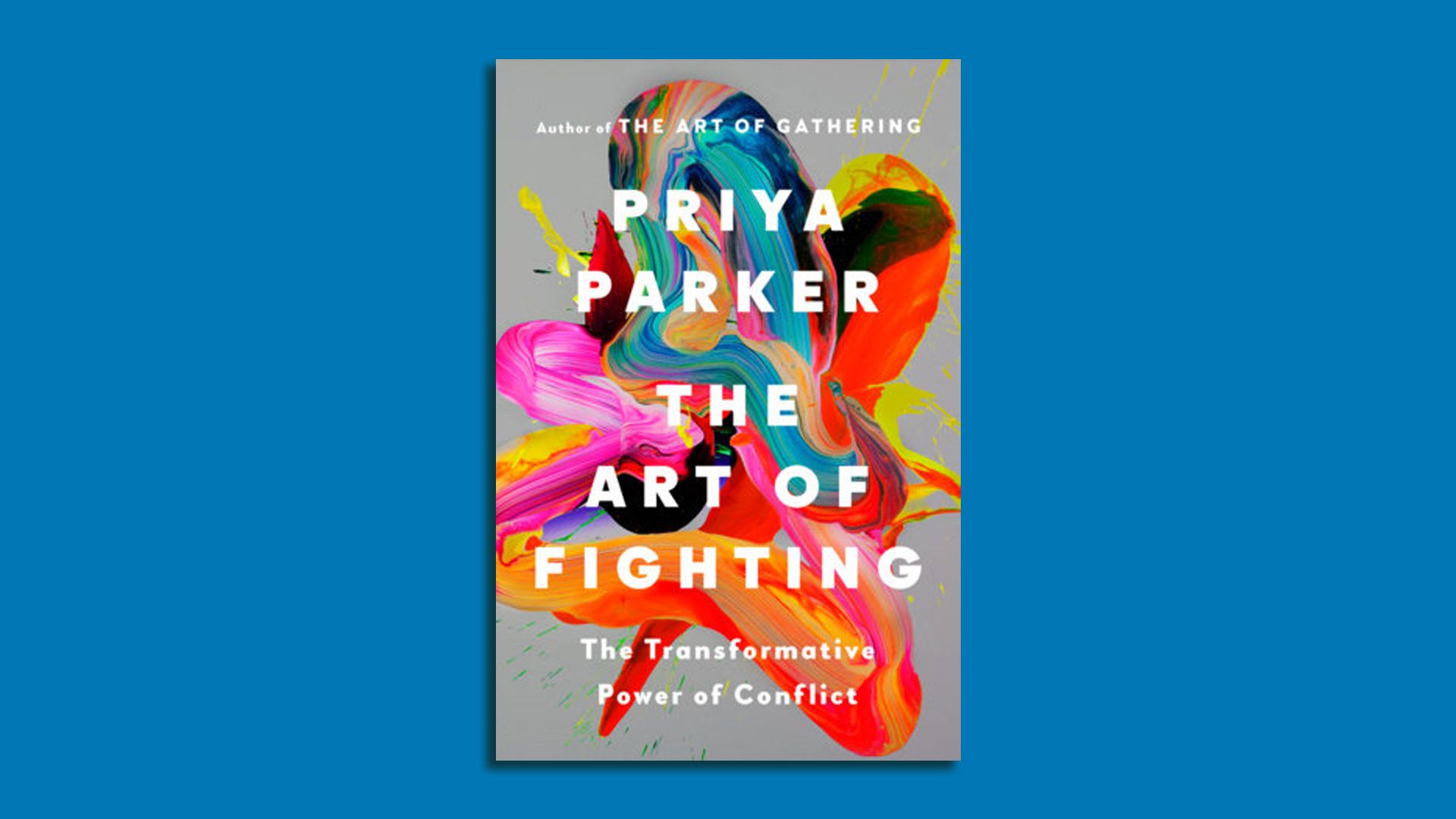
Most of us aren't taught how to fight well. We tend to bounce between avoiding conflict and "burning the house down," author and conflict-resolution facilitator Priya Parker tells Axios.
Why it matters: Avoiding every disagreement can create what Parker calls "unhealthy peace" in a group, where the real conversations never happen and people are afraid they'll be punished for saying what they think.
- Parker's new book — "The Art of Fighting," out today — is meant to help leaders, lovers, friends and family think more artfully about how they spar.
- Her last bestselling book, "The Art of Gathering," was all about bringing people together. She believes her latest guide is in service of the same goal.
Conflict isn't necessarily a sign that a relationship or group is failing. Done well, she says, fighting can help people figure out "who we are" and even build trust.
I asked Parker for advice on fighting better in a few familiar relationships:
- Marriage: "Sit side by side" when you fight, instead of facing each other.
- Close friends: Start with "I love you" and "I value our friendship." Parker says that signals the conflict is an investment in the relationship, not an exit.
- Family group chat: "Let's take this offline."
- Co-workers/peers: Start with "I love working with you, and I want to work with you for a long time."
- Boss-employee: "Practice letting the arrow pierce" — really listen, even if you feel defensive.
Zoom in: Before confronting someone, Parker recommends asking yourself whether you can "continue to engage meaningfully in this relationship without saying something."
- Also: "Will I regret not trying?"
Yes, but: Sometimes "strategic conflict avoidance" can preserve a relationship — by changing what you talk about or even how you spend time together.
Between the lines: Once in a while the healthiest move isn't to repair a group — it's to end it.
- Parker said a group may be ready for a "funeral" when it has completed what it set out to do, has "lost its mojo" and there's "no longer a there there."
