Tesla sought permit for 5,000 robotaxis in Las Vegas. It got 10.

Add Axios as your preferred source to
see more of our stories on Google.
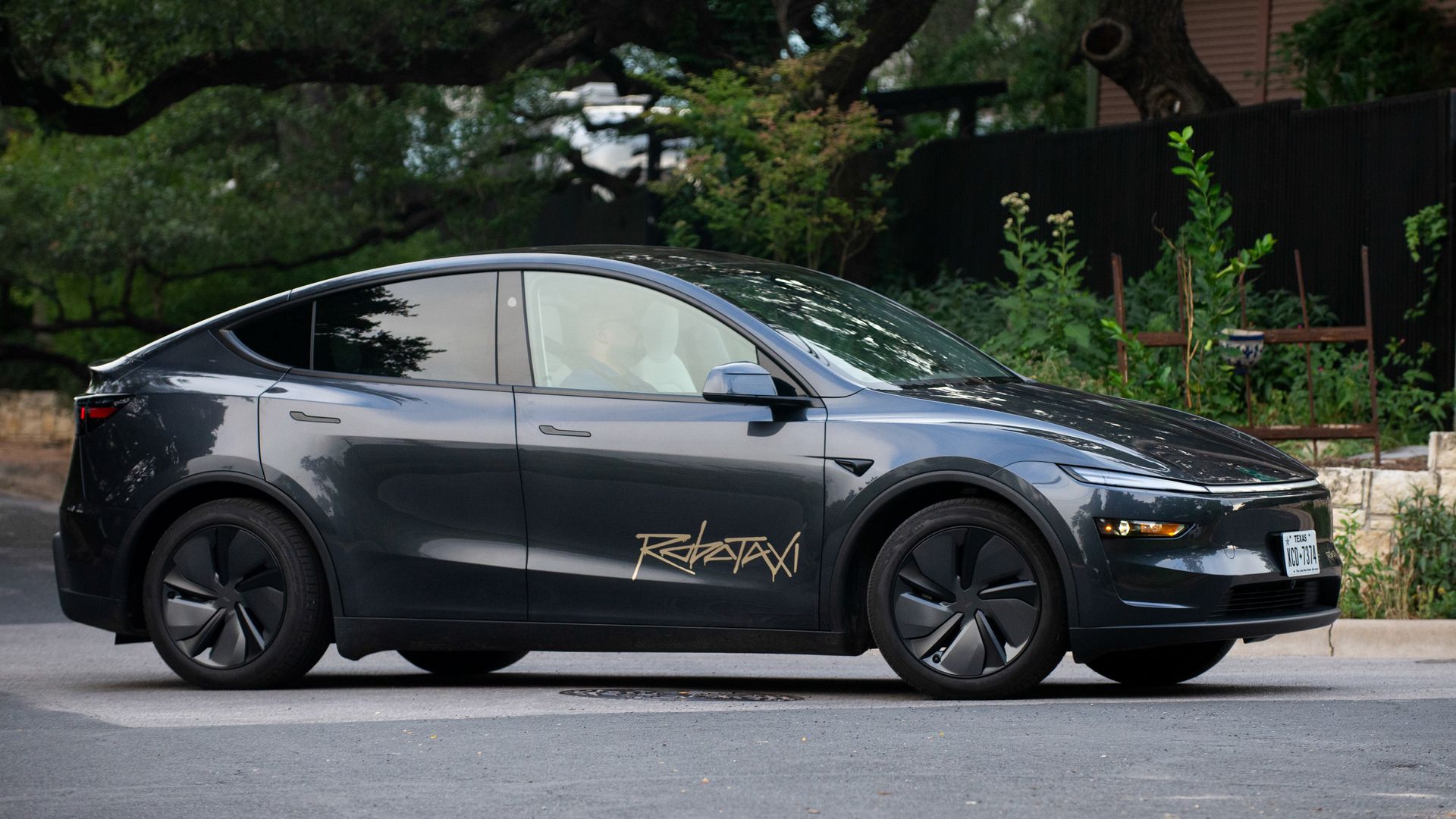
Tesla Robotaxi. Photo credit: Tim Goessman/Bloomberg via Getty Images
Tesla applied for a permit to deploy up to 5,000 robotaxis in Clark County, Nevada, but got approval from the state for just 10.
Why it matters: CEO Elon Musk has bet the company on autonomy, robots and AI, but state and federal regulators will have the final say on how quickly those ambitions are realized.
Zoom in: The Nevada Transportation Authority granted Tesla's application for a robotaxi permit, but capped the size of the fleet at just 10 vehicles and ordered other restrictions, according to the permit issued July 27.
- Robotaxis can't exceed 45 miles per hour and are confined to the Las Vegas Strip corridor.
- Tesla is specifically prohibited from picking up passengers at Harry Reid International Airport.
- Vehicles must be clearly marked "robotaxi" and passengers must be notified for each trip that transportation is being provided by a driverless taxi.
The order also requires "appropriate human supervision." It isn't clear whether that means robotaxis must have a backup safety driver in the vehicle, or refers to a team of remote monitors to provide guidance when necessary.
- Any expansion of the operating area, or size of the fleet, requires NTA approval.
What they're saying: "It tells me the rollout of robotaxis in Las Vegas is going to be a lot slower than the market is currently pricing in," says Grayson Brulte, cofounder and co-CEO of research and advisory firm AUTNMY AI.
Reality check: While 10 robotaxis is a far cry from the 5,000 Tesla sought in Vegas, it's consistent with the limited initial rollout it has had in other markets such as Austin, Dallas and Houston.
- Tesla has said it won't begin scaling its robotaxi fleet until its next-generation autonomous software, FSD v15, ships, which is expected in late 2026 or early 2027.
What we're watching: Tesla has not applied for an exemption from federal vehicle safety requirements for its purpose-built Cybercab, which has no steering wheel or pedals.
The bottom line: Tesla's robotaxi ambitions are big, but the pace of the rollout will continue to be slow.
