Major banks enabled Epstein's crimes, Democratic senator's report asserts

Add Axios as your preferred source to
see more of our stories on Google.
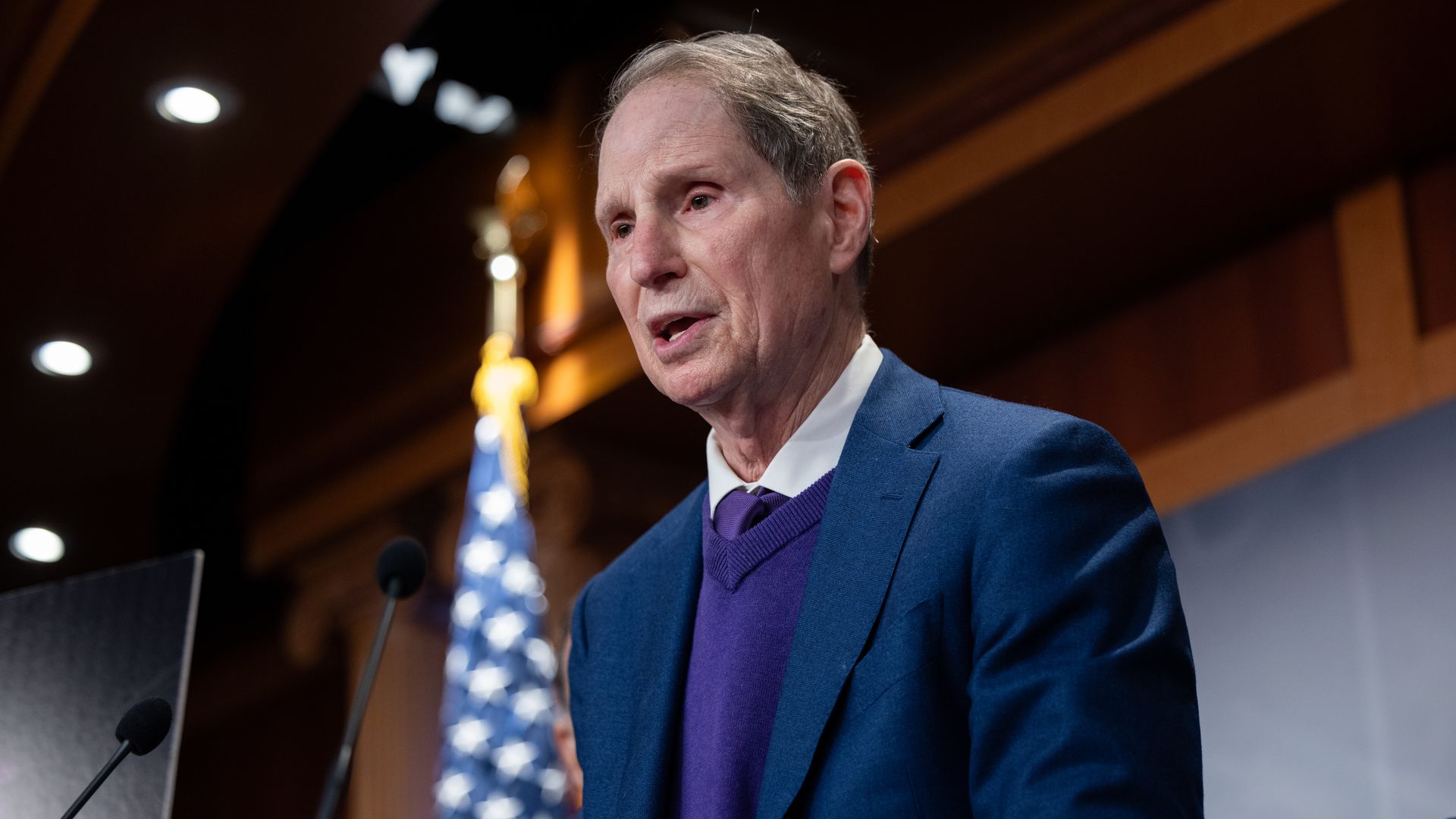
Sen. Ron Wyden (D-Ore.) speaks at a news conference with Senate Democrats about the Epstein files on Dec. 16, 2025, in Washington. Photo: Nathan Posner/Anadolu via Getty Images
Deutsche Bank, JPMorgan and Bank of America allegedly helped enable convicted sex offender Jeffrey Epstein by delaying the screening and reporting of his financial transactions, according to a Senate Finance Committee report published Tuesday.
The big picture: The report raises questions about how the three banks failed to stop Epstein from moving hundreds of millions of dollars while he was under investigation for sex trafficking.
- Sen. Ron Wyden (D-Ore.), the committee's ranking member, and a team of investigators conducted a multiyear probe into transactions that the report says financed Epstein's crimes.
Zoom in: According to Wyden's report, all three banks waited until 2019 — after Epstein was arrested on sex trafficking charges — to "retroactively" flag "thousands of questionable transactions" that moved "more than $1.4 billion in and out of his accounts over the course of nearly two decades."
- That included Deutsche Bank later flagging $250 million in suspicious wire transfers, including payments to women in Russia and elsewhere in Eastern Europe.
- The investigation also alleges that BofA didn't screen and report $170 million in payments from former Apollo Global Management CEO Leon Black to Epstein until 2020.
- "Black was Epstein's single largest source of funding," the report said. Wyden's staff calculated that 90% of Epstein's income over a five-year period came from Black.
- Susan Estrich, an attorney for Leon Black, said in a statement: "Senator Wyden's assertions are outrageous and false," calling the report's findings "completely baseless."
Wyden's report also claims JPMorgan Chase "likely violated" federal anti-money laundering law by underreporting Epstein's activity.
- The report accuses JPMorgan Chase executives of coaching "Epstein on how to withdraw cash through shell companies instead of his personal accounts" and helping "conceal information."
What they're saying: "This report shows exactly how Wall Street protected Epstein and enabled his sex trafficking for decades," Wyden posted on X.
- The X account for Democrats on the Senate Finance Committee wrote: "The American people deserve to know who funded Jeffrey Epstein's sex trafficking crimes."
- A BofA spokesperson said in a statement: "We take our legal and regulatory obligations seriously and, as we have previously said, the bank did not facilitate wrongdoing."
- In a statement, Deutsche Bank said it regrets its past with Epstein and that it has "been transparent in addressing deficiencies and investing in strengthening our control environment in parallel."
- A JPMorgan Chase spokesperson told Axios in a statement: "We strongly disagree with the report's conclusions, which are based on many false claims contradicted by easily-found public information." The spokesperson added that it "began flagging suspicious transactions for the government as early as 2002" and "acted appropriately on what we knew, when we knew it, as the law requires."
Zoom out: One day after Wyden released the report, New Mexico sued acting Attorney General Todd Blanche and the Justice Department, seeking files related to Epstein.
- The lawsuit claims the DOJ unlawfully withheld records that could identify witnesses, victims and additional illegal conduct.
- The state is conducting its own investigation into Epstein, following allegations that he trafficked and sexually abused girls and women at a property he owned outside Santa Fe.
Go deeper: 7 flashpoints revive Epstein scrutiny
Editor's note: This story has been updated with a statement from JPMorgan Chase.
