Scoop: Progressives scorch Gillibrand over crypto

Add Axios as your preferred source to
see more of our stories on Google.
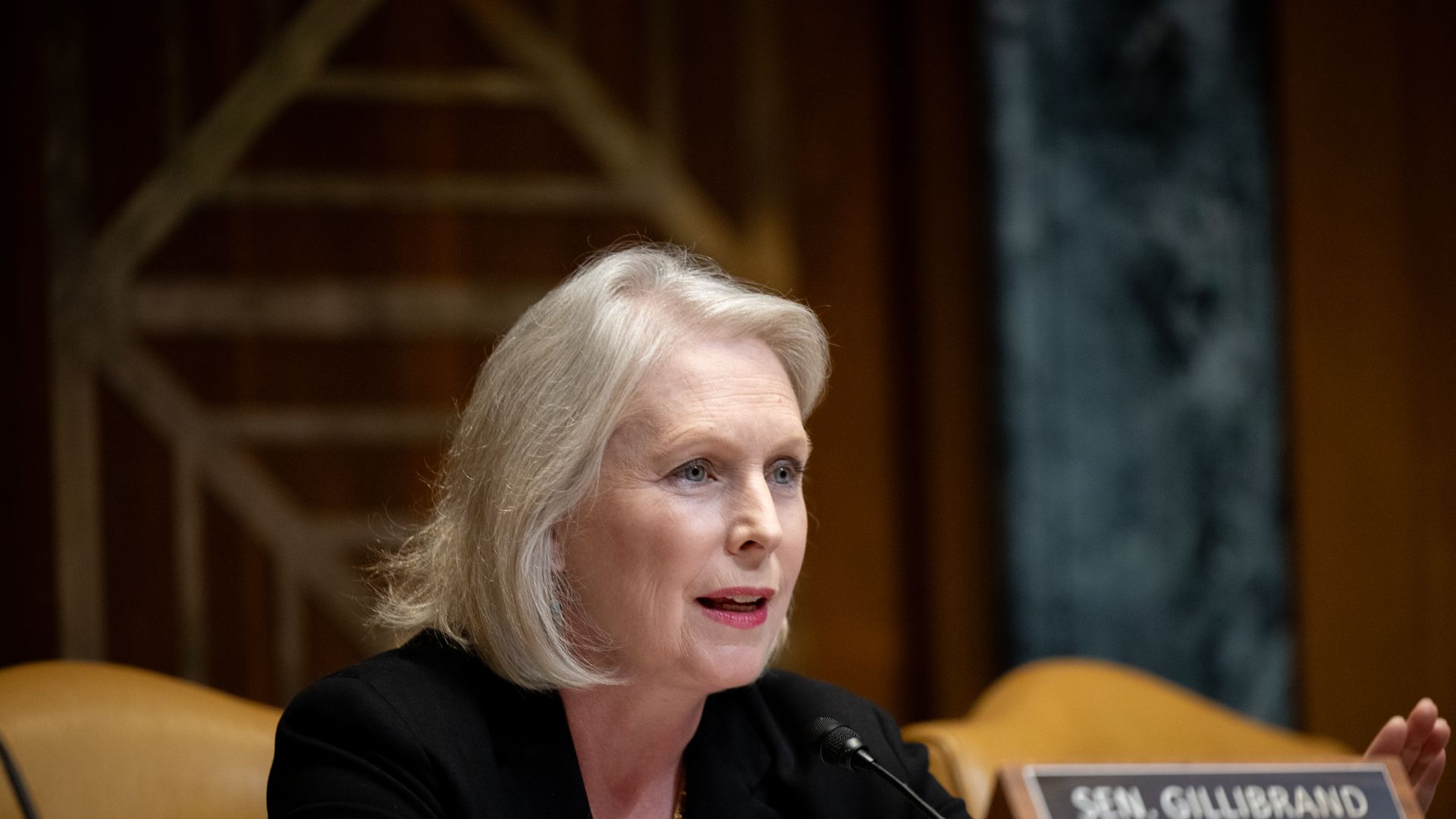
Sen. Kirsten Gillibrand during a Capitol Hill hearing on May 19. Photo: Nathan Posner/Anadolu via Getty Images
Progressive groups are opening a vicious new front in the fight over crypto legislation, targeting Sen Kirsten Gillibrand as she tries to broker a compromise on the CLARITY Act, which has unresolved issues on its ethics provisions.
Why it matters: The blistering — and deeply personal — attack from Indivisible, Demand Progress and the Revolving Door Project complicates already delicate negotiations.
- It's also a warning shot to Democrats: Progressive groups are prepared to make support for the bill politically painful, even if it means another bruising intraparty fight over one of the crypto industry's top legislative priorities.
- "Senator Kirsten Gillibrand, chair of the Democratic Senatorial Campaign Committee (DSCC), is a prime example of a Democratic leader whose conduct undermines efforts to hold the Trump administration accountable for their rampant corruption," the groups wrote in a letter sent to every Democratic Senate office Tuesday evening.
- "Fair or not, criticisms of the Trump administration's overwhelming corruption fall flat when voters perceive the critics to be engaged in substantively similar behavior."
The groups argue that Gillibrand's son's involvement in an equity trading platform leaves Democrats vulnerable to the very charge they are trying to level against President Trump.
- Trump's crypto ventures have generated an estimated $600 million windfall, testing long-standing norms around presidents profiting from businesses affected by government decisions.
The other side: Gillibrand has called for Congress to prevent all elected officials, and their spouses, from issuing or sponsoring their own digital assets.
- "This is a commonsense requirement that should get broad bipartisan support — public officials and their spouses should not be issuing memecoins," she said in a June statement.
State of play: Finding 60 votes for the CLARITY Act this summer is a high-wire act, but passing the bill remains a top priority for Senate Republicans, the White House and the crypto industry.
- Sens. Bernie Moreno (R-Ohio) and Cynthia Lummis (R-Wyo.) are working with the White House on compromise language for the ethics provisions. They appear to be making progress, though the details of the compromise haven't been released.
- In addition to the talks with the White House, bipartisan talks are underway, with Sen. Thom Tillis (R-N.C.) leading Republicans in negotiating the ethics language.
The intrigue: Looming over the negotiations is the crypto industry's political war chest. Fairshake, its flagship super PAC, has some $125 million on hand.
- The industry's political muscle gives both parties another incentive to reach a deal — and another reason for progressives to dig in.
- Republicans are eager to put that money to work to help defend their Senate majority, but — as with the legislative negotiations — the clock is ticking for those dollars to have maximum impact in the midterm elections.
What we're hearing: Both parties view the ethics language as the biggest remaining obstacle to securing the 60 votes needed to pass the CLARITY Act.
- The bill cleared the Senate Banking Committee in May with support from two Democrats, Sens. Ruben Gallego (Ariz.) and Angela Alsobrooks (Md.), underscoring the bill's bipartisan potential and the difficult coalition it will take to reach the Senate floor.
Zoom out: Crypto regulation continues to divide Democrats on both policy and politics.
- Last year's passage of the GENIUS Act — which established the first federal regulatory framework for dollar-backed stablecoins — sparked tense internal Democratic debates over both the merits of the legislation and Trump's financial ties to the crypto industry.
- In the end, 18 Senate Democrats voted for the bill.
Editor's note: This story has been updated to clarify that Gillibrand's son is involved with an equity trading platform (and not directly with the crypto industry).
