Judge sanctions Trump's lawyers for IRS settlement, anti-weaponization fund


Add Axios as your preferred source to
see more of our stories on Google.
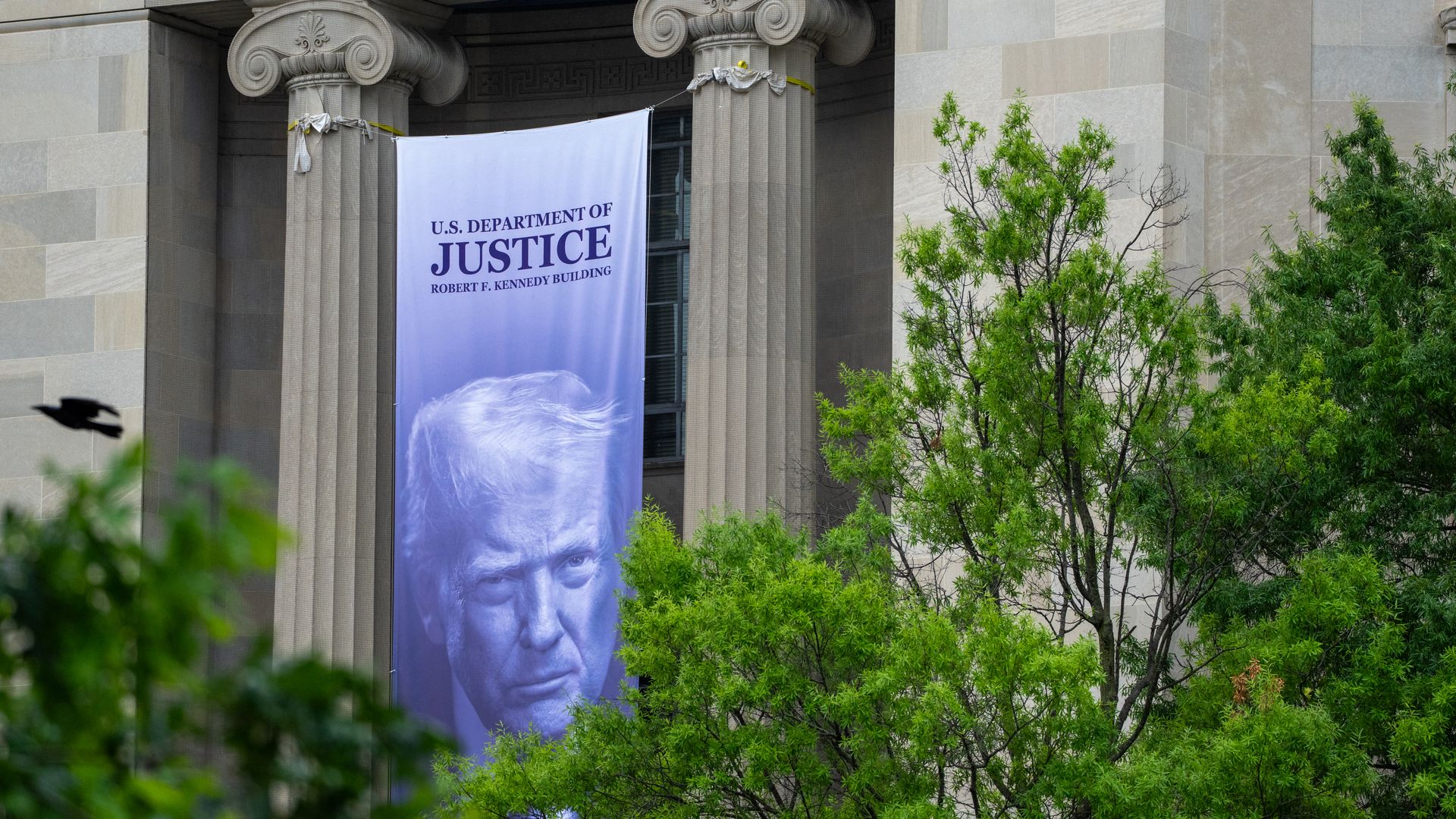
A banner featuring President Trump hangs on the outside of the Department of Justice headquarters. Photo: Ken Cedeno/AFP via Getty Images
A federal judge lambasted and penalized the attorneys behind President Trump's settlement with the IRS, saying in an explosive Monday order that the case was a means to an end: judicial cover for a deal granting Trump audit immunity and creating his controversial anti-weaponization fund.
The big picture: The $1.776 billion pot of money, born from the Trump settlement, created an avalanche of bipartisan concern and legal scrutiny.
What she's saying: U.S. District Judge Kathleen Williams sanctioned the lawyers, deeming the lawsuit to have been "improperly employed" to justify the settlement fund.
- The "action was never about a party seeking judicial resolution of a legal issue or a factual dispute," she wrote in her scathing order.
- The suit, she continued, was "an attempt to use the Court to provide some legitimacy to an agreement to confer immunity to people and entities affiliated with the President and to earmark billions of dollars from American taxpayers to redress grievances not defined in the law."
- She referred one lawyer to the Florida Bar and sent her order to the New York and D.C. bars where acting Attorney General Todd Blanche and Associate Attorney General Stanley Woodward Jr. are members, respectively.
Catch up quick: Trump, his two eldest sons and the Trump Organization sued the IRS and Treasury in January over the 2019 leak of his tax returns by an IRS contractor.
- He dropped the suit in May. The DOJ then announced the nearly $1.8 billion fund, a formal apology and a bar on the IRS auditing him.
- In late May, Williams ordered the plaintiffs to respond to "grievous" accusations from 35 former federal judges who said the deal was premised on deception.
The other side: "The IRS wrongly allowed a rogue, politically-motivated employee to leak private and confidential information about President Trump, his family, and the Trump Organization to the New York Times, ProPublica and other left-wing news outlets, which was then illegally released to millions of people," a spokesperson for President Trump's legal team said in a statement.
- The White House referred requests for comment to Trump's personal lawyers. The Trump Organization did not immediately return a request for comment.
Between the lines: Trump's lawyers argued Williams couldn't act at all because dropping the suit stripped her of jurisdiction.
- She rejected that, ruling a court keeps power over "collateral" issues like sanctions even after a case ends. Otherwise, she said, a party could "abuse the judicial system" and "get off scot free" by pulling the plug.
The sanctions: In addition to sending her order to three bar associations, she blocked attorney Daniel Epstein from practicing in the Southern District of Florida for a year and barred Trump and the government from calling the deal to end the lawsuit a "settlement."
- She imposed non-monetary sanctions and also found monetary sanctions warranted, though she did not name an amount.
- The outside groups and former judges who challenged the deal have two weeks to ask that Trump and his lawyers cover their attorneys' fees.
State of play: The administration abandoned the fund in June under bipartisan pressure, but the audit-immunity provision remains in place.
The bottom line: Williams evoked former President John Adams' warning that "Facts are stubborn things" in her conclusion.
- "Thus, whatever may be the Parties' wishes, inclinations, or the dictates of their passion, they cannot alter the state of the facts or evade the rule of law," she wrote.
Editor's note: This story has been updated throughout with additional context and information.
