Meta's AI catch-up effort gets a new look

Add Axios as your preferred source to
see more of our stories on Google.
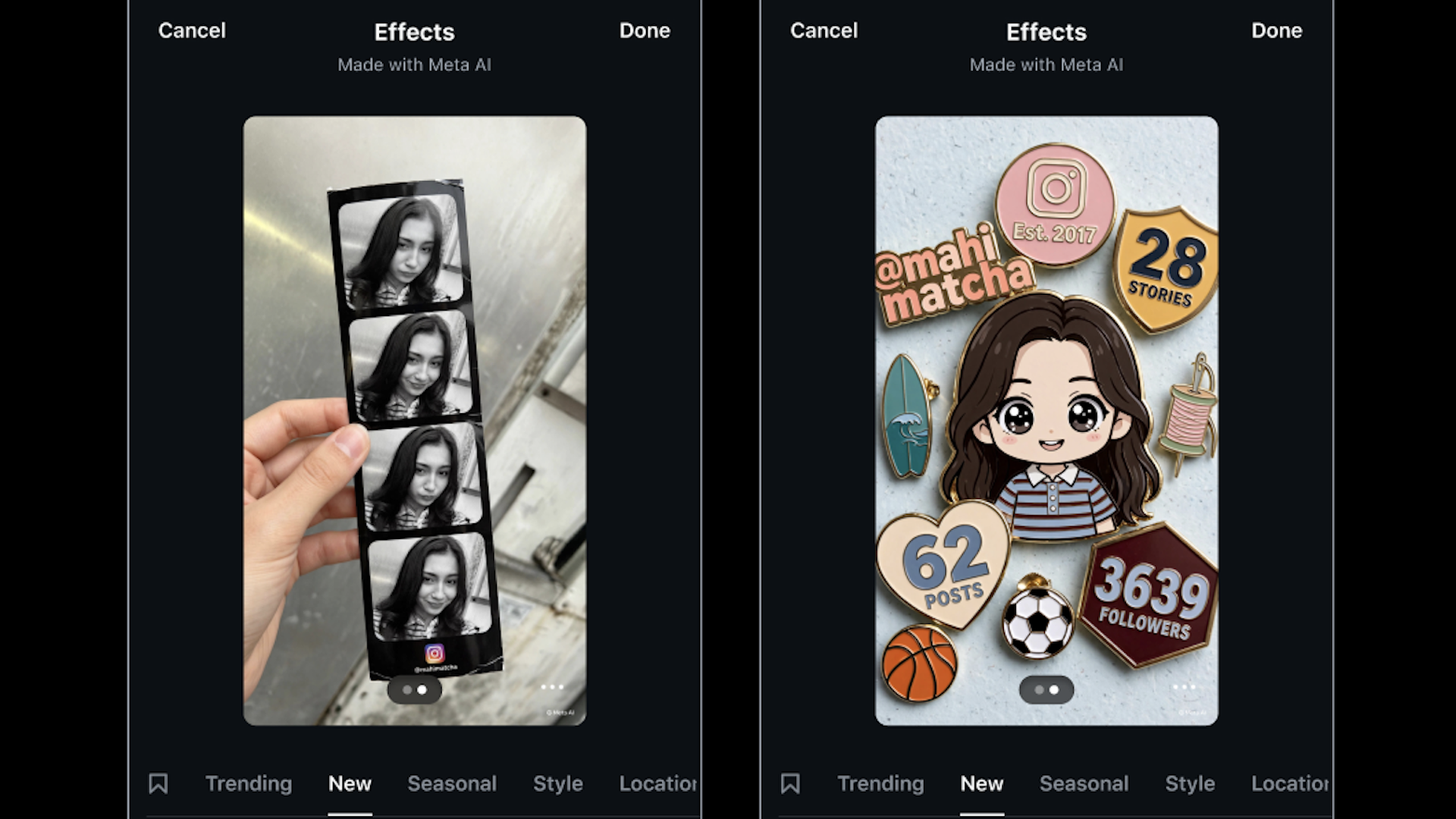
Meta says its Muse Image model is being used to power more than 30 new Instagram filters. Image: Meta
Facebook's parent company on Tuesday announced Muse Image, its first picture-generating model developed within the Alexandr Wang-led Meta Superintelligence Lab.
Why it matters: The model is the latest test of Meta's effort to close the gap with cutting-edge AI rivals, even as those companies continue to push forward.
Driving the news: Muse Image will take over image generation duties for Meta AI and some experiences within WhatsApp and Instagram, where it will power more than 30 new AI effects.
- The company says that it will soon be available on Facebook and Messenger and that advertisers will also soon be able to tap Muse Image as part of Meta's Advantage+ tool.
- Meta says Muse Image is free for "everyday creation," with more usage available as part of the company's recently added subscription option.
- Meta also previewed Muse Video, a movie-generating model coming soon to Meta AI.
Zoom in: Meta is leaning heavily into the social possibilities of image generation.
- With the new Muse Image-powered Meta AI, users can tag public Instagram accounts and incorporate photos from those profiles into generated images.
- Instagram users can opt out of being tagged or having their images used, but the feature is enabled by default.
Zoom out: Meta says Muse Image performs strongly across several benchmarks, generally surpassing Google's Nano Banana 2 and trailing only ChatGPT's image generator.
Yes, but: Meta is still evaluating whether it will make Muse Image available to outside developers.
- Developers, meanwhile, still don't have access to Muse Spark, the language model Meta introduced in April. The company says that API access to Spark is coming soon.
- Meta also plans to release an open model based on Spark, but has yet to do so.
- The company says it is on track to release a significantly more powerful model than Spark that uses vastly more compute power.
Between the lines: The image-model release comes amid reports of frustration inside Meta over both the pace of its AI progress and the methods it has used to accelerate development.
- Meta reassigned thousands of engineers to data labeling and other AI-related work, hurting morale in a move that executives have since acknowledged was poorly handled.
- The company also began using employees' work activity to collect AI training data, but paused the program after a privacy failure left potentially sensitive information broadly accessible inside Meta.
What we're watching: Whether Meta can deliver a significant leap beyond Muse Spark later this year.
- More broadly, whether the company can turn its vast distribution and computing resources into sustained gains against OpenAI, Google, Anthropic and other leading AI developers.
