Exclusive: FDA allows ZYN to sell pouches on health benefits

Add Axios as your preferred source to
see more of our stories on Google.
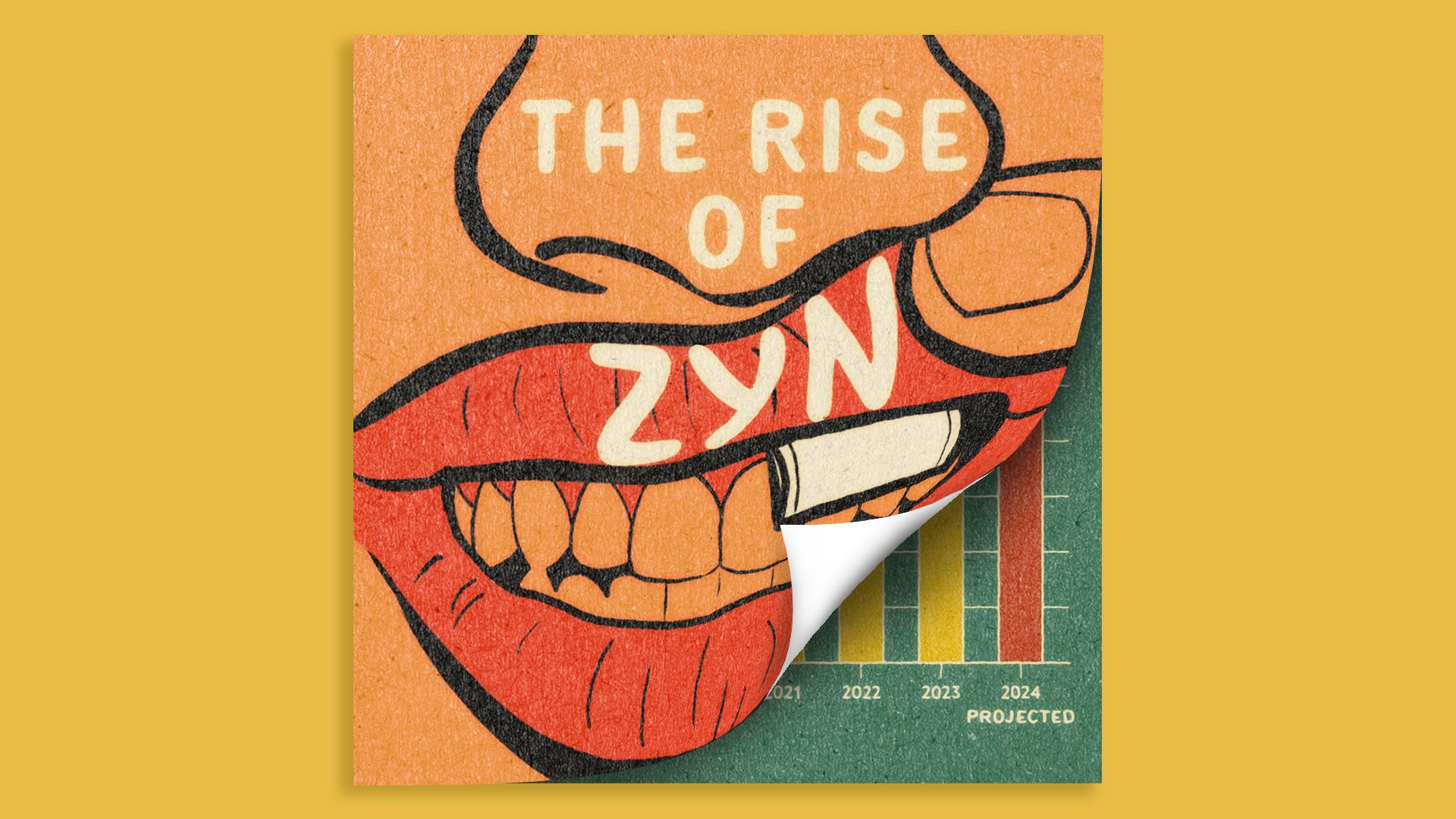
Illustration: Lindsey Bailey/Axios
The Food and Drug Administration will announce today that it will allow Zyn nicotine pouches to be marketed as less harmful to human health than cigarettes.
Why it matters: Though scientists generally agree that the language is accurate and the pouches — which contain nicotine but not tobacco — are a safer option for smokers, critics worry about the appeal to young people.
Driving the news: The FDA will allow 20 Zyn products to be marketed with the claim that "using ZYN instead of cigarettes puts you at a lower risk of mouth cancer, heart disease, lung cancer, stroke, emphysema, and chronic bronchitis."
- That's a win for Philip Morris International, the parent company of Zyn manufacturer Swedish Match, which has previously argued that adult smokers need accurate information about the relative risks of different products.
- FDA scientists said the ""the totality of the evidence" supports the marketing claim during a public meeting in January, the AP reported.
What they're saying: "FDA's review of modified risk products is intended to ensure that adult users have clear, science-based information about the relative harms of tobacco products, so they can make informed choices," Bret Koplow, acting director of the FDA's Center for Tobacco
Products, said in a statement.
- "Today's decision allows these products to be marketed with a modified risk claim that informs adults who smoke about the lower risks associated with these products."
The big picture: Zyn pouches have become enormously popular within President Trump's orbit and the MAGA movement, and users include Health Secretary Robert F. Kennedy Jr., the WSJ has reported.
- Scientists remain concerned about their cardiovascular effects, and critics have argued most users of the pouches aren't former smokers.
The bottom line: The decision signals that the FDA views the products as having real harm-reduction value, despite critics' concerns.
