Trumponomics 2.0 throws out old globalization playbook

Add Axios as your preferred source to
see more of our stories on Google.
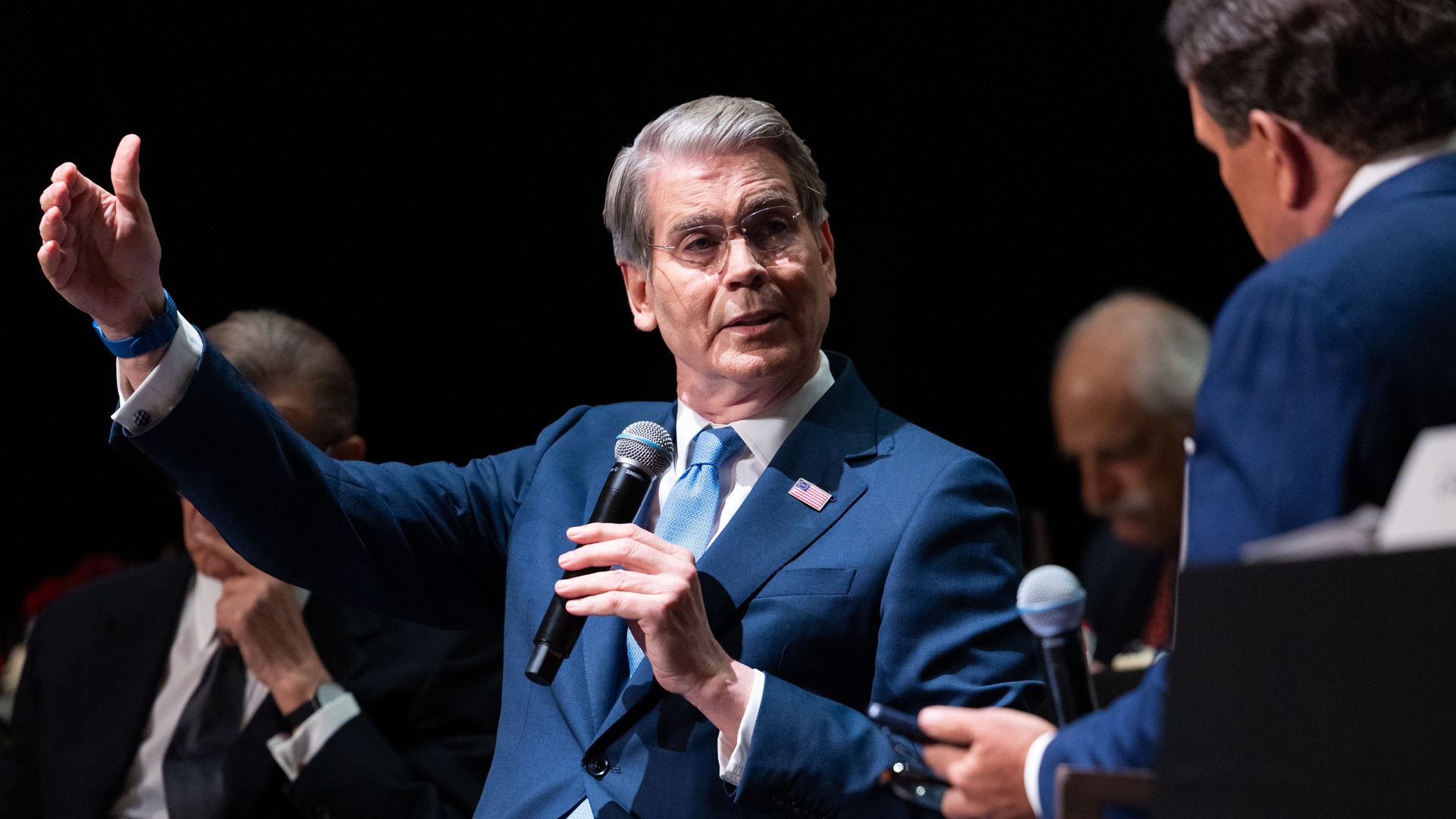
Treasury Secretary Scott Bessent at the Economic Club of New York. Photo: Krisanne Johnson/Bloomberg via Getty Images.
In a speech in New York on Tuesday night, Treasury Secretary Scott Bessent said that a long-running bet on cheaper goods and deeper economic integration making America richer and safer had failed.
Why it matters: The speech set a framework for President Trump's economic policies since his second term, including tariffs and calls for reshoring.
- But it also suggests that those policies may be part of a broader rethinking of globalization that extends well beyond one administration.
- If that's right, investors betting on a return to the old globalization playbook may be waiting a long time.
What they're saying: "The nation that depends on its adversaries for critical inputs is not truly sovereign. And the nation that reduces its economics to consumption is not truly prosperous," Bessent told the Economic Club of New York.
- Policymakers incorrectly assumed that "low prices would compensate for lost capacity," he added.
The big picture: Bessent argued that America got cheaper goods and more efficient supply chains, but became too dependent on foreign countries in the process.
- He said the answer is an economic strategy that puts greater weight on domestic production, supply chain resilience and national security.
The intrigue: The underlying concern is strikingly similar to one that emerged under former President Biden, a sign of bipartisan skepticism about the more globalist view that defined pre-pandemic times.
- Then-national security adviser Jake Sullivan said in 2023 that policymakers wrongly assumed "markets always allocate capital productively and efficiently" and that supply chains were resilient.
- Bessent echoed that belief Tuesday, arguing that the U.S. assumed "supply chains would function in every crisis." He called for diversification away from "dangerous concentrations" so America is never "at the mercy of a foreign chokepoint abroad."
Yes, but: Trumponomics puts more explicit emphasis on international reciprocity — a theme in step with the wide-ranging tariffs to address what Trump perceives as unfairness toward America.
- U.S. economic "partnership now carries expectations," Bessent said.
- "The United States possesses many tools at its disposal to remedy practices that distort trade and undermine reciprocity. We will always seek to use those tools judiciously — but we will never hesitate to use them decisively."
Of note: On Wednesday morning on CNBC, Bessent praised Federal Reserve chairman Kevin Warsh's efforts to get rid of forward guidance.
- He said that Trump "has said both in public and privately that he has every confidence in Kevin Warsh."
