Fox's Roku deal raises concerns over distribution bias

Add Axios as your preferred source to
see more of our stories on Google.
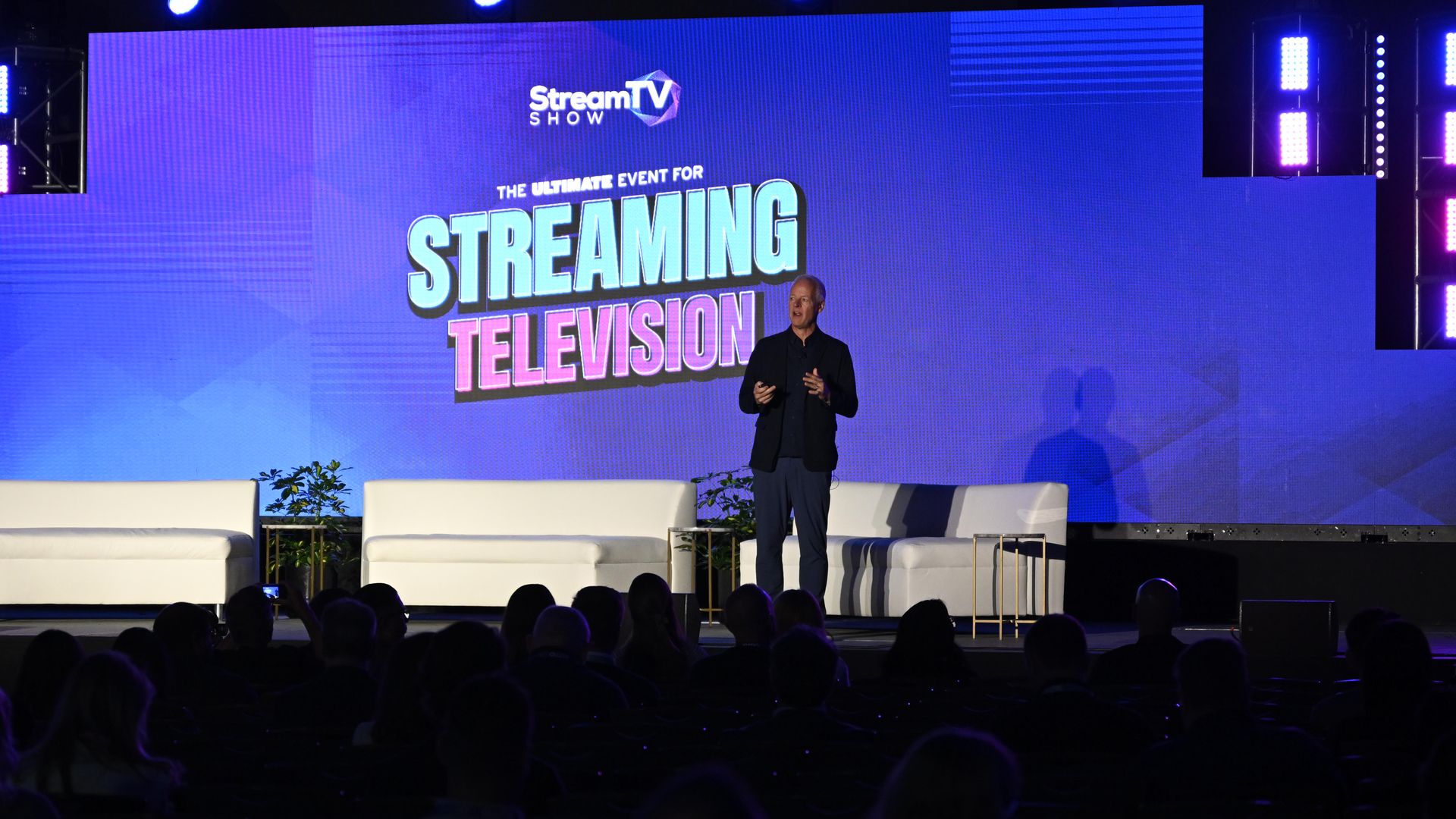
Wurl CEO Dave Bernath. Photo: Courtesy of StreamTV Show
Fox's Roku deal has sparked unease throughout the streaming industry over whether the media company could favor its own programming on a key TV gateway.
Why it matters: The concern is that the new ownership could introduce bias into distribution at the exact moment streaming platforms are becoming the primary form of TV consumption.
Driving the news: When asked at StreamTV Show what makes their connected TV interface distinct, some companies are pitching neutrality.
- "We do not have our own service or our own content, nor do we bundle or aggregate other people's content and then redistribute that to the user," Rob Caruso, senior vice president of consumer products for Ventura at The Trade Desk, said onstage on Wednesday.
- "For us, that creates an interface that's truly unbiased and objective," he added.
The big picture: For years, streaming companies have competed for subscribers and the biggest shows.
- Now, the battle centers on the interface where viewing decisions are made, recommendations are surfaced and advertising dollars flow.
- "Combining Fox and Roku really creates this next-generation media technology company," Tubi chief content officer Adam Lewinson said during a keynote, pointing to the "power of live" and streaming.
Case in point: Wurl CEO Dave Bernath described thumb-on-the-scale moments for streamers during his keynote.
- When a client's channel saw a sudden spike in activity, Bernath said a streaming executive attributed it to a platform that "just decided editorially to put us on the homepage."
- He added that the executive relayed a comment from a high-level platform executive: "We can make or break a channel."
Reality check: Roku has a financial incentive to remain a good partner to third-party streamers since it takes a cut of subscription and advertising revenue generated through its platform.
- When asked on Monday's investor call about how the deal will affect these relationships, Fox Corp. CEO Lachlan Murdoch said Roku will "remain an open and partner-friendly business."
- The business has "tremendous partners who really rely on Roku for a lot of their distribution, and we don't see that changing at all," Murdoch said.
- Roku isn't alone. Apple, Google and Amazon all operate both streaming services and distribution platforms. Smart TV makers like Samsung and Vizio also offer their own free live TV channels.
State of play: Speaking to Axios onstage, Roku's head of sports Joe Franzetta said, "Roku is the doorway, gateway, front door to a lot of users' experience."
- Asked about the impact of the Fox deal, Franzetta said, "Until the transaction closes, it's very much business as usual."
- "Business as usual for us is helping viewers find content to watch, helping advertise reach them, helping distribution partners get their content in front of people who want to see it," he added. "As we go forward, it all remains to be seen, but we're excited about it."
Zoom in: Starz offers its streaming service through Roku's channel store and expects "our relationship, our partnership to continue," Alison Hoffman, president of Starz Networks, told Axios on a separate panel.
- Starz "continues to talk to everybody in the industry about partnership," she said, and earlier noted plans to announce new bundles and partnerships later this summer.
Yes, but: Strong programming can cut through regardless of distribution.
- "The [Power Universe] occupies such a strong part of the zeitgeist of social media," Kathryn Busby, president of original programming at Starz, told Axios onstage. "There's a love and a passion for our franchises that is greater than just the viewership."
Go deeper: Streaming wars enter a new era
Editor's note: This story was updated to include comments from Fox's investor call.
