Iranian foreign minister says deal with U.S. "never been closer"

Add Axios as your preferred source to
see more of our stories on Google.
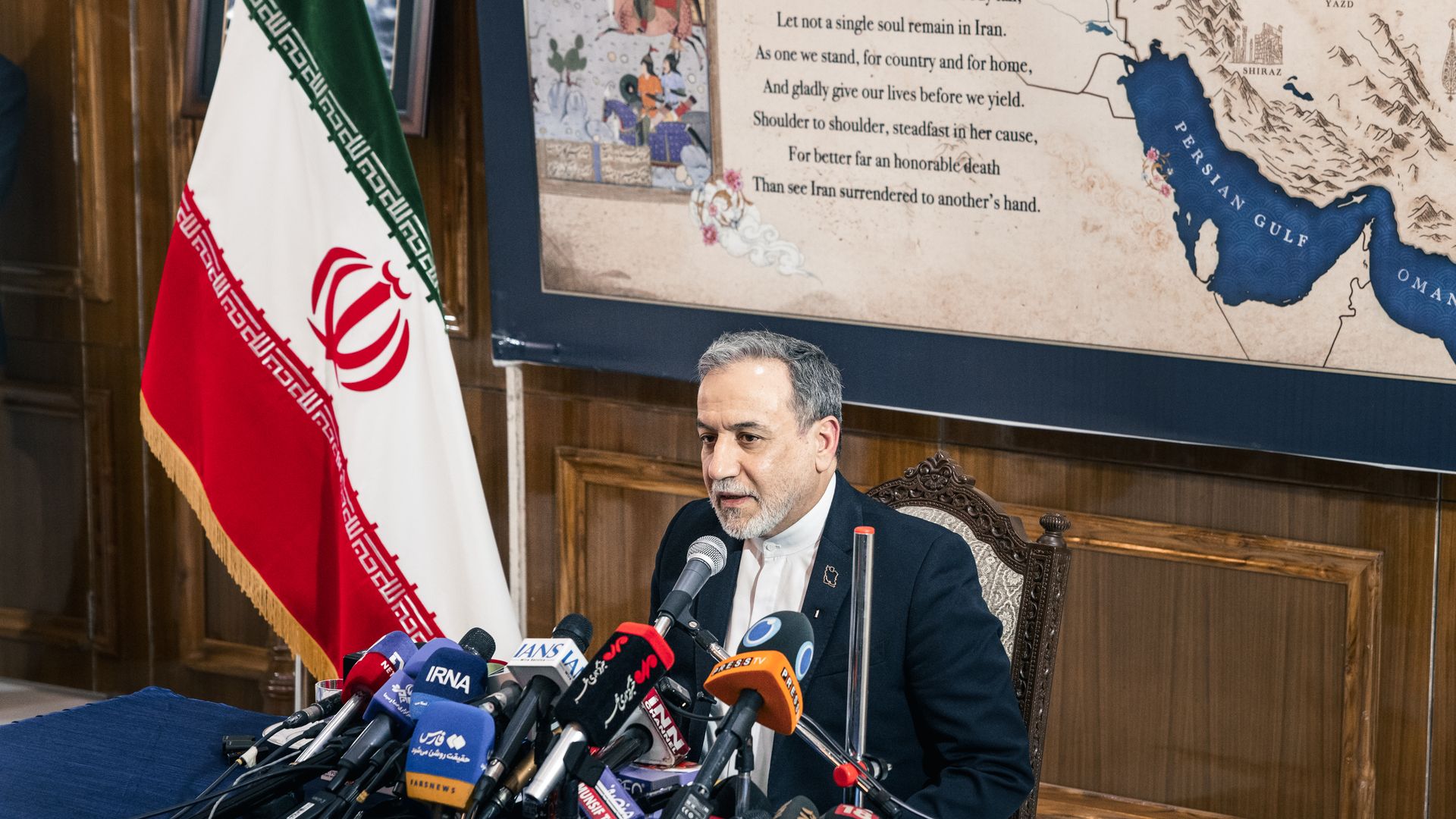
Iran's Foreign Minister Abbas Araghchi holds a press conference in May. Photo: Elke Scholiers/Getty Images
Iranian Foreign Minister Abbas Araghchi said Friday that an agreement with the U.S. to extend the ceasefire, reopen the Strait of Hormuz and launch negotiations on Iran's nuclear program "has never been closer."
Why it matters: Araghchi's comments on X were the most positive yet from Tehran about the prospects for a deal in the coming days, and appeared designed to prevent the deal from collapsing amid a battle to shape the narrative around it.
- Pakistani prime minister Shehbaz Sharif, one of the key mediators between the U.S. and Iran, wrote on X that "an agreed upon text of the peace deal has been reached" and Pakistan was working with the parties on next steps.
- A senior U.S. official told reporters in a briefing on Friday that "we're not quite at the finish line yet, but we are very close." The official added: "We do expect to be signing this agreement over the next few days...I maybe would have said 75% this morning. It's probably more like 80- 85% now, but it's not 100%."
- Aragchi later told state TV that if a deal is agreed, it will be signed remotely rather than in a joint ceremony.
Driving the news: President Trump, who lashed out earlier on Friday over reports in Iranian state media about the contents of the deal, told Axios in a short call that he considered Araghchi's post "very positive."
- Trump said he'd demanded a public clarification over the state media reports, which claimed Iran stood to receive billions of dollars in frozen assets immediately after signing the agreement.
- Trump also claimed Iran had privately "apologized for putting out false information." It's unclear how any such message was conveyed.
- The president said he still thinks a deal could be signed over the weekend or on Monday.
What they're saying: "The Islamabad Memorandum of Understanding has never been closer. Pending its finalization, the media should refrain from entering speculation about its content. In line with our responsible and transparent approach, all details will be shared with the public in due course," Araghchi wrote.
- That came after Trump posted on Truth Social that "the terms that Iran leaked out... have NOTHING to do with the terms that were agreed to, in writing."
- "Very dishonorable people to deal with. With them, there is no such thing as dealing in good faith," Trump wrote, adding: "They better get their act together, and FAST!"
- Sharif wrote that actors "who want to sabotage the peace deal" were conducting a misinformation campaign, but "peace has never been this close as it is now."
- Araghchi later said on state TV that Iran had won the war and would emerge stronger from it. He said the deal had not been signed and changes were possible, but made the case that the MOU was a good deal for Iran.
Between the lines: Iran's foreign ministry spokesperson said Friday afternoon that Iran's decision-making bodies were still holding consultations, but most issues had been agreed with the U.S. and internal deliberations were in their final stages.
- The senior U.S. official told reporters that the within Iran's "very complicated" system, most people in authority wanted to sign the deal but some officials had been complaining internally that it was not strong enough.
- "We do also see broad consensus in the IRGC, among the hardliners, among the civilian leadership, that this is a good and acceptable deal," the U.S. official contended.
- The U.S. official said the White House had heard from Iranian civilian and military officials that Supreme Leader Mojtaba Khamenei was "comfortable with where we are." Two sources told Axios that as of Thursday evening, the deal had been approved on the Iranian side at high levels but likely not by Khamenei.
Zoom in: The Iranian media reports led to criticism of Trump from hawks and mocking from Democrats who claimed the agreement was, at best, a reheating of the 2015 deal signed by then-President Obama.
- While both sides now say an agreement is close, the efforts to shape the narrative around it could get in the way of actually signing it
- The biggest discrepancy between the Iranian and U.S. claims around the deal is over what happens to Iran's billions of dollars in frozen funds.
- Iran claims money will be unfrozen immediately, the U.S. says that will only happen in return for nuclear concessions.
- Vice President Vance insisted the "economic benefits" would only flow if "Iran meets its obligations," and criticized those who were attacking the deal based on "anonymously sourced social media posts."
What to watch: The U.S. official said that over the last two weeks, the U.S. got the Iranians to agree to "more specificity" in their commitment to destroy and dispose of the enriched Uranium, with Trump personally involved in "cracking the language" on that element.
- "We sort of had verbal commitments [on the nuclear issue], now we actually have a text that I think both sides feel good about," the official said.
- But the big question is whether two months of negotiations can actually produce a detailed plan for disposing of Iran's enriched Uranium, as well as limiting enrichment and decommissioning Iran's nuclear sites.
- "How do we do that? It's going to take a little bit of time to figure it out. We're not just going to like go down there with a backhoe and a guy with a backpack and start taking it out. We're going to figure out how to do that in the technical negotiations that will follow," the official said.
Go deeper: Our breakdown of what's in the deal
