Future of White House Correspondents' Dinner in limbo

Add Axios as your preferred source to
see more of our stories on Google.
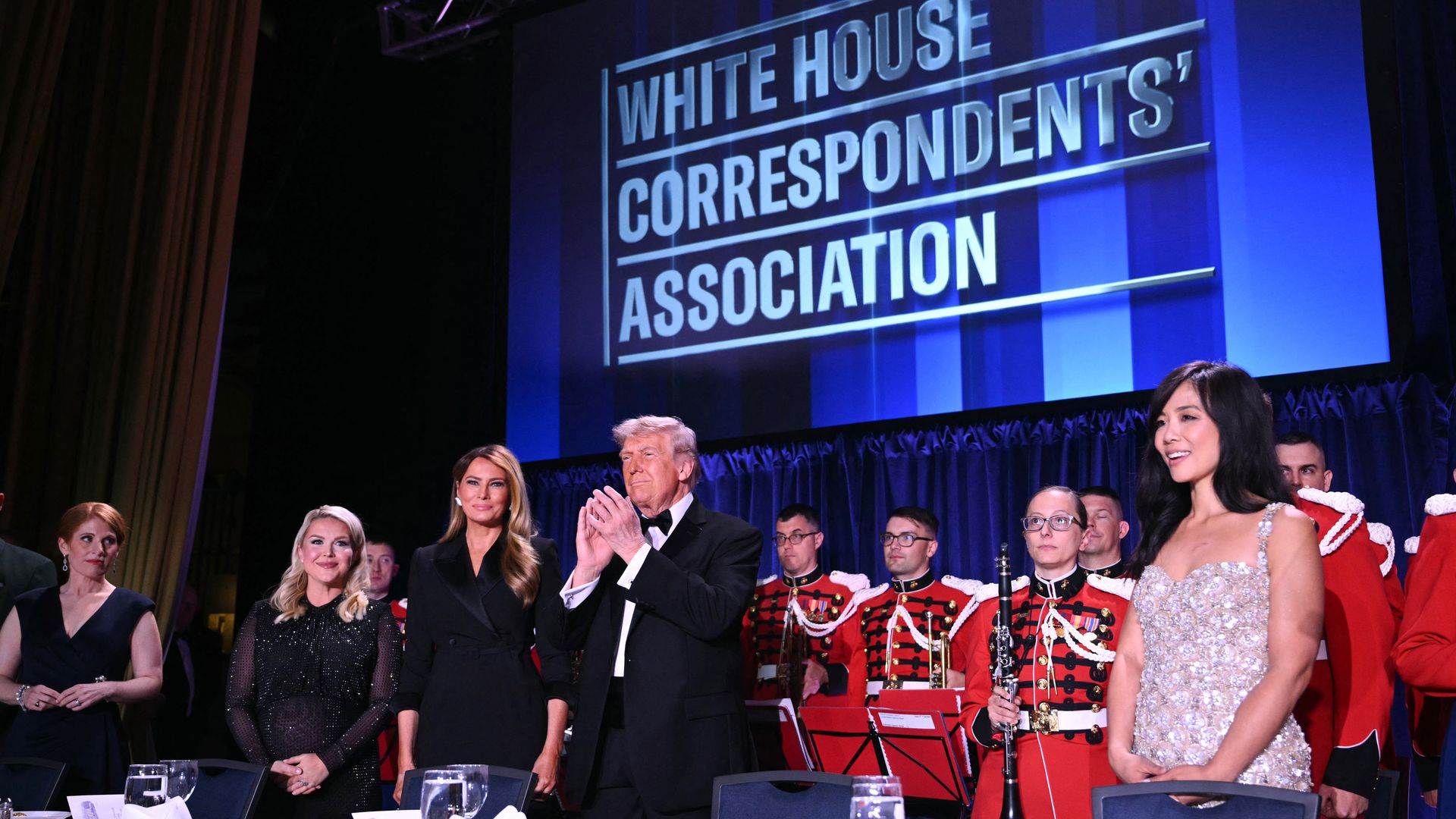
Journalist Karen Travers, White House Press Secretary Karoline Leavitt, US First Lady Melania Trump, US President Donald Trump and CBS News senior White House correspondent Weijia Jiang attend the White House Correspondents' dinner on April 25, 2026. Photo: Mandel NGAN / AFP via Getty Images
For decades, the White House Correspondents' Dinner has been a treasured tradition, uniting the press and politicians under one roof at the storied Washington Hilton. Now, the future of that ritual is in question.
Why it matters: The intruder at Saturday's dinner will force security officials and the White House Correspondents' Association to reconsider whether it's safe to host the dinner again in that venue, and how the event may need to evolve.
State of play: President Trump at a press conference Saturday said the dinner would be held again in 30 days. Media executives Axios spoke with are skeptical that it'll be staged exactly the same way.
- Hundreds of corporate executives, CEOs, diplomats and even celebrities fly in for the event, many with their own security teams and protocols.
- The event requires months of planning for attendees, journalists and Administration officials, let alone police and the secret service.
Zoom in: The dinner, which takes place in the basement ballroom at the Washington Hilton — the same hotel where President Reagan was shot in 1981 — seats over 2,000 people across nearly 260 tables.
- Those tables are packed so closely together, it can be challenging to even get out to walk to the restrooms, which are located on the security level two flights above.
- When the incident occurred on the security level, members of the secret service charged at various tables throughout the ballroom, pulling cabinet members out of the room.
- They had to quickly climb over a sea of closely packed chairs and tables, like lizards slithering across burning rocks, to try to reach those officials and yank them out.
Reality check: There was no security required to get into the top floor of the hotel, which is open to the public and was hosting guests for the weekend.
- Some party-goers were asked to show their dinner tickets or pre-party invite confirmations to checkpoints outside.
- In order to get on the escalators and stairs that grant access to the dinner in the basement, guests needed to go through a security screener, where bags were also checked.
Of note: Various news organizations host pre-parties at the Hilton before the event starts. Not all pre-party guests had tickets to the actual event, which means there were likely many more hundreds of people in the hotel — in close proximity to dozens of officials and CEOs — that weren't even attending dinner.
Between the lines: Once it became clear that something was wrong, it was difficult for dinner attendees to get enough service to communicate with their teams and loved ones.
- Cell phone reception can be weak in the basement. The wifi, which was under the network name WHCD25 with the password MOREWINE, wasn't much better.
The big picture: Over the past few years, government buildings have become less accessible to the public in response to rising security threats. But public establishments, such as The Washington Hilton, remain easy to access.
- Many Washington events that are meant to unite the press and politicians occur in public venues.
- While this was the President's first time attending the White House Correspondents' Dinner while in office, he has attended other, smaller press events — such as the Gridiron Dinner — in public venues.
The bottom line: The dinner this year was supposed to represent a rare moment of bonding between the Administration and the press, but instead will serve as a wake-up call about the security risks that could upend the tradition moving forward.
