Hands-on with ChatGPT's powerful new image engine

Add Axios as your preferred source to
see more of our stories on Google.
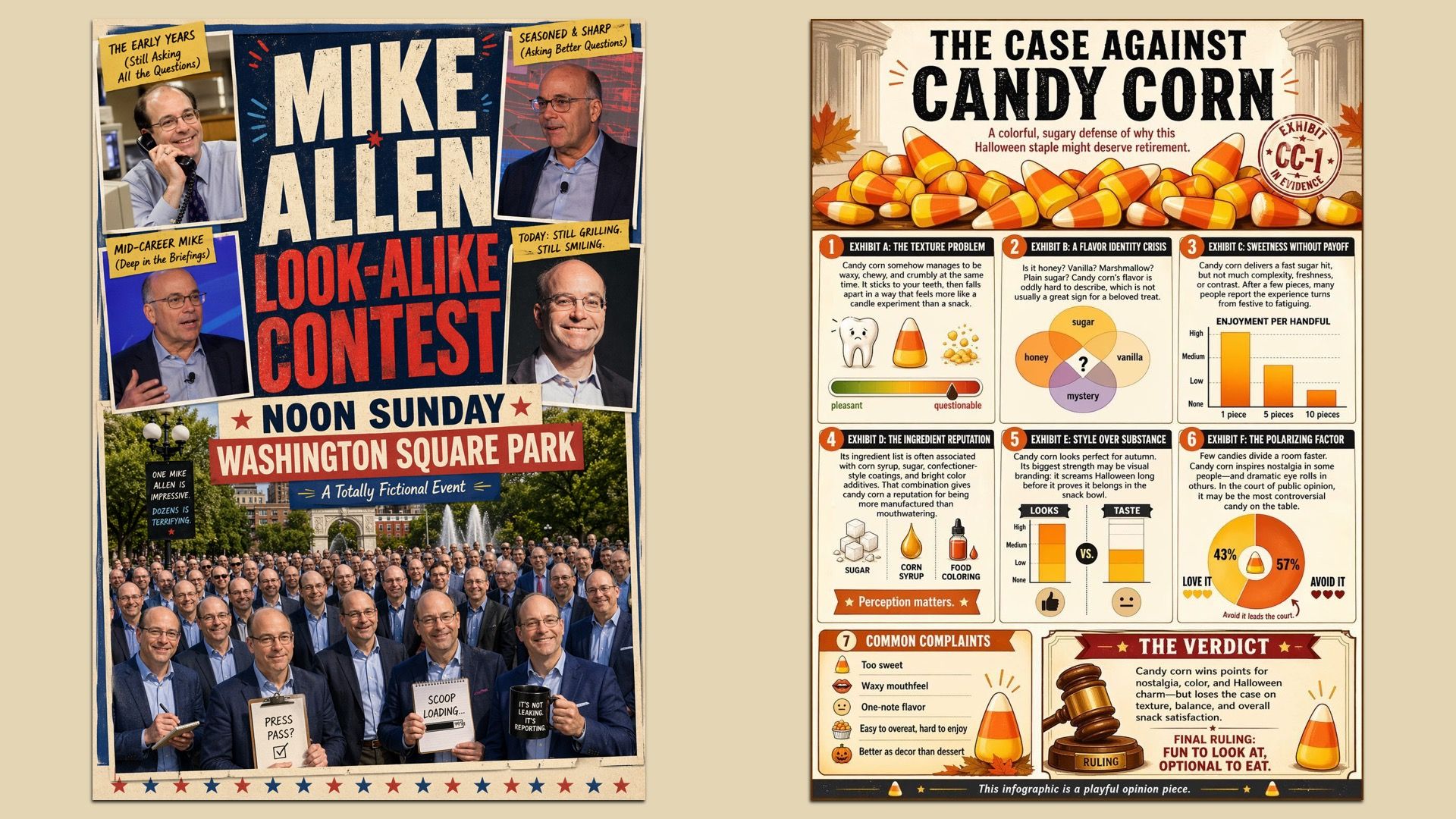
An AI-generated image promoting a fictional Mike Allen look-alike contest and an infographic making the case against candy corn. Images: Ina Fried via ChatGPT
ChatGPT's new image engine promises a host of improvements including better typography, access to the web and an ability to reason. So Axios put it to the test.
Why it matters: Past image engines have proved initially popular with consumers, but had enough flaws to prevent broader use in business.
Catch up quick: ChatGPT Images 2.0 is now live in the app and supports a wide range of aspect ratios and comes in both standard and a "thinking" mode with built-in reasoning.
- All users will have access to the standard version of the image model, while the thinking mode is reserved for paid subscribers.
Zoom in: In the day that I have had access, I gave the new model a wide range of tasks.
- A friend asked me to make a memorial image of her recently deceased cat along with two favorite toys. It crafted an image that looked like a highly personalized sympathy card.
- It elegantly took two photos from my wedding and made it appear as if they were in an old-style photo album with photo corners.
- My colleagues suggested a poster for a fictional event. I decided to create a Mike Allen look-alike contest in Washington Square Park this Sunday. (Of course, it's only fictional if no one shows up.)
It also made a handy infographic making "the case against candy corn" which I used unsuccessfully to convince two colleagues that the treat, which is neither candy nor corn, is also not good.
- I used it to "clean up" my bedroom, which was filled with gadgets, Legos and clothes. I uploaded a picture of the room with all my mess and it showed what it would look like without my stuff everywhere. I was shocked by how much space we could have, but my partner saw it as a tease and said to let him know when ChatGPT could actually clean the room.
- It also excelled at turning pictures of me playing softball and my 13-year-old playing soccer into trading cards complete with name, position and team logo, extracted from our uniforms.
Yes, but: When I asked it to create a faux newspaper — the "Smart Brevity Times" based on the latest Axios headlines — it first used old articles rather than pulling from today's news.
- A second try got the latest stories, but looked more like a mock-up than a finished newspaper.
- And some of its creations were less than elegant. A mahjong cheat sheet I asked for was accurate but lacked polish.
- Also, it pays to plan ahead. All that added reasoning means that images can take quite a while to produce.
