Oil-price disconnect obscures unprecedented energy shock

Add Axios as your preferred source to
see more of our stories on Google.
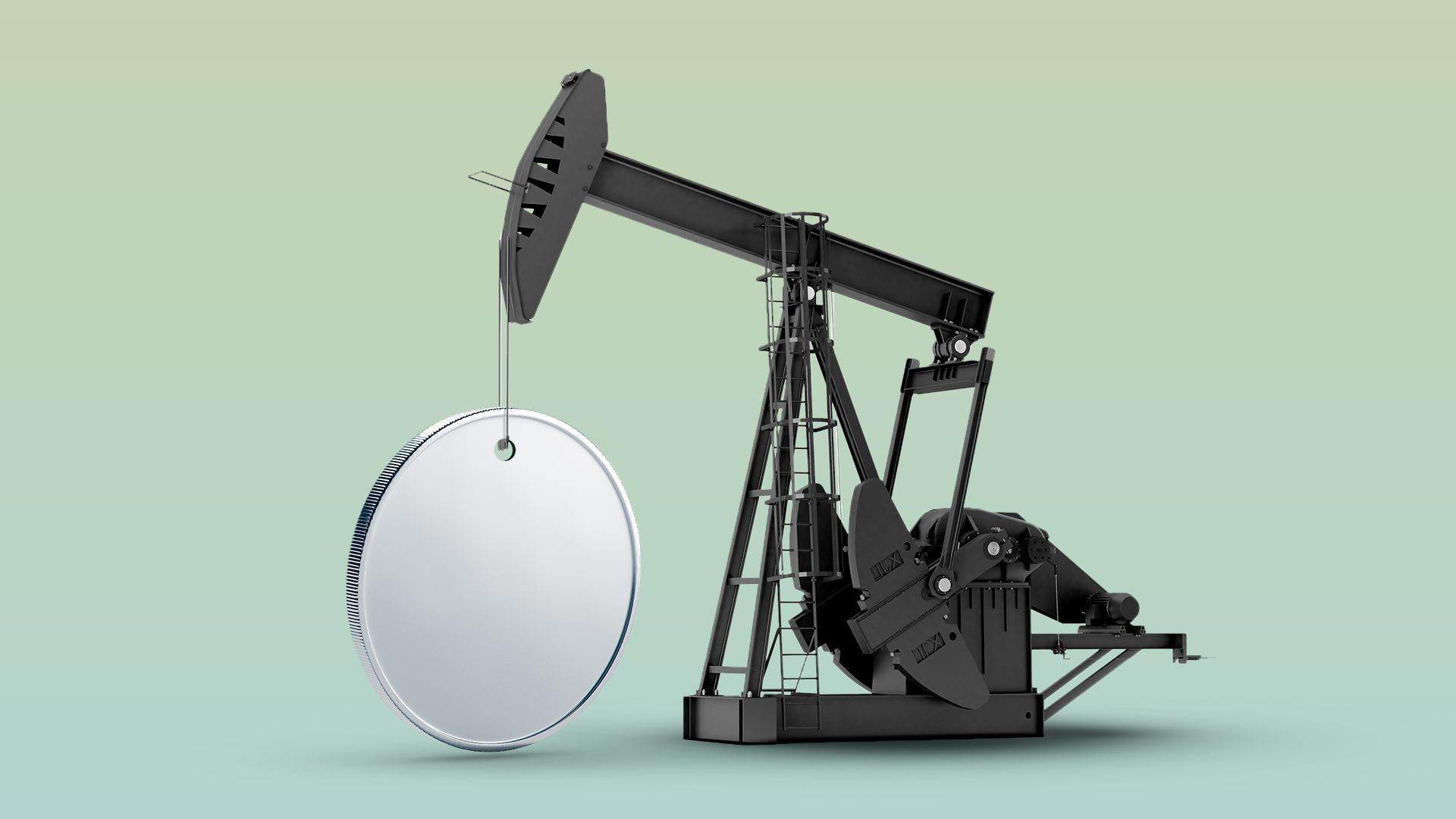
Illustration: Natalie Peeples/Axios
As high as those oil prices flashing on TV are, underlying market conditions are even worse — and so is the unfolding global economic pain.
Why it matters: Headline-grabbing futures prices — bets on where oil prices are headed — are far below the cost of increasingly scarce physical shipments.
- This disconnect can obscure how dire things are in the unprecedented energy shock that will take a long time to unwind.
Zoom out: Futures contracts are often traded among parties that never obtain oil, and also used by companies to hedge price risk.
- But lots of today's turmoil is rooted in physical, or spot, markets for commodities now in short supply.
Zoom in: An example of dissonance is that "Dated Brent," one physical grade refiners buy, hit a record $144 per barrel this week.
- But Brent futures topped out briefly at roughly $120 last month and are now in the $95 range — even as the Strait of Hormuz remains bottled, and Mideast producers have cut output by roughly 10 million barrels per day.
- Futures haven't approached 2008's $147 record, or even hit the roughly $139 peak after Russia attacked Ukraine — a crisis that took comparatively tiny amounts of oil off the market.
What they're saying: "They both may be called Brent, but they describe different worlds," energy historian Dan Yergin tells Axios' Amy Harder.
- He cites the difference between prices set in a market swayed by news and anecdotes and one swayed by hard physical constraints.
Friction point: Analyst Vandana Hari argues the futures plunge on Tuesday's ceasefire news reflects "hope, not reality" — and sees market failure.
- "In the long run … the broken futures market risks becoming the exclusive playground of speculators, a hive of insider trading, but useless for hedging physical barrels," she posted on X.
Between the lines: There's no single reason why futures — both the front month trade and the longer "forward curve" — are so chill compared to physical prices.
- Nobody knows what to make of such a historic disruption.
- A portion of the market believes the whole thing is "too big to fail," Neil Crosby, an analyst with market data and intelligence firm Sparta Commodities, told Axios.
- On the other side, some traders see looming "demand destruction" that brings prices down the painful way — real-world costs get so high that economic activity slows considerably, he notes.
And don't sleep on the Trump factor. Traders are hesitant to bet on higher prices when a single social media post can bring big downward market swings, Columbia University's Daniel Sternoff said.
- "That volatility can blow out your position," Sternoff, a senior fellow with its energy think tank, said in a briefing Thursday.
Our thought bubble: Futures prices, blasted out by financial outlets, play a big role in market psychology — and that reaches Main Street, notes Axios Markets author Emily Peck.
- Market reaction to the war, thus far, has been relatively muted — and it's not a stretch to connect the dots. Relatively low oil futures prices send a message that the conflict will resolve and prices will come down relatively soon.
- That helps keep a lid on stock prices, which in turn is reassuring for the many Americans who have their savings in equities via 401(k)s or other investment vehicles.
Threat level: Some import-reliant Asian nations are already imposing emergency rationing.
- And the oil shock will take months to unwind if and when shipping lanes are clearly open.
- Even if the ceasefire holds, there are still "enormous logistic and supply issues" in crude and transport fuel markets, Yergin said.
What we're watching: U.S. oil producers.
- "As it becomes clear that the forward curve does not reflect the magnitude of the supply disruption and prices may be 'higher for longer,' some producers have begun to discuss rig additions," Jai Singh of the research and consulting firm Rystad Energy said in a note.
The bottom line: "[M]any stakeholders, from thought leaders to media to politicians and the general public, have had a distorted (benign) view of the disruption," Clayton Seigle, an oil analyst with the Center for Strategic and International Studies, said via email.
Editor's note: This story has been corrected to reflect that the 2022 peak oil price wasn't $122 per barrel, but $139.
Sign up here for Axios' Future of Energy newsletter.
