Tim Sheehy joins Senate Republican whip operation

Add Axios as your preferred source to
see more of our stories on Google.
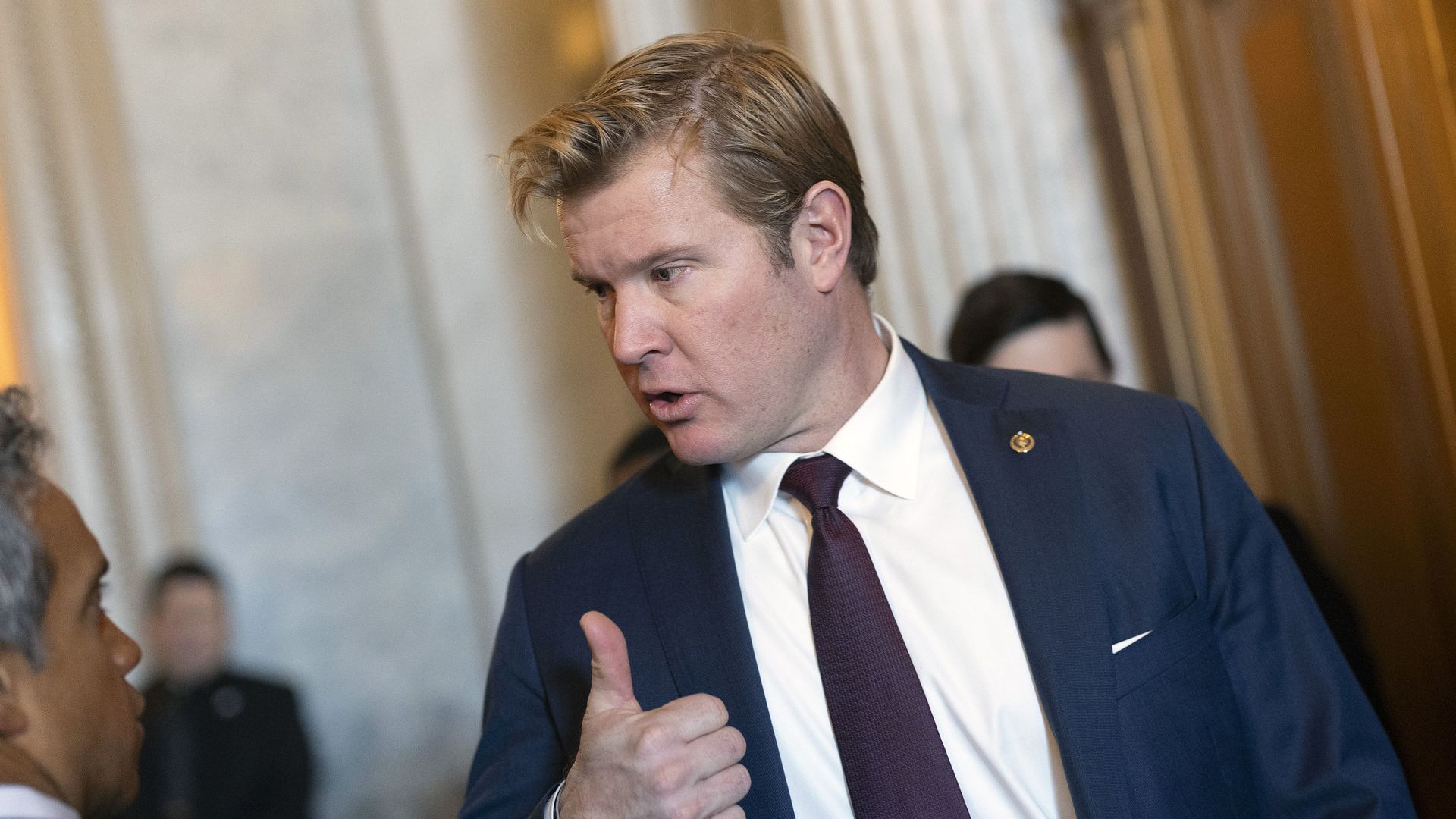
Sen. Tim Sheehy (R-Mont.) Photo by Kevin Dietsch/Getty Images
Senate Majority Whip John Barrasso (R-Wyo.) has tapped Sen. Tim Sheehy (R-Mont.) to join his whip team, replacing former Sen. Markwayne Mullin (R-Okla.) who is now secretary of Homeland Security.
Why it matters: Sheehy will be responsible for sounding out senators on how they intend to vote on consequential pieces of legislation, as Congress weighs a second reconciliation package and a potential supplemental to replenish munitions used in Iran.
- "Every vote matters for national security, a strong and growing economy, and energy dominance," Barrasso said in a statement. "My friend — and Montana neighbor — Tim Sheehy will be a critical part of the team to get the votes and pass the Trump agenda."
- "Tim makes our deputy whip team even stronger."
Between the lines: Joining the whip team typically means a senator will vote with leadership.
- After Sen. Thom Tillis (R-N.C.) opposed Trump's "Big Beautiful Bill" in 2025, he quietly left the whip operation.
Zoom out: Sheehy joins fellow freshmen Sens. Jim Banks (R-Ind.) and Bernie Moreno (R-Ohio) as a deputy whip, giving him greater visibility into how legislation is shaped — and more exposure within the GOP conference.
- Barrasso's 11-member team hails from across the country, with Sheehy and Chief Deputy Whip Mike Crapo (R-Idaho) both representing states that border Barrasso's Wyoming.
- They gather weekly in Barrasso's office to discuss strategy for passing legislation.
Zoom in: Sheehy, a former Navy SEAL, has worked closely with the Trump administration and has been a frequent TV defender of Trump's position on Iran.
- As a first-year senator, he had the rare feat of helping to pass a law — allowing the transfer of excess Defense Department aircraft to fight wildfires — during Trump's first 100 days.
- He has also flexed his political muscle, vowing to torpedo the "Big Beautiful Bill" if it didn't strip out a provision allowing federal lands to be sold for housing development.
