Dems eyeing 2028 want huge tax cuts — but big hikes for the rich


Add Axios as your preferred source to
see more of our stories on Google.
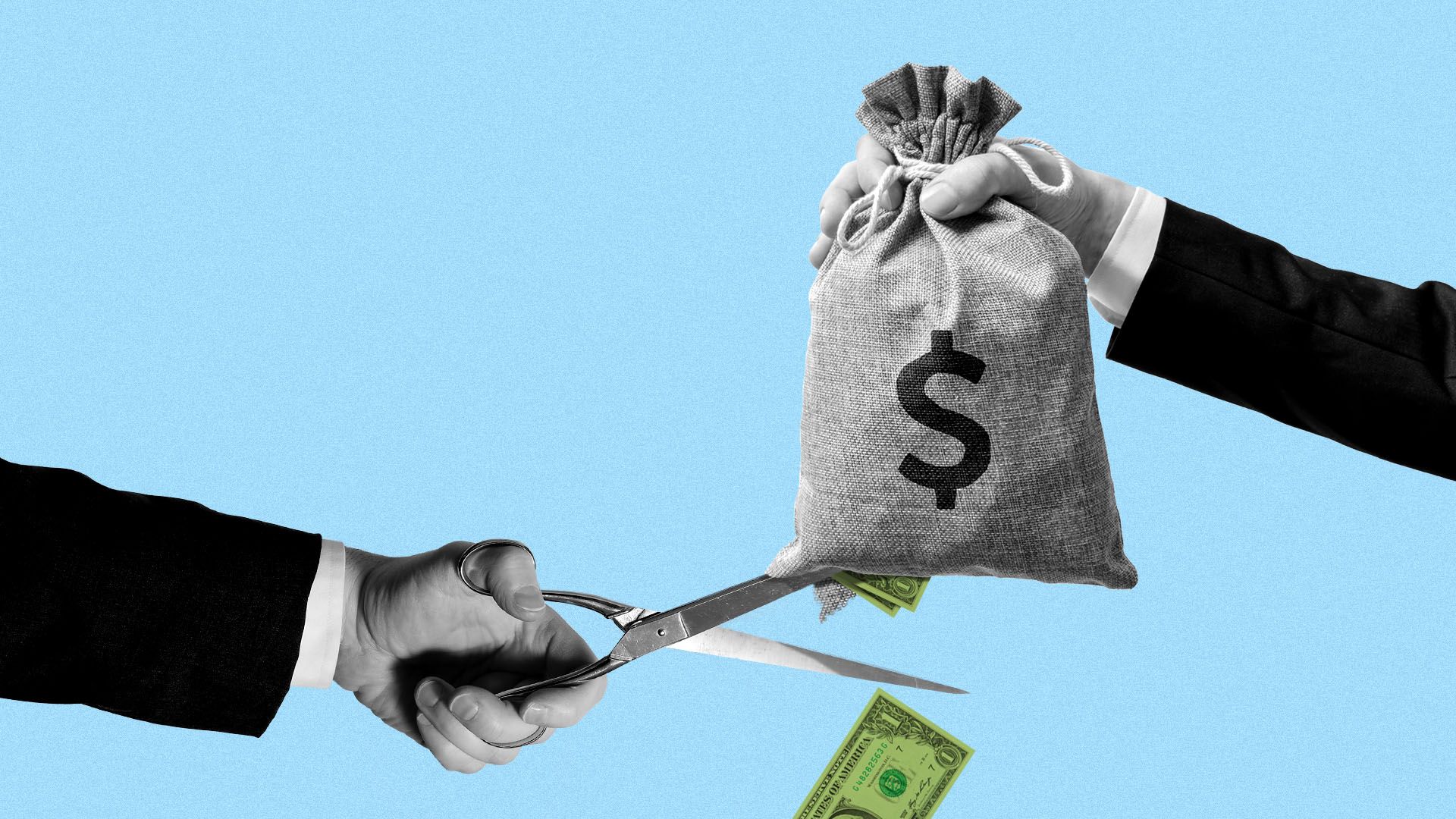
Illustration: Sarah Grillo / Axios
Some Democrats eyeing runs for the White House have rolled out a provocative new economic policy: massive tax cuts for the working and middle classes — and big hikes for the wealthy.
Why it matters: Republicans may lose the midterm elections because of voters' anger over high prices, but Democrats are still struggling to figure out how to address voters' concerns about inflation.
Driving the news: The proposals by Democratic presidential hopefuls include eliminating federal income taxes for half of all U.S. workers, making the first $75,000 of income earned by married couples tax-free, and enacting a variety of state-based tax cuts and credits.
- Critics argue that some of the plans would squander funds that should be spent on social services, undermine the argument for government programs, and amount to political pandering, or what they call "slopulism."
The tax-cut proposals — Democratic versions of a strategy long associated with the GOP — are triggering what some are describing as the biggest policy battle on the left in years.
- "There isn't a wonk in town who doesn't hate this," one D.C.-based Democratic operative told us.
- "Holy cow … did we set off a sh*tstorm," acknowledged Erica Payne, president of Patriotic Millionaires, a liberal group that supports one of the main proposals.
Zoom in: Maryland Sen. Chris Van Hollen kicked off the debate in March by calling to get rid of federal income taxes for every married couple earning less than $92,000 annually — and any individual making less than $46,000 — while hiking taxes on millionaires.
- The bill also would lower, but not eliminate, income taxes for millions more middle-class Americans.
- "If you are working paycheck to paycheck and making just enough to cover your basic cost-of-living expenses, then you shouldn't have that taxed away at the federal level," Van Hollen told us.
Other possible presidential candidates, including Arizona Sens. Mark Kelly and Ruben Gallego, signed onto Van Hollen's plan.
- New Jersey Sen. Cory Booker, who's also considering a White House run, followed with a bill to make the first $75,000 of income earned by married couples tax-free. He too would raise taxes on the wealthy.
- "It's clearly suboptimal policy," Alex Jacquez, who worked in the Biden White House's National Economic Council and now is a top aide at the liberal think tank Groundwork Collaborative, said of both proposals.
- "It's a ton of money, and that's revenue you can't use to address anything else."
- Booker spokesperson David Bergstein said the senator "thinks Democrats need big ideas to meet the affordability crisis head on, and we shouldn't be afraid of talking about a tax cut for working people that's paid for by making big corporations and the wealthiest few finally pay their fair share."
What they're saying: Supporters argue that lowering ordinary Americans' taxes is sometimes a more efficient way to help them than boosting government programs, and that expanded social services could be funded by other taxes on the rich.
- Payne, whose organization helped Van Hollen craft his plan, shot back at detractors: "These so-called intellectuals on the left haven't met a working or a poor person since they entered politics."
- "86% of the people in the country are worried about the price of groceries.… Let them keep more of the money that they make," she added.
The big picture: The rush by some would-be presidential contenders to back broad-based tax cuts is a shift from the last competitive Democratic primary in 2020, when several candidates signed onto left-wing economic ideas such as Medicare for All.
- Democrats said the trend could be a preview of a more populist — and ideologically jumbled — primary in 2028.
- That's triggering anxiety among some corners of the party, though not along typical moderate vs. progressive lines. Instead, it's more like a feud between policy wonks and politicians.
State of play: Beyond D.C., likely 2028 contenders are making lower taxes central to their state-level campaigns. Their approaches haven't attracted as much criticism.
- Illinois Gov. JB Pritzker, running for a third term this November, touted "cutting taxes on working families" in a TV ad.
- Pennsylvania Gov. Josh Shapiro, also up for reelection, has boasted that he's enacted "seven tax cuts" and crisscrossed his state promoting a new tax credit.
- Shapiro has clashed with at least one local official over his approach, however. He threw cold water on Philadelphia Mayor Cherelle Parker's push to hike taxes to fund homeless services, saying that although he'd hear her out, "I'm not looking to raise taxes."
What's next: The anti-tax fervor is spreading beyond those considering 2028 presidential runs.
- California gubernatorial candidate Katie Porter is campaigning on eliminating state income taxes for families earning less than $100,000.
- Keisha Lance Bottoms, running for governor in Georgia, is backing a plan to exempt public school teachers from income taxes in her state.
