Private credit's wake up call

Add Axios as your preferred source to
see more of our stories on Google.
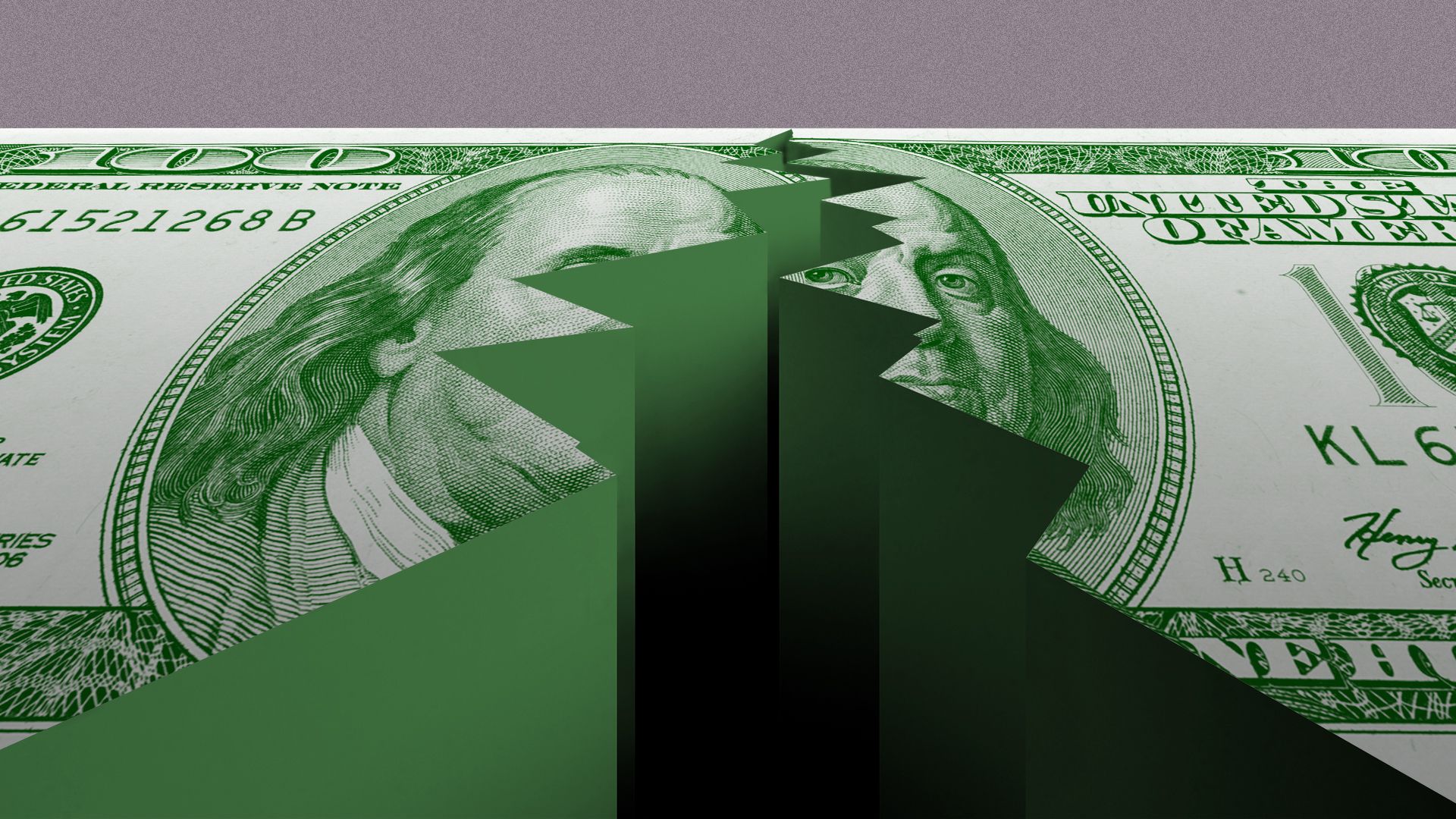
Illustration: Brendan Lynch/Axios
Even as the Iran war grabs everyone's attention, private credit still has Wall Street unsettled.
Why it matters: Investors are worried about loan quality and getting their money out of funds, and it's that anxiety that actually appears to be private credit's biggest problem. (Here's an explainer on the trillion-dollar sector.)
Where it stands: For investors, "this is a little bit of a wake-up moment," Lotfi Karoui, a multi-asset credit strategist at Pimco, said on a company podcast this week.
- People are starting to think more carefully about where they deploy capital, he said.
Zoom in: Here's what's driving the stress — and why it might not be cause for a full-fledged freakout:
Software weakness. About 20% of private credit loans were made to software companies, and their fate is now in question because of AI.
- A significant share of defaults, however, hasn't materialized — though Morgan Stanley forecasts that it will rise to 8%. That's not great, but it's hardly a systemic disaster.
Lower yields. As more investors got interested in private credit last year — and as the Federal Reserve cut rates — the yields that investors could earn fell from about 11% to about 8%-9%, per data that investment bank Lincoln International shared with Axios.
- The lower yields have made private credit less attractive to investors, says Ron Kahn, the bank's managing director and global co-head of valuations and opinions.
- "Some of this started before even the software disruption, purely because of the yield," he says.
Opacity. Investing in this market is not like putting money into stocks. Investors don't know what their investments are worth day to day. That's nerve-racking.
What they're saying: There are commenters comparing this moment to the run-up to the Great Financial Crisis — arguing private credit is an unfamiliar financial instrument that obscures risk and could take down the system.
- "You will not ever hear someone who professionally lived through 2008 make that comparison with any real veracity," Jim Caron, the chief investment officer of Morgan Stanley's Portfolio Solutions Group, tells Axios.
- Unlike before the financial crisis, now there isn't leverage upon leverage for a derivative security backed by a strawberry picker's $700,000 loan that then blows up the housing market.
- Still, Stephen Parker, global co-head of investment strategy at JPMorgan Private Bank, says: "There is likely to be some pain felt."
- "But importantly, we think the default cycle will be manageable and we don't think this is going to be a systemic issue, which I think is the question that a lot of our clients are asking,"
Between the lines: Stress begets stress, creating a bit of a doom loop that is lessening investor interest overall in private credit.
By the numbers: 35% of investors said negative perception of private credit was the biggest headwind to the industry, per a survey from PitchBook of about 100 credit providers, banks, private equity firms and other market participants in the U.S. and Europe.
- Stress/default risk was the second-highest risk, followed by geopolitical turmoil.
- "Sentiment in the market is significantly worse than it was six months ago," says Marina Lukatsky, global head of research, credit and U.S. private equity at PitchBook LCD.
Zoom out: "Headlines are absurd. Asset class is fundamentally sound," one respondent wrote.
- Still, optics are everything in investing — the gloomy outlook is driving down demand for new investments.
- That might drive up yields and make this an interesting sector again.
