How the hot war in Iran diminished the cold war with Russia

Add Axios as your preferred source to
see more of our stories on Google.
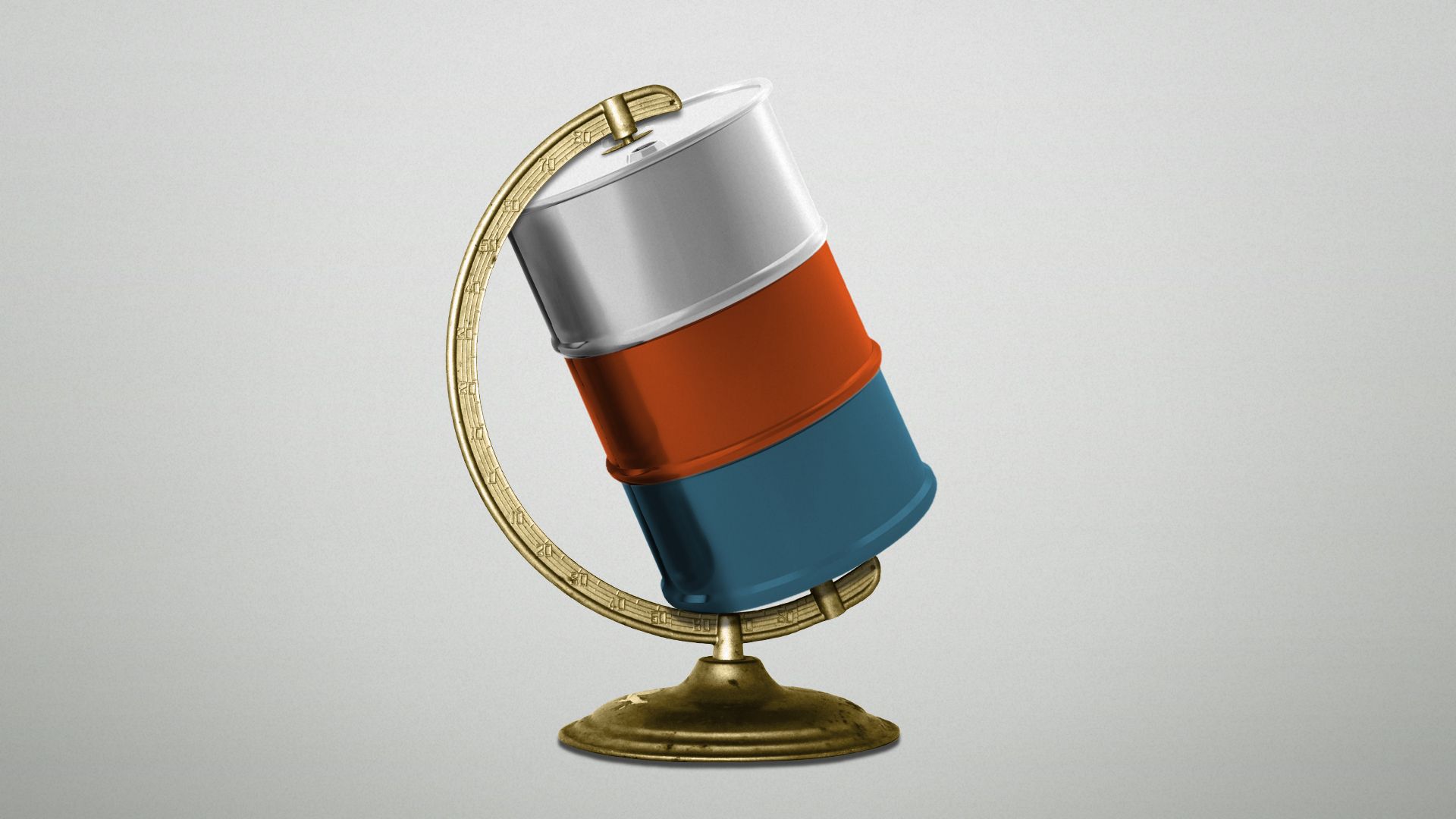
Illustration: Megan Robinson/Axios
The war in Iran has sent oil prices skyrocketing, scrambling an economic conflict with Russia that's been raging for more than a decade.
The big picture: It's harder to maintain tight sanctions on Russia —effectively a "cold war" — while also grappling with the economic impact from the "hot war" with Iran.
State of play: The Treasury Department last week announced a one-month waiver on U.S. sanctions on Russian oil, even as some European allies objected.
- The waiver followed a more limited one that allowed India to buy Russian oil.
- The waivers apply only to oil already on tankers in the water.
- The idea is to free up supply while the Iranians have 20% of the world's oil blockaded in the Strait of Hormuz.
Where it stands: The move, one of a number of actions the White House is taking on oil, doesn't appear to have lowered prices.
- The price of Brent crude, the global benchmark, rose about 3% Friday, to $103 a barrel.
- The amount of oil affected by the waivers is equivalent to about eight to 10 days' worth of what would normally flow through the strait, notes Richard Nephew at the Center on Global Energy Policy. That may not be enough to make a serious dent.
Zoom out: The effect on geopolitics, however, could be more severe, say foreign policy experts and former government officials who've worked on sanctions. The temporary waivers could wind up having long-term consequences.
- Russia's oil revenue funds the war against Ukraine.
- "This is the first major relaxation of sanctions on Russia we've seen, and risks dismantling the regime that we built starting in 2014 after the invasion of Crimea," says Eddie Fishman, who was a Russia and Europe sanctions lead in the Obama administration's State Department.
- Lifting the sanctions also reduces the stigma around buying Russian oil. That may be challenging to restore.
Friction point: The U.S. government is managing a crisis and needs to pick its priorities, says Kari Heerman, a senior fellow at the Brookings Institution and a former economist at the State Department.
- There are at least three in play: low gas prices, war in Iran and pressure on Russia to end the war in Ukraine.
- The U.S. picked low gas prices and war in Iran, Heerman says: "Those are the kinds of decisions you have to make in a world where you're doing a lot more economic statecraft."
Between the lines: The war also changed Iran's ability to leverage its economic might.
- The country had never before had a reason to justify shutting down the Strait of Hormuz — its most effective weapon against the West — until the bombs started falling.
For the record: Treasury Secretary Scott Bessent said in a statement that the measure "will not provide significant financial benefit to the Russian government."
- The White House says its energy team is focused on maintaining stability in energy markets.
- "Short-term sanctions relief for Russian oil that's been stranded at sea is one of many pieces in this strategy, along with the Development Finance Corporation's reinsurance plan and initiatives tapping into newfound Venezuelan markets, to shore up global supply until the Iranian threat is neutralized," White House spokesman Kush Desai said in an email.
What to watch: Will the White House put sanctions back in place when the month's up if oil prices haven't come down significantly?
- Keep an eye on the oil market when it reopens Sunday night.
