Axios Finish Line: Owning your mistakes

Add Axios as your preferred source to
see more of our stories on Google.
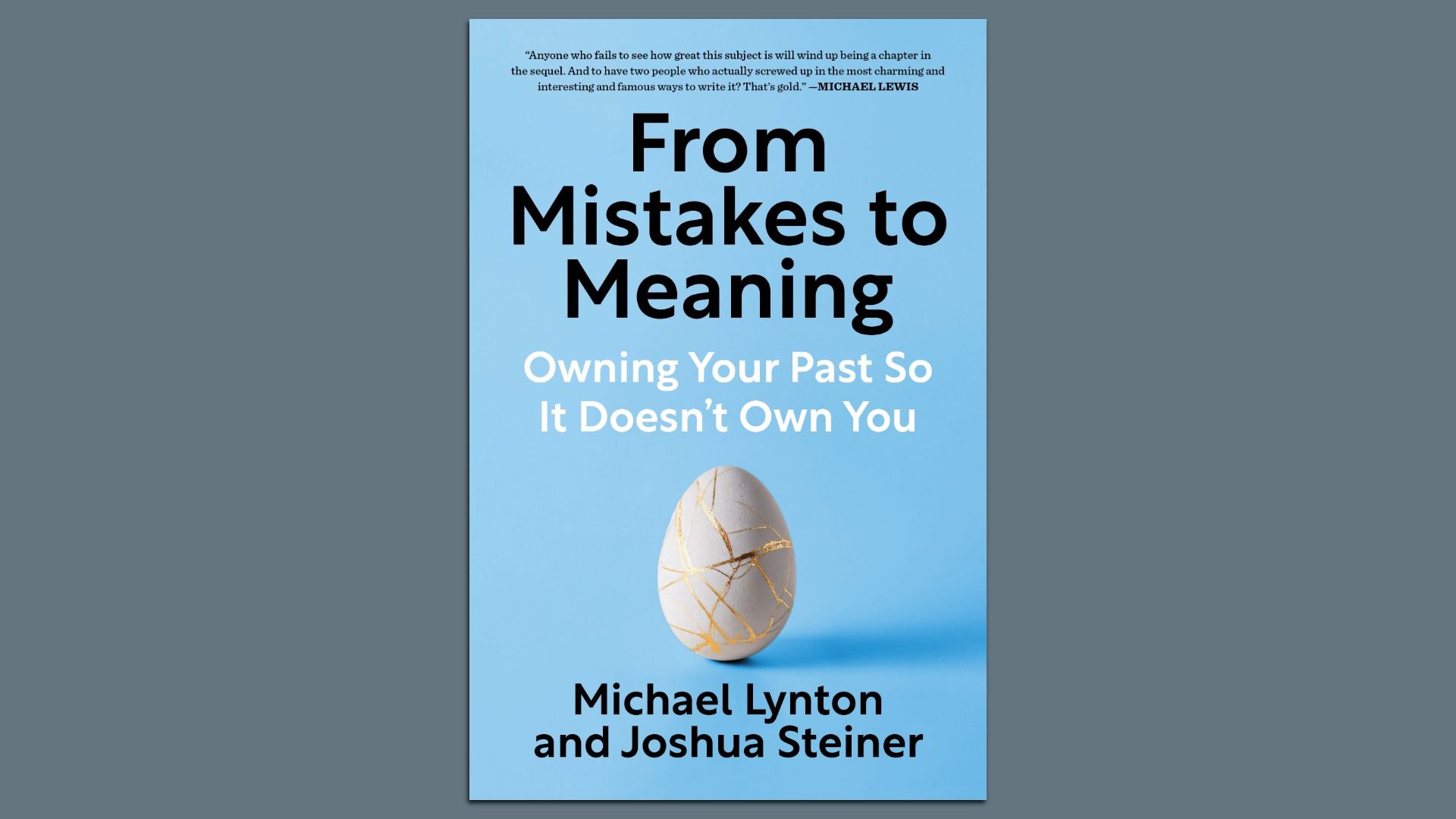
Photo: Book cover courtesy of authors
Chances are you're still stewing over some mistake in your past.
Why it matters: The new book "From Mistakes to Meaning" offers a framework for processing your missteps, large or small, and letting them go.
- Co-authors Michael Lynton and Joshua Steiner have laid bare their own highly public missteps, and interviewed others about theirs.
Zoom in: For Lynton, the former head of Sony Pictures Entertainment, his big mistake was green-lighting "The Interview," a comedy starring Seth Rogen and James Franco about a plot to assassinate Kim Jong Un.
What followed was anything but comedic.
- Instead, Sony was hit by a cyberattack attributed to North Korea, one of the most destructive corporate hacks at the time.
- Executives' private emails spilled into public view, along with other sensitive company data.
- Racial jokes surfaced. Reputations were damaged.
As Lynton recounts, President Obama asked him: "What were you thinking when you made killing the leader of a hostile foreign nation a plot point?" Ouch.
Steiner's mistake centers on a diary he kept during the Clinton administration-era Whitewater affair, when he was a young Treasury official.
- The diary was subpoenaed, made public — and became the talk of Washington.
If that doesn't sound so bad, read Maureen Dowd's acidic piece about it.
- Imagine yourself as a bright-eyed 28-year-old Yale graduate testifying before Congress. Then facing your friends and mentors afterward.
- (Disclosure: Josh is a friend and I have known about his diary for years, but never dreamed of asking him about it.)
Steiner focuses more on why he avoided his mistake for so long — what the authors call "Act III."
- Only when he directly excavated it with Lynton did the embarrassment and shame begin to fade.
- "It also allowed me to forgive myself," he writes.
Between the lines: Your biggest mistakes are often set in motion long before the offending act. Lynton and Steiner call this your "schema" — the deeper pattern driving your choices.
- For Lynton, it was a desire to belong, to seem cool around Rogen and Franco. "My middle school self took over," he writes.
Reality check: Not ever mistake in the book will resonate equally.
- I was intrigued by author Malcolm Gladwell's big regret: quitting competitive running as teenager when he might have been an Olympian.
- For Gladwell, the schema behind his mistake has even bigger implications. In unpacking an old track decision, he realized he was afraid of anything where failure might be an option.
- I don't want to spoil too much, but it led Gladwell to delay starting a family.
At its core, this is a self-help book. And Lynton and Steiner have a handy acronym to confront — and conquer — your mistakes: DUET.
- Disclose: Find a trusted friend and talk it through. Start small — not with your biggest blunder.
- Unpack: Examine what led to the mistake, both the immediate trigger and the longer-term patterns behind it. Identify how you felt afterward. Understand the schema.
- Empathize: Don't be too hard on yourself. Extend that same grace when others share their mistake(s).
- Trust: In yourself — and the person you're confiding in.
The bottom line: Confront your mistakes, however embarrassing. The people closest to you know they don't define you.
