Investors buy America again. They have no choice.

Add Axios as your preferred source to
see more of our stories on Google.
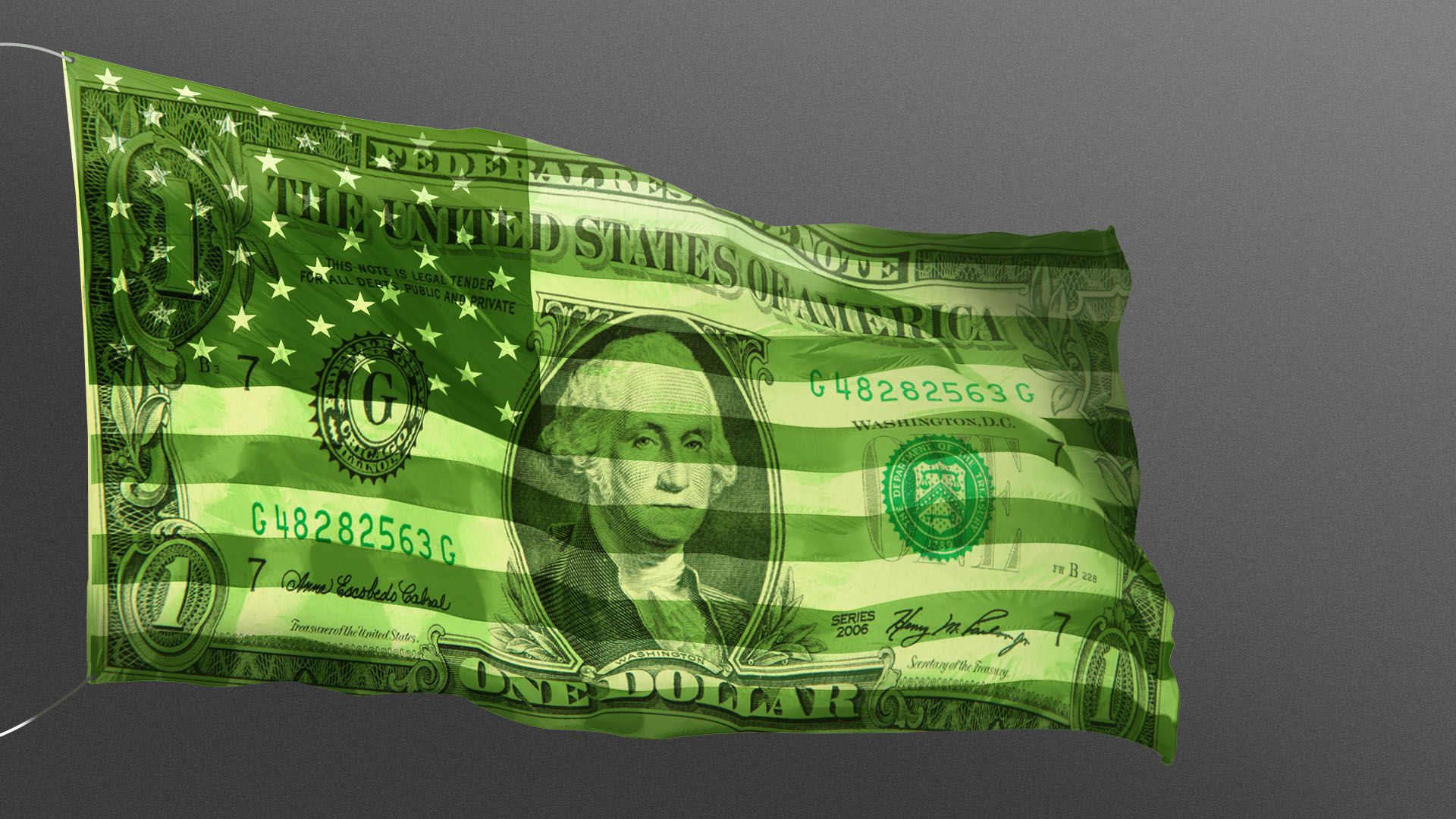
Illustration: Sarah Grillo/Axios
The dollar is so back. The U.S. currency — subject to a good deal of bad press for the past year or so — has strengthened in value against other currencies since the Iran war began.
Why it matters: It's not that people are falling in love with America again. It's more as if investors are running for safety toward the best option. And, like it or not, that's still the U.S. dollar.
The big picture: The spike in oil prices was the catalyst for a major global market disruption that's only beginning to play out. Uncertainty abounds.
- Since Sunday, the dollar's value has grown relative to other currencies.
- This is how the currency market always reacts to big risks, says Robin Brooks, a senior fellow at the Brookings Institution and a former FX strategist at Goldman Sachs.
- "This is completely normal price action, and it does mean that people still think of the U.S. dollar as a safe haven." (He writes more about it here.)
How it works: Investors are selling holdings in overseas stocks and assets in Europe and Asia, and they're cashing out into dollars.
- That dynamic increased demand for the greenback, pushing up its value against other currencies.
Another factor: Those rising oil prices. Oil trades on a global market, but it trades in dollars. Higher energy prices mean you need more dollars, again pushing up demand.
- There's also a bit of rate differentials at play. The rise in energy prices will likely be more inflationary for other countries than in the U.S., which is more insulated from oil or natural gas shocks.
What they're saying: "It's completely normal that after a year and change of Americans putting money to work overseas — and they made a ton of money off it — now they're saying, 'I'm going to lock in some gains,'" says Rebecca Patterson, a senior fellow at the Council on Foreign Relations who once ran JPMorgan Private Bank's global currency and commodity trading desk.
- "And that process benefits the dollar," she notes.
Between the lines: Since President Trump took office last year, and especially in the wake of the "Liberation Day" tariffs, there have been concerns over de-dollarization.
- Perhaps the U.S. standing in the world had become so worrisome that the dollar would lose its status as the reserve currency, writers speculated.
- Perhaps other nations would see their currencies gain as the dollar lost.
Zoom out: The dollar's standing really was never in question, Brooks says.
- "There's a difference between news stories that get written and reality. Obviously Trump is unpopular in half the country, so it makes for good reading."
- He notes that throughout the tariff chaos, Asian sovereign wealth funds showed no change in their allocations to the dollar.
- "That's actually pretty remarkable, and kind of a reminder that the hurdle for the U.S. dollar to lose its reserve currency status is really, really high."
The bottom line: The dollar's still got it, and probably never even lost it.
