Anthropic launches AI job destruction detector

Add Axios as your preferred source to
see more of our stories on Google.
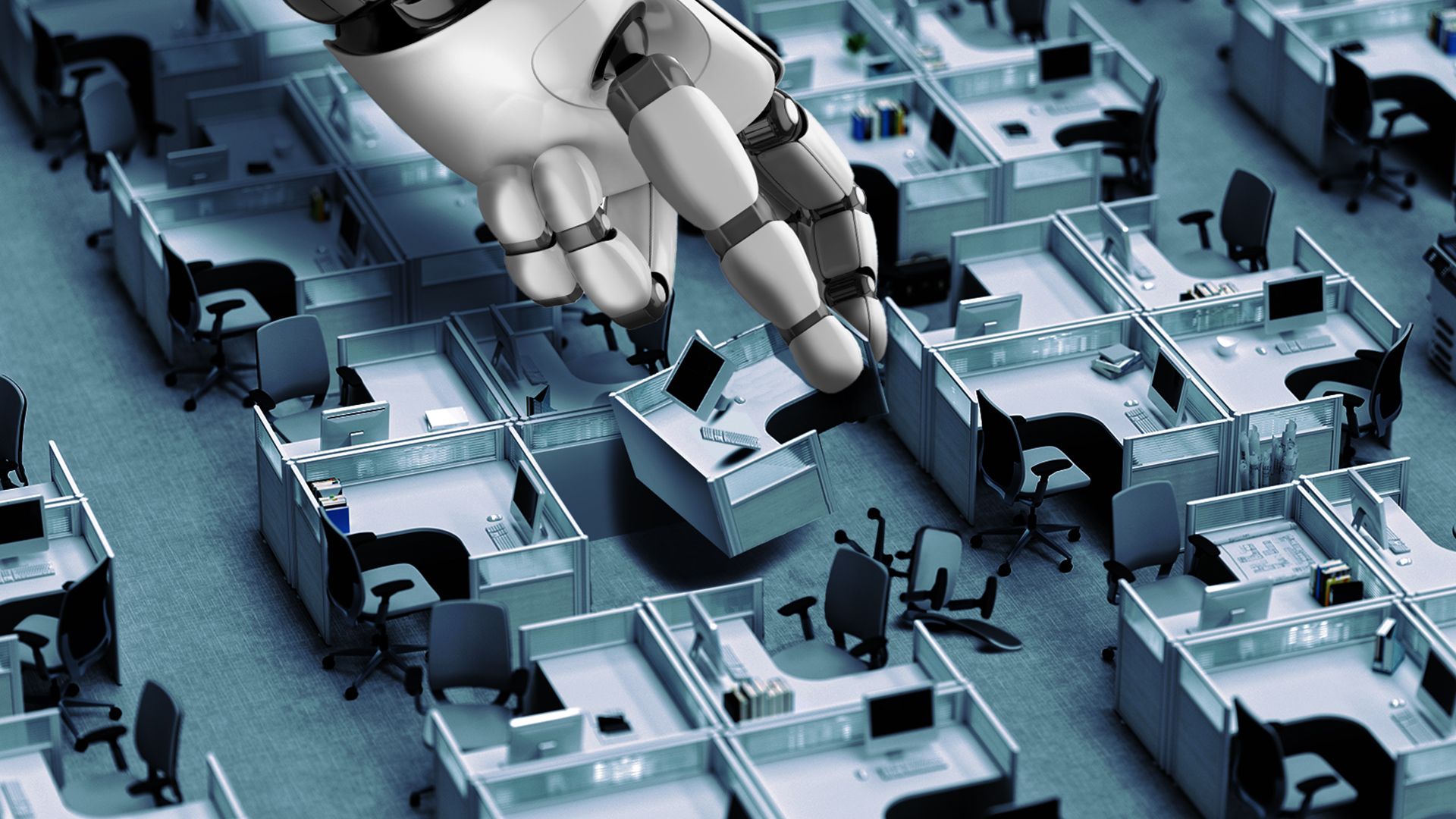
Illustration: Aïda Amer/Axios
Anthropic says it is building an early-warning system for a potential AI-driven white-collar jobs bust.
Why it matters: While the new index from Claude's maker shows "limited evidence" that AI has affected joblessness so far, the effort enters a larger debate among economists over how a possible "AI labor doom and gloom" scenario should be tracked in the first place.
What they're saying: "By laying this groundwork now, before meaningful effects have emerged, we hope future findings will more reliably identify economic disruption than post-hoc analyses," Anthropic economists Maxim Massenkoff and Peter McCrory write in a new paper.
- Anthropic CEO Dario Amodei is among the most vocal to warn about the economic disruption his own technology might sow.
How it works: Anthropic's new measure takes into account:
- An occupation's specific tasks;
- An estimate of which of those tasks can be performed by large language models.
- Which tasks are actually being done by AI today.
Zoom in: Jobs are more exposed when their core tasks could be automated by AI, and Anthropic's anonymized data shows those tasks are already being automated in the real world.
By the numbers: Computer programmers (75% task coverage), customer service reps, data entry keyers and medical record specialists rank among the most exposed occupations, Anthropic says.
- Its economists estimate roughly 30% of occupations don't clear the minimum threshold to register as "exposed" in their index.
- Those are fields you might expect to be the least susceptible to AI disruption, given how human-intensive they are: cooks, lifeguards, dishwashers and the like.
Yes, but: Workers in "most exposed" occupations have not become unemployed at meaningfully higher rates than workers in jobs considered AI-proof.
- "The average change in the gap since the release of ChatGPT is small and insignificant, suggesting that the unemployment rate of the more exposed group has increased slightly but the effect is indistinguishable from zero," researchers write.
- Anthropic does find "suggestive evidence that hiring of younger workers" — particularly ages 22 to 25 — "has slowed in exposed occupations," a sign that certain entry-level workers are so far among the most affected by the uptake of AI.
The big picture: Anthropic wants to build a roadmap for economists to track unemployment trends that might lurk underneath the surface, particularly among the most AI-exposed occupations.
- The researchers note that the difference between current AI exposure and potential exposure is massive, raising the possibility of job turmoil down the line.
The intrigue: Government agencies, which release what's considered the gold standard of economic data, are fine-tuning how they measure AI effects.
- The Census Bureau adjusted how it surveys businesses about AI usage, a change that resulted in a sharp increase in the share of firms reporting current and expected use of the technology.
What to watch: It's possible that AI disruption will be obvious — like COVID-19's initial shock to employment — potentially eliminating the need for intricate tracking tools.
- Anthropic's economists say its measure will be most useful when the effects of AI disruption are "ambiguous" — that is, other economic developments like trade wars cloud what's going on.
Massenkoff tells Axios that the "China shock" in the early 2000s shows how major economic disruptions can take years to clearly show up in the data.
- "There's still debate about how exactly that affected employment and jobs," says Massenkoff, noting that AI's impact could similarly be murky in aggregate statistics at first.
