Scoop: Witkoff says any Iran nuclear deal should last indefinitely

Add Axios as your preferred source to
see more of our stories on Google.
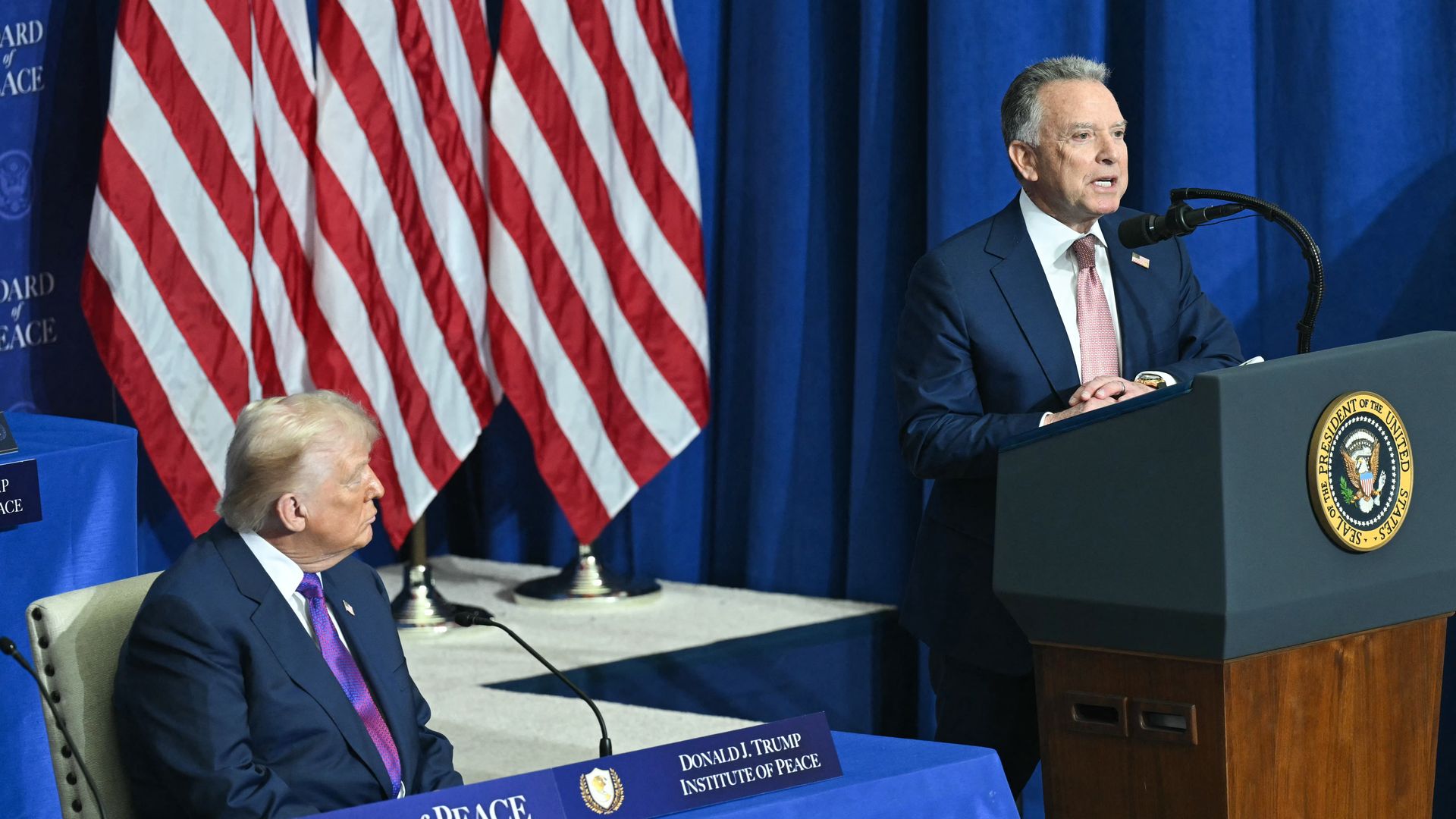
Witkoff speaks at the Board of Peace meeting last week. Photo: Saul Loeb/AFP via Getty
White House envoy Steve Witkoff told a private gathering on Tuesday that the Trump administration is demanding that Iran agree any future nuclear deal will remain in effect indefinitely, according to a U.S. official and two other sources with knowledge of his remarks.
Why it matters: President Trump and other critics of the 2015 Iran nuclear deal negotiated by the Obama administration seized on the "sunset provisions" as one of its main flaws.
- Witkoff made the comments two days before the next round of nuclear talks is scheduled to take place in Geneva.
Breaking it down: According to the 2015 deal, which Trump scrapped, most of the limitations on Iran's nuclear program gradually expired between eight and 25 years after signing. Iran also pledged to never pursue a nuclear weapon.
- Ruling out such "sunset provisions" would strengthen the deal and make it easier for Trump to sell domestically as an upgrade to Obama's
- Iran's foreign minister, Abbas Araghchi, said in an interview with CBS last weekend that Iran could sign a "better" deal that will make sure its nuclear program "remains peaceful forever."
Behind the scenes: "We start with the Iranians with the premise that there is no sunset provision. Whether we get a deal or not, our premise is: you have to behave for the rest of your lives," Witkoff told a gathering of AIPAC donors in Washington, according to the sources.
- Witkoff also said the U.S.-Iran negotiations were currently focused on nuclear issues, but if a deal is reached the Trump administration would like to hold follow-up talks over Iran's missile program and support for proxy militias.
- At that point, the U.S. would like other countries in the region to participate in the talks, he said.
- Witkoff said that during the current nuclear talks, two key issues are Iran's ability to enrich uranium and the fate of its existing stockpile of enriched uranium.
Zoom in: Iran's demand to continue to enrich uranium on its soil is one of the key hurdles in the talks.
- U.S. officials have said Trump could be open to "token" enrichment in Iran if the Iranians prove it won't allow them to develop a nuclear weapon.
- U.S. officials say the Iranians are under a lot of pressure from the mediators — Oman, Qatar, Egypt and Turkey — to move towards a deal with the U.S. that prevents war. But many officials in D.C. and the region remain skeptical the Iranians are willing to reach the high bar Trump has set.
- The White House didn't respond to a request for comment.
Driving the news: Witkoff and Trump's adviser and son-in-law Jared Kushner are expected to meet Araghchi in Geneva on Thursday to discuss a detailed proposal for a nuclear deal, drafted by Iran.
- A source with direct knowledge said the political leadership in Iran had "cleared" the proposal, but it wasn't clear if the Iranians had already provided it to the U.S.
Threat level: The meeting in Geneva will likely be the last chance for a diplomatic breakthrough.
- The message Kushner and Witkoff give to Trump after the meeting will have significant influence on the president's decision to keep talking, or order a military campaign against Iran.
- Trump said in the State of the Union on Tuesday that he prefers a diplomatic solution. But he also laid out a case for war.
What they're saying: "We can't let the craziest and worst regime in the world have nuclear weapons. That's what the president has set as our goal. He is going to try and accomplish that diplomatically, but he has a number of other tools at his disposal to ensure this doesn't happen. He has shown willingness to use them and I hope the Iranians take it seriously in the negotiations tomorrow," Vice President Vance told Fox News on Wednesday.
The other side: Araghchi said in an interview with "India Today" that his goal in the negotiations in Geneva is to prevent war.
- "In the previous round, we made progress. We were able to reach a kind of understanding, and I think based on those understandings we can build something in the form of an agreement, a deal."
