Trump promised to replace taxes with tariffs. Here's what it would cost

Add Axios as your preferred source to
see more of our stories on Google.
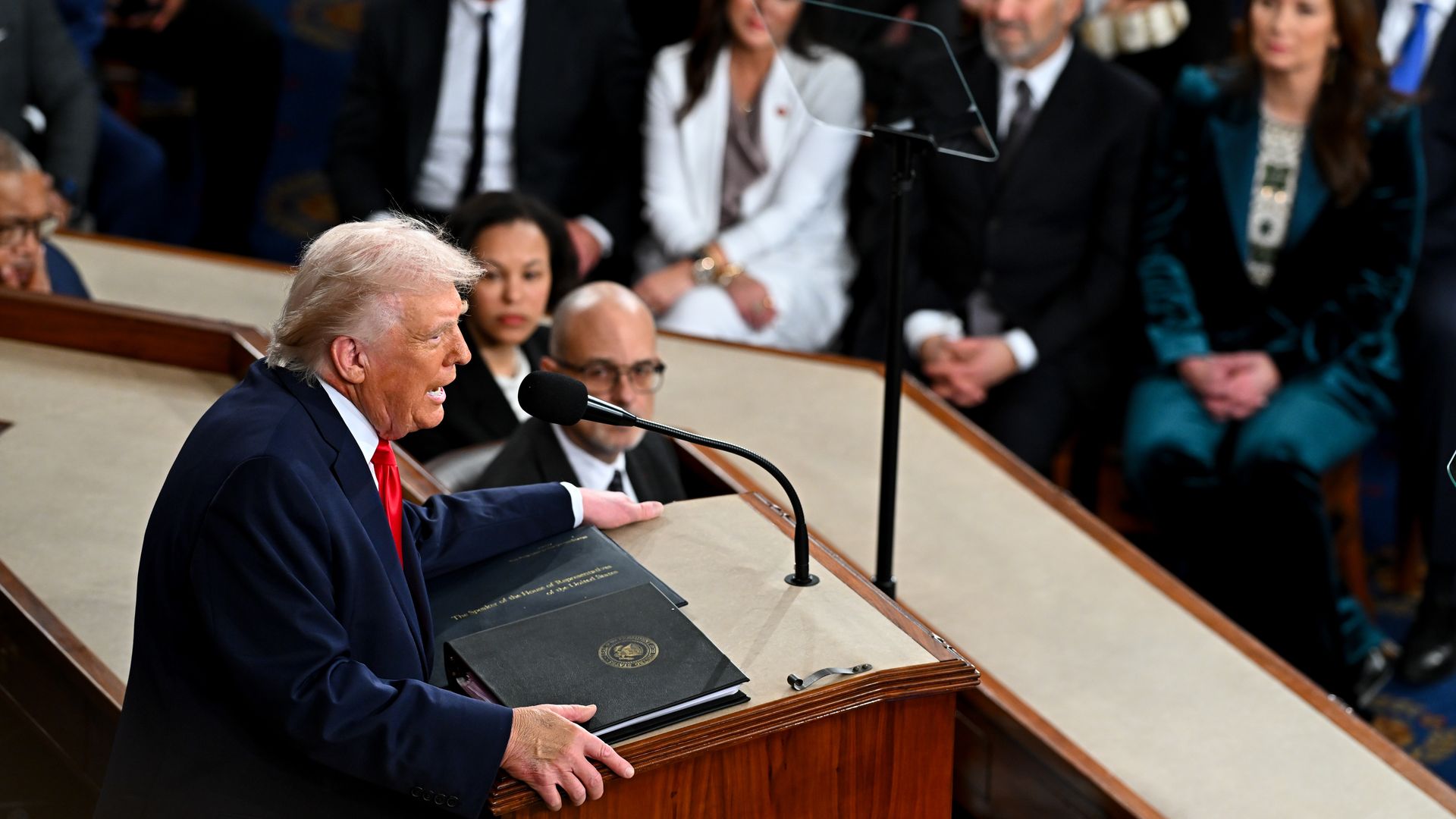
President Trump speaks during the State of the Union address on Tuesday. Photo: Graeme Sloan/Bloomberg via Getty Images
President Trump said on Tuesday he believes tariff revenues could one day "replace" U.S. income tax, the government's primary revenue source.
Why it matters: Customs duties fall well short of the trillions of dollars that Americans pay in taxes each year — income taxes generated roughly 13 times more revenue than tariffs did in the latest fiscal year.
- But Trump's claim is the latest confirmation of plans to keep import taxes at the center of his economic agenda, despite new curbs on his power to unilaterally impose tariffs.
What they're saying: "As time goes by, I believe the tariffs paid for by foreign countries will ... substantially replace the modern day system of income tax, taking a great financial burden off the people that I love," Trump said during his State of the Union speech.
By the numbers: Income taxes alone brought in roughly $2.6 trillion in the most recent fiscal year, according to the Treasury Department.
- Customs duties were only about $195 billion in the same period. That was a record haul, but still far below what's necessary to replace income tax.
Between the lines: Raising tariff rates substantially would not close the gap, either.
- "Higher tariff rates do not translate into proportionally higher revenues because, as the tax rises, consumers buy fewer imports, businesses shift to higher-cost domestic alternatives, and reduce production," economists at the Cato Institute wrote last week.
- "This dynamic response limits how much revenue tariffs can realistically generate."
How it works: Treasury Secretary Scott Bessent said last week that fresh tariffs would bring in the same revenues as the levies previously imposed under the International Emergency Economic Powers Act.
- Those IEEPA tariffs were overturned by the Supreme Court last week, delivering a stunning blow to Trump's economic agenda.
- Trump said he would reinstate a 15% global tariff under a separate trade authority, though Customs and Border Protection sent a memo to importers on Tuesday saying that rate was 10%.
The intrigue: Even top Trump economic officials describe tariff revenue as a melting ice cube.
- If the administration's economic vision is realized — and manufacturers build more facilities in the U.S. — tariff revenue should shrink further over time, as companies substitute foreign goods for domestic-made products.
The bottom line: Trump's sticking to his lofty goals for tariff revenue, even with last week's resounding defeat at the Supreme Court.
