Jon Meacham's "American Struggle": Anthologizing our fragile, durable democracy

Add Axios as your preferred source to
see more of our stories on Google.
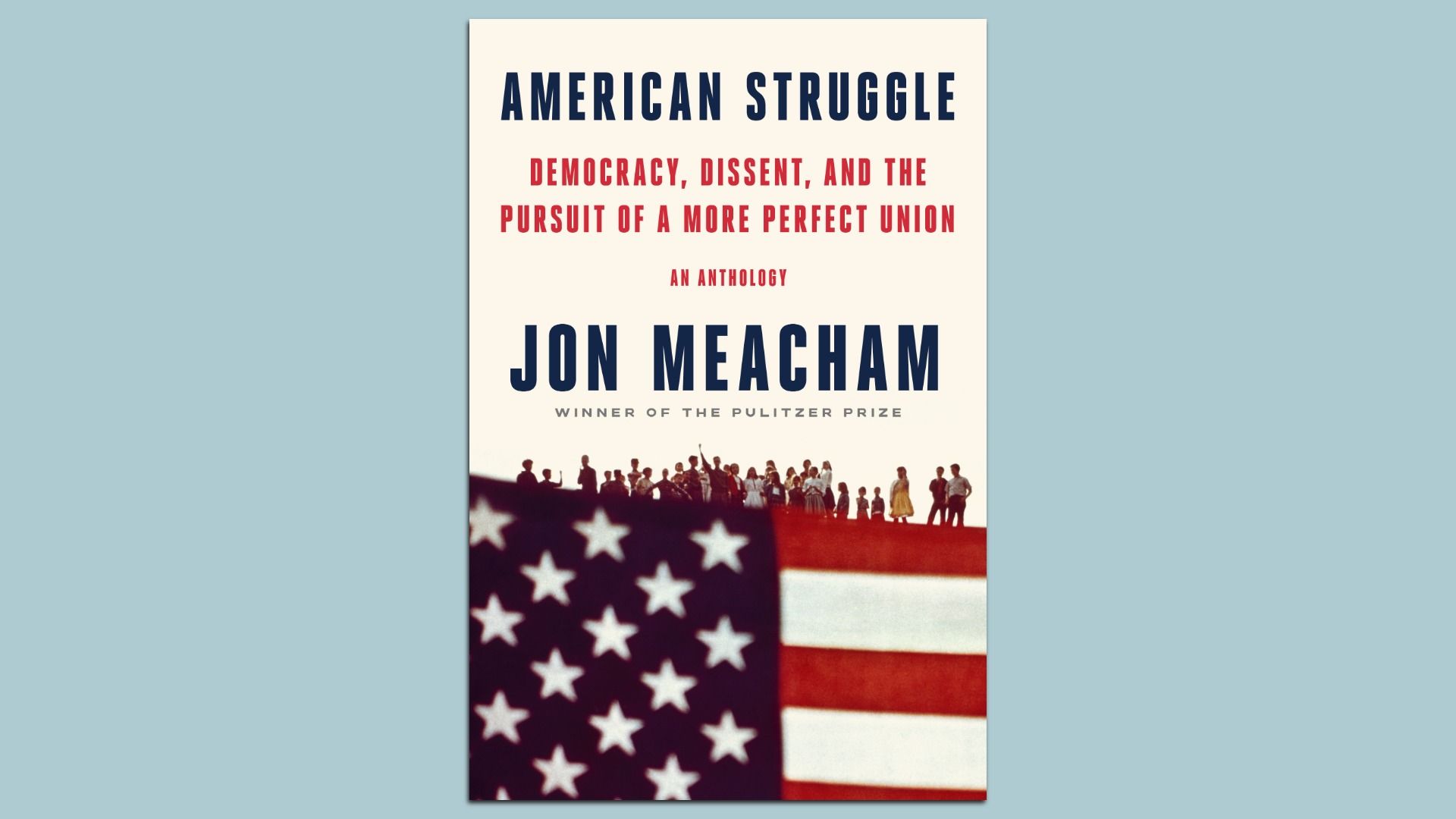
Cover: Random House
We've been here before. That's the bracing, reassuring message Jon Meacham, the acclaimed biographer and historian, has for us in "American Struggle," out Tuesday.
Why it matters: This hefty, meaty book — dedicated to the memory of Charlie Peters, the legendary Washington Monthly founder, who died in 2023 — anthologizes durable, worthy thinking and writing about the American experiment and struggle, from 1619 through last year.
Meacham tells me that after writing "The Soul of America," out in 2018, he "realized it would be great to hear the voices of the past as they were in real time. And from teaching students at Vanderbilt, I also saw that exposure to original documents could be crucial in illuminating moments that might seem remote but really aren't."
- "All of us who do this kind of work," Meacham continued, "are asked two questions all the time: Has it ever been like this? And what can we do?"
- "This anthology — this convening, to use a terrible corporate-y term — shows us that the past was never easy, that the work of citizenship and of making the Union more perfect is always fraught. And on the question of action, the example of Frederick Douglass ['I do not despair of this country'] looms largest: Power concedes nothing without a fight, and we must live in hope. This collection should make it clear: Despair is a sin. They endure, and so must we."
Zoom in: Meacham, who was the wunderkind editor of Newsweek before he became a Pulitzer Prize-winning author, writes in the introduction: "Nativism, xenophobia, cultural populism, and broad political fear have shaped the Republic from the beginning, and always will. Such is the nature of life in a fallen world; anxiety and its manifestations in the public square ebb and flow. (Truth be told, they mostly flow, which is the occasion of our conversation here.) The American Founders understood this. 'If men were angels,' James Madison wrote, 'then no government would be necessary' — and given that men were so self-evidently un-angelic, the American government was designed to check our passions and to balance our failings."
- "In our own un-angelic moment," Meacham adds, "the speeches, letters, and essays collected here remind us that American politics is inherently dramatic and tends toward the inflammatory and the superlative. Candidates and partisans and commentators from age to age depict every election as not just a choice, but as an existential battle; not only as contests of opinion, but as clashes of worldviews. Progress has been forever contingent; the republic has always been fragile."
