How the SAVE America Act could impact 21 million voters

Add Axios as your preferred source to
see more of our stories on Google.
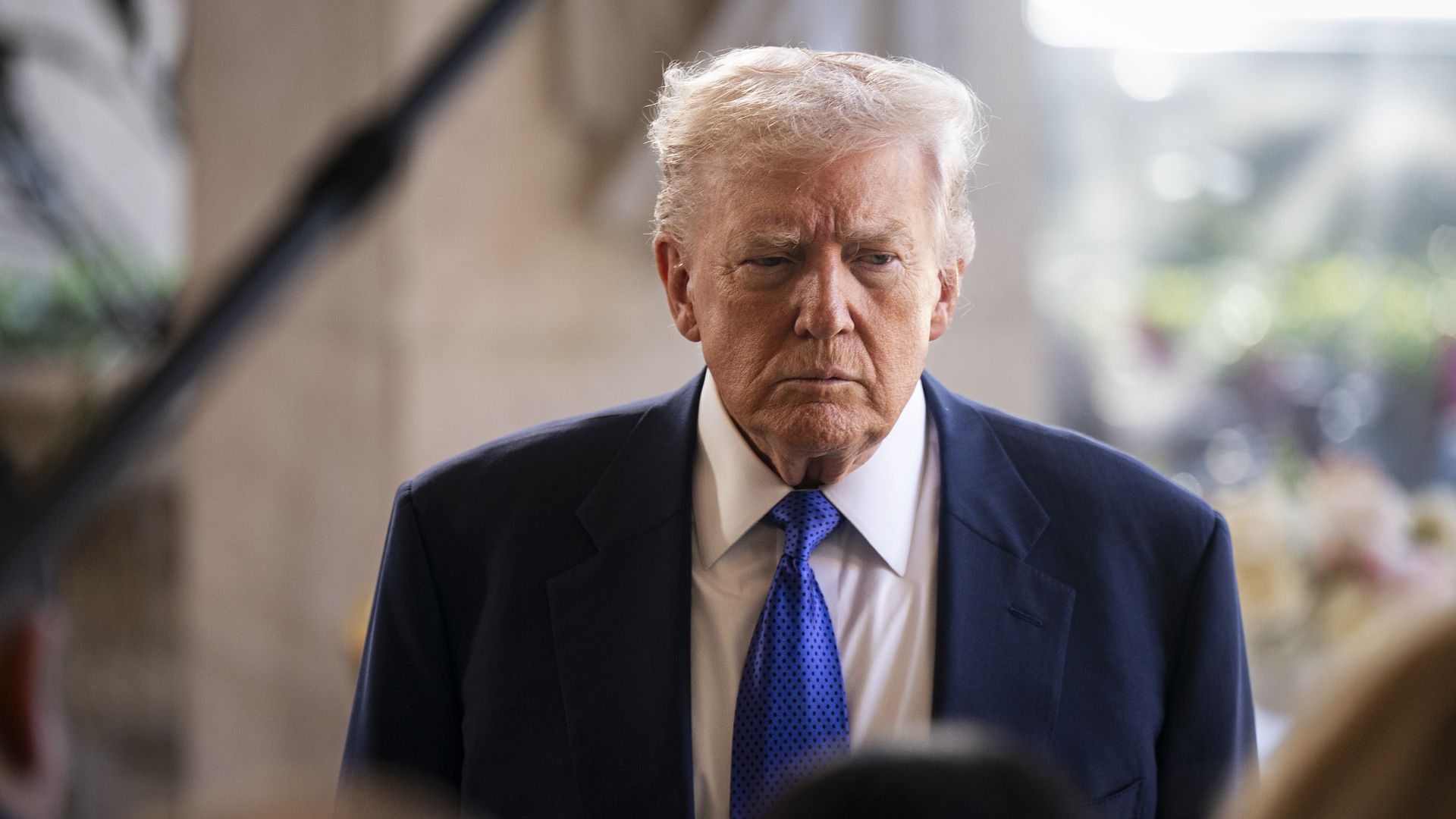
President Trump has called for Republicans to "nationalize" elections, end mail-in ballots and pass the SAVE America Act. Photo by Al Drago/Getty Images
President Trump's push to "nationalize" elections includes his backing of a bill that could be a "nightmare" for voters, election experts told Axios.
Why it matters: The House is scheduled to vote on the SAVE America Act this week, which requires proof of citizenship to vote, and could potentially prevent millions of people from casting their ballots.
- Trump and Republicans have framed their election overhaul efforts as necessary to stop noncitizen voting, but that is both illegal and rare.
Catch up quick: Last week, Trump told ex-FBI deputy director Dan Bongino the GOP should "nationalize" elections in 15 places — without specifying where — and has repeatedly claimed without evidence that elections are "rigged."
- "President Trump cares deeply about the safety and security of America's elections, that's why he has urged Congress to pass the SAVE Act and other legislative proposals," White House spokeswoman Abigail Jackson told Axios this week.
Democrats and nonprofit groups have rallied against the bill.
- Democrats have accused Trump of using the bill to manipulate midterms in the GOP's favor, with Sen. Adam Schiff (D-Calif.) saying Sunday on ABC News' "This Week" that Trump "intends to try to subvert the elections."
- The SAVE America Act "sends clear marching orders for state lawmakers to enact Trump's extreme elections agenda — all with an eye toward this year's midterms," Samantha Tarazi, CEO of Voting Rights Lab, a nonpartisan organization that tracks and analyzes election laws, told Axios.
Here's what the SAVE America Act could mean for voting:
What the SAVE America Act aims to change
State of play: SAVE America doesn't end mail-in voting, despite Trump's repeated calls for it.
- Last week, the president wrote on Truth Social: "NO MAIL-IN BALLOTS (EXCEPT FOR ILLNESS, DISABILITY, MILITARY, OR TRAVEL!)."
Zoom in: The bill would require proof of citizenship to register to vote in federal elections. Options to prove citizenship include:
- A REAL ID-compliant ID showing citizenship
- A passport
- A military ID with proof of U.S. birth
- A government-issued photo ID showing U.S. birth, or other government-issued photo ID with a birth certificate, other proof of U.S. birth or naturalization documents.
What the SAVE America Act would change
By the numbers: In every iteration of the bill, a Brennan Center analysis found, "the SAVE Act would require American citizens to show documents like a passport or birth certificate to register to vote."
- The Brennan Center estimates that more than 21 million Americans lack ready access to those documents, that roughly half of Americans don't have a passport, and millions lack access to a paper copy of their birth certificate.
- "Likewise, millions of women whose married names aren't on their birth certificates or passports would face extra steps just to make their voices heard," the researchers said.
What they're saying: Todd Belt, a professor at George Washington University who researches campaigns and elections, told Axios that if the SAVE Act is passed, "people without a government-issued ID will no longer be able to vote."
- "Most political analysis of the impact demonstrates a lower turnout rate among Blacks, Latinos and low-income voters," he said.
Alex Ault, policy counsel at the Lawyers' Committee for Civil Rights Under Law, told Axios that "the threat level is grave."
- The bill is "sort of a game changer in terms of what any state would need to run an election."
- "It's not just registering to vote — verification, having to bring your paper birth certificate to the polls, it's not something people are used to," Ault said. "It's going to be uneven and a nightmare."
What more aggressive versions of the bill are targeting
What we're watching: More restrictive versions of the SAVE America Act are also circulating, but they're less likely to be passed by Congress.
- One version of the bill would place additional strain on election officials by mandating voter-roll purges every 30 days and ending the 90-day "quiet period" that prevents voters from being mistakenly removed from the rolls.
The bottom line: Ault said that "in recent memory," every single "massive change to voting" has been based on evidence, and has had the goal of ensuring access to citizens facing roadblocks.
- In contrast, he said, the "onerous restrictions" Republicans are gunning for "without any kind of proportional threat is crazy."
