Why Congress gets to see unredacted Epstein files and how they'll read them

Add Axios as your preferred source to
see more of our stories on Google.
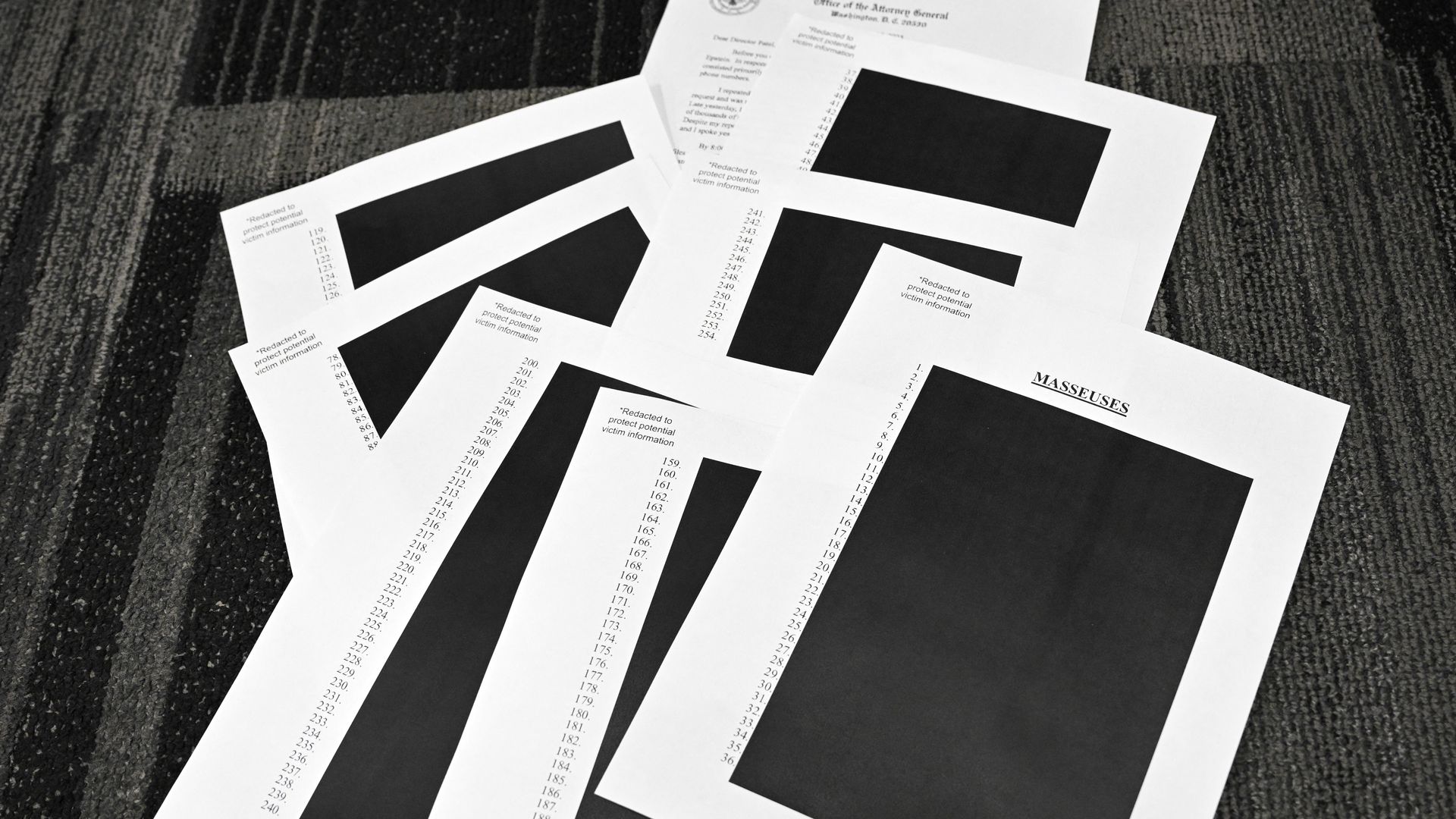
Redacted documents are displayed in Washington, D.C., on Dec. 19, 2025, after the Justice Department began releasing records from its investigation into Jeffrey Epstein.Photo: Mandel Ngan/AFP via Getty Images
Starting Monday, members of Congress can access millions of uncensored records about convicted sex offender Jeffrey Epstein in the federal government's possession.
Why it matters: The Justice Department (DOJ) has made public millions of heavily redacted files. Now, Congress members will have the chance to examine the unredacted reams for hidden details, and determine whether the Trump administration fully complied with the Epstein Transparency Act.
- "We will not rest until the Epstein class is brought to justice," said Rep. Ro Khanna (D-Calif.) in an X post Sunday.
- The review only covers the three million files the DOJ made available to the public, not all 6 million documents that are in the federal government's possession.
- Here's why and how the process will work.
Why Congress can view the unredacted Epstein files
The Epstein Transparency Act required the DOJ to release millions of documents from the Epstein probe.
- But when the Trump administration began its disclosures, many of the records were heavily redacted, providing little new information or hiding key details.
- Lawmakers and the public cried foul.
Between the lines: The act said no documents could be "withheld, delayed, or redacted on the basis of embarrassment, reputational harm, or political sensitivity, including to any government official, public figure, or foreign dignitary."
- However, it did allow for redactions or withholdings over active federal investigations, victims' personal information, child sex abuse material or anything regarding classified information, among other things.
Catch up quick: Deputy Attorney General Todd Blanche said last month that members of Congress would be given access to the unredacted materials if they requested it.
- House Judiciary Committee ranking member Jamie Raskin (D-Md.) sent Blanche a letter asking for the opportunity to review the files, prompting DOJ to share the files with Congress.
- Rep. Nancy Mace (R-S.C.) and ex Rep. Marjorie Taylor Greene (R-Ga.) both advocated for access to the uncensored documents, too.
How Congress will read unredacted Epstein files
Members and leaders of the House and Senate Judiciary committees will have priority to review the files, but all of Congress will eventually have access, NBC News reports.
How it works: Beginning Feb. 9, the documents were made available on computers inside a reading room at the DOJ building in Washington, D.C.
- The files are available to Congress from 9am to 6pm, Monday to Friday.
The fine print: Lawmakers need to give the DOJ 24 hours notice before they are permitted to view the files.
- Lawmakers cannot bring other electronic devices into the room, but they are allowed to take notes.
- Only members of Congress can review the unredacted files — not members of their staff.
What we're watching: Reps. Thomas Massie (R-Ky.) and Khanna, who led the push for the Epstein Transparency Act, are expected to visit the DOJ at 3pm Monday.
- The pair is then expected to hold a press conference at 5pm after viewing the files.
- Attorney General Pam Bondi is scheduled to give testimony to the House Judiciary Committee on Wednesday.
More from Axios:
