U.S.-EU trade deal now in limbo

Add Axios as your preferred source to
see more of our stories on Google.
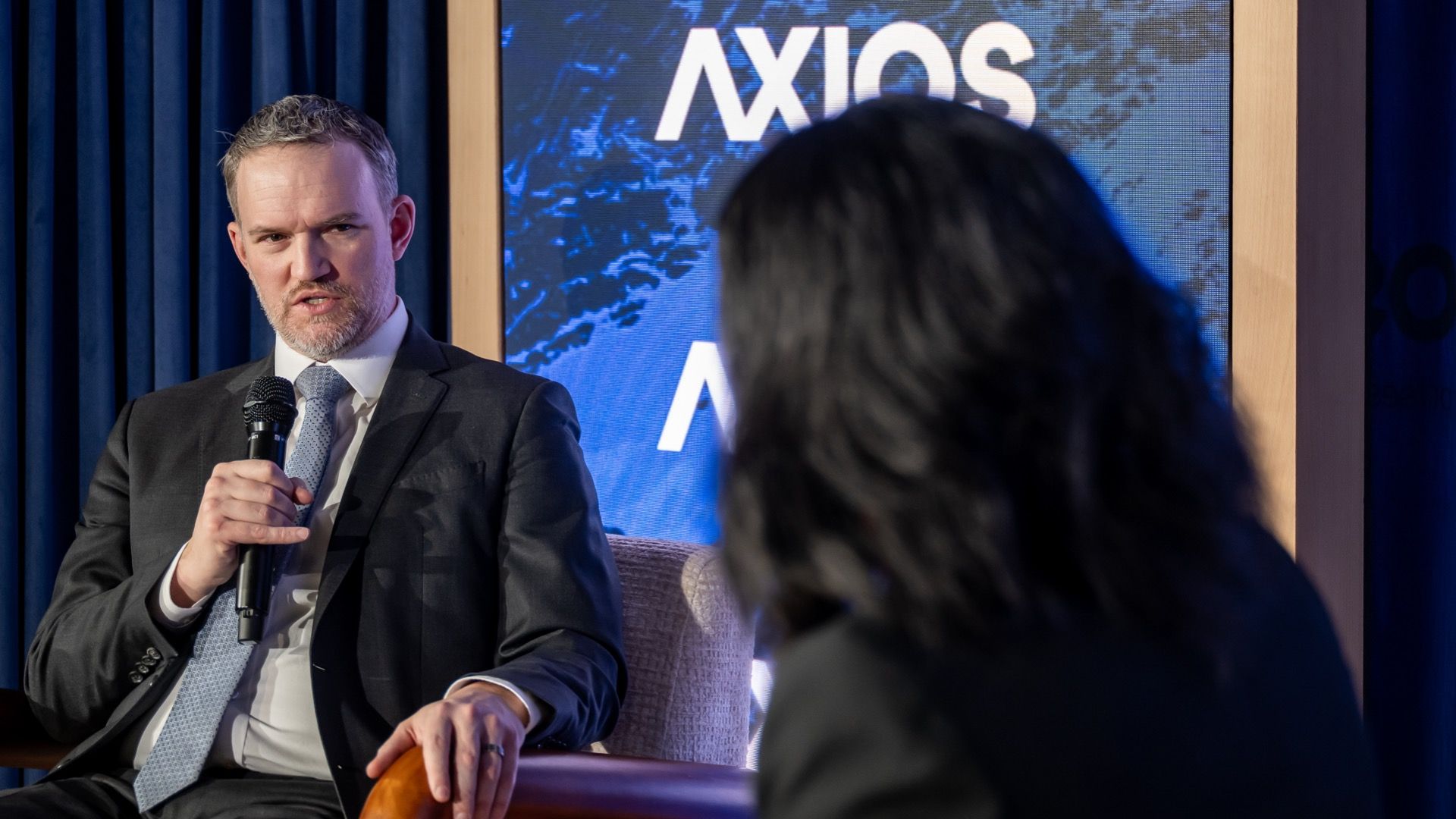
U.S. Trade Representative Jamieson Greer speaks at Axios House on Wednesday. Photo: Dani Ammann Photography for Axios
One of the most significant trade deals of the Trump era so far could fall apart: European lawmakers said on Wednesday that they would stop implementation of the U.S.-European Union trade deal in the wake of fresh tariff threats.
Why it matters: This is the world's new realization. A Trump trade deal means new tariffs are still an economic risk, a swift change from the agreements that underpinned the global economy in decades past.
- It comes hours after President Trump's top trade negotiator told Axios that the trade deal was still intact.
The intrigue: The trade pact, announced last summer, was quick to be negotiated and might be quick to unravel, presenting a new risk for the global economy.
- Just minutes after Trump stepped off the stage at the World Economic Forum on Wednesday, lawmakers in Europe suspended work on implementing the sweeping trade deal with the U.S.
- Trump name-checked the trade deal in his 90-minute-long remarks, citing it as one of many the administration had landed to reset the global trading system.
U.S. Trade Representative Jamieson Greer told Axios that he believed that the trade deal — and a separate agreement with the U.K. — would not be undermined by Trump's threats to increase tariffs unless there is a deal for Denmark to sell Greenland to the U.S.
- "We had a trade agreement about certain matters and we should proceed on those matters — and things that fall outside the four corners of the agreement should be held in their own way."
- "It was not a deal that said, 'Here's the deal, and if there's any other issues, we just won't raise [tariffs]," Greer said.
What they're saying: In a statement, European Union lawmakers — charged with implementing the agreement — said they were pausing work on the tariffs, which were threatened to be enacted on Feb. 1.
- Bernd Lange, the top trade lawmaker in the European Parliament, said that representatives were pausing work "until the U.S. decides to re-engage on a path of cooperation rather than confrontation, and before any further steps are taken."
- "By using tariffs as a coercive instrument, the U.S. is undermining the stability and predictability of EU-U.S. trade relations," Lange said.
- On Tuesday, the Parliament said that it would delay a vote on ratification of the deal in the wake of the threats. The deal was partially implemented but still required approval from European Parliament to be finalized.
Zoom in: Earlier, Greer said that some trade deals have clauses that specify that countries can take trade measures — including implementing tariffs — in the wake of national security concerns.
- Such a clause "has always been the reality under the WTO," Greer said, referring to the World Trade Organization agreements that for years dominated the globe's trade rules.
- "People can argue with us and say, 'Well, that's not national security,' but that's for us to judge, right?"
- "We're going to have geopolitical events that drive trade policy. Sometimes national security will have an effect on this, too," Greer said.
What to watch: It is unclear whether the suspension will ultimately result in a reversion to pre-trade deal terms that saw tariffs on U.S.-bound European goods as high as 25% for certain goods, including autos.
- The deal capped tariffs at 15%. Europe also agreed to drop tariffs on American exports to zero, while agreeing to invest billions of dollars in the U.S.
The intrigue: Before news that Europe was freezing its work on the agreement, Greer took a swipe at Europe for moving too slow to implement the deal.
- "When they say things like, 'Well, maybe we should put [the trade deal] on pause,' they are putting on pause a process that's already been super slow," he said.
Editor's note: This story has been updated with the news about the European Parliament's suspension of work on the U.S.-EU trade deal.
