White House announces "phase two" of Gaza ceasefire deal

Add Axios as your preferred source to
see more of our stories on Google.
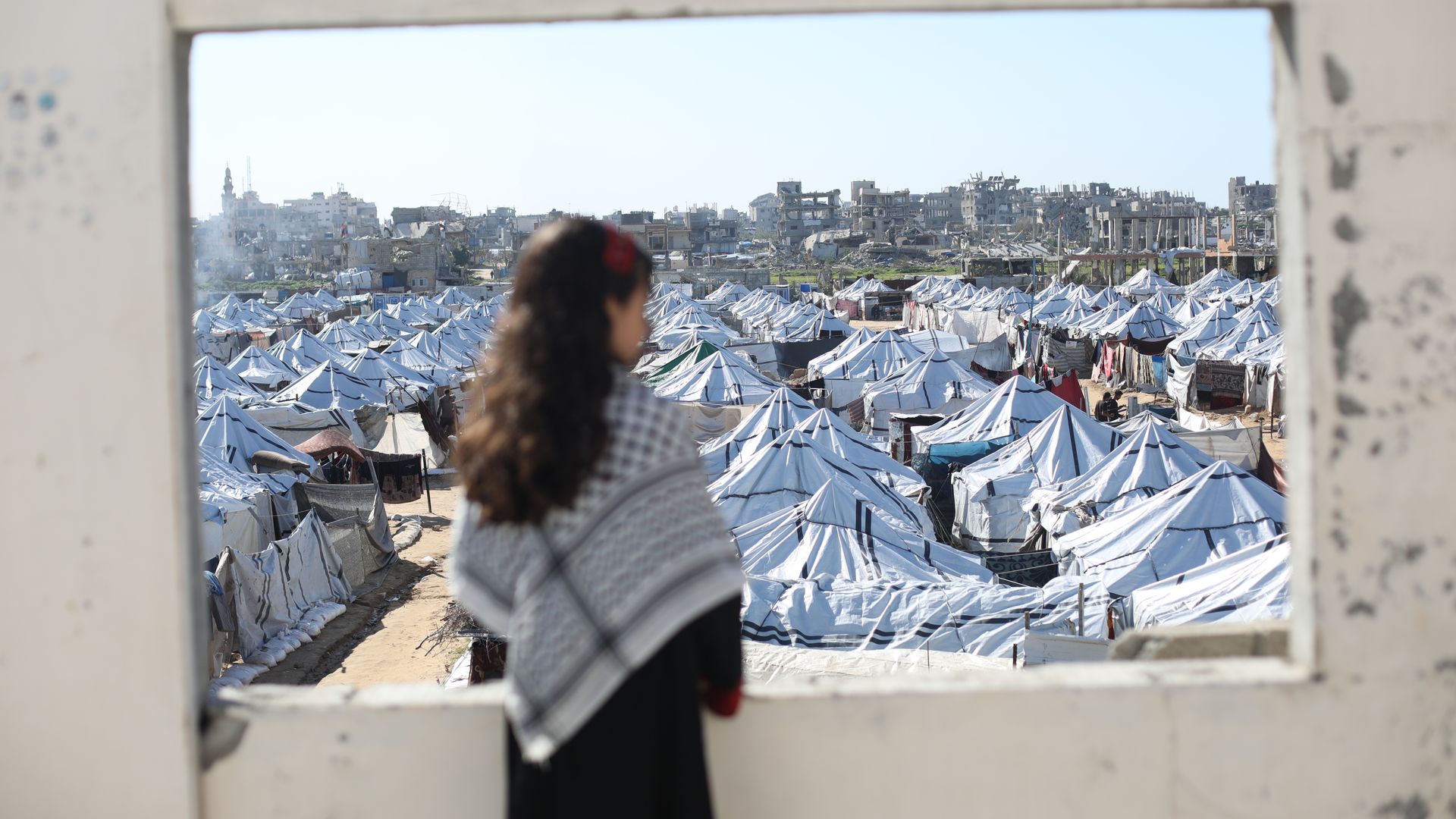
Displaced Palestinians in Nuseirat, Gaza Strip on January 11. Photo: Hassan Jedi/Anadolu via Getty
The White House announced on Wednesday that it was launching "phase two" of the Gaza ceasefire agreement with the establishment of a new Palestinian technocratic government.
Why it matters: U.S. officials worry the situation in Gaza could deteriorate into a renewed war unless there is progress toward implementing the second phase of the deal, which involves Hamas giving up its weapons, Israel pulling its troops back, and new governing and security structures coming into force.
State of play: While violence decreased significantly after the ceasefire was announced in October, hundreds of Palestinians have been killed in Israeli strikes during that time and the truce remains fragile.
- The humanitarian situation has improved significantly, with the UN announcing last week that 100% of basic food needs in Gaza have been met for first time since 2023.
- Aid organizations say the main challenge in Gaza at the moment is shelter. Israel refuses to allow big tents into Gaza, claiming their metal poles can could be used for producing weapons, sources say.
- Nearly the entire population of Gaza was displaced by the war and hundreds of thousands of people are still living in tents. U.S. officials hope rebuilding will begin in earnest in phase two, though the process is expected to take many years
- All live hostages were returned under phase one of the deal, though the remains of one deceased Israeli hostage are still in Gaza.
- While many issues are unresolved, the White House decided to move forward to the second phase and announce the Palestinian technocratic government to create momentum.
What they're saying: "Today, on behalf of President Trump, we are announcing the launch of Phase Two of the President's 20-Point Plan to End the Gaza Conflict, moving from ceasefire to demilitarization, technocratic governance, and reconstruction," White House envoy State Witkoff said in a statement.
- Witkoff said the U.S. expects Hamas "to comply fully with its obligations, including the immediate return of the final deceased hostage. Failure to do so will bring serious consequences."
- "We are deeply grateful to Egypt, Turkey, and Qatar for their indispensable mediation efforts that made all progress to date possible," the White House envoy said.
Driving the news: Egypt announced the Palestinian technocratic government, which will be responsible for day-to-day governance, on Wednesday after a meeting of the Palestinian factions in Cairo.
- The technocratic government will be headed by Ali Shaath, a former deputy minister of transportation in the Palestinian Authority. All members of the new government are from Gaza.
- Palestinian Vice President Hussein al-Sheikh welcomed the announcement and thanked Trump for his efforts, while stressing that the new institutions in Gaza must be linked to the PA government in the West Bank, rather than creating "duplication, division, separation or fragmentation."
What's next: The Trump-led Board of Peace, which will oversee the technocratic government, has not yet been announced.
- U.S. officials said that the White House sent invitations to several countries to join the board and hopes to formally establish it within days.
- Trump will chair the first meeting of the Board of Peace next week during the World Economic Forum in Davos, the officials said.
- Former UN envoy to the Middle East Nikolay Mladenov will be the Board of Peace representative on the ground in Gaza and will work with the new government on the demilitarization and reconstruction process, according to sources with knowledge.
What to watch: The U.S. has also yet to announce which countries will contribute troops to the International Stabilization Force, which is supposed to take responsibility for security in Gaza during phase two of the deal.
- U.S. officials say that Indonesia and Morocco are expected to be the main troop contributing countries at this stage.
- A senior U.S. official contended that the protests in Iran will make it harder to Tehran to provide support to Hamas, potentially helping the implementation of the second phase.
