Powell probe comes as SCOTUS weighs Trump's power to fire

Add Axios as your preferred source to
see more of our stories on Google.
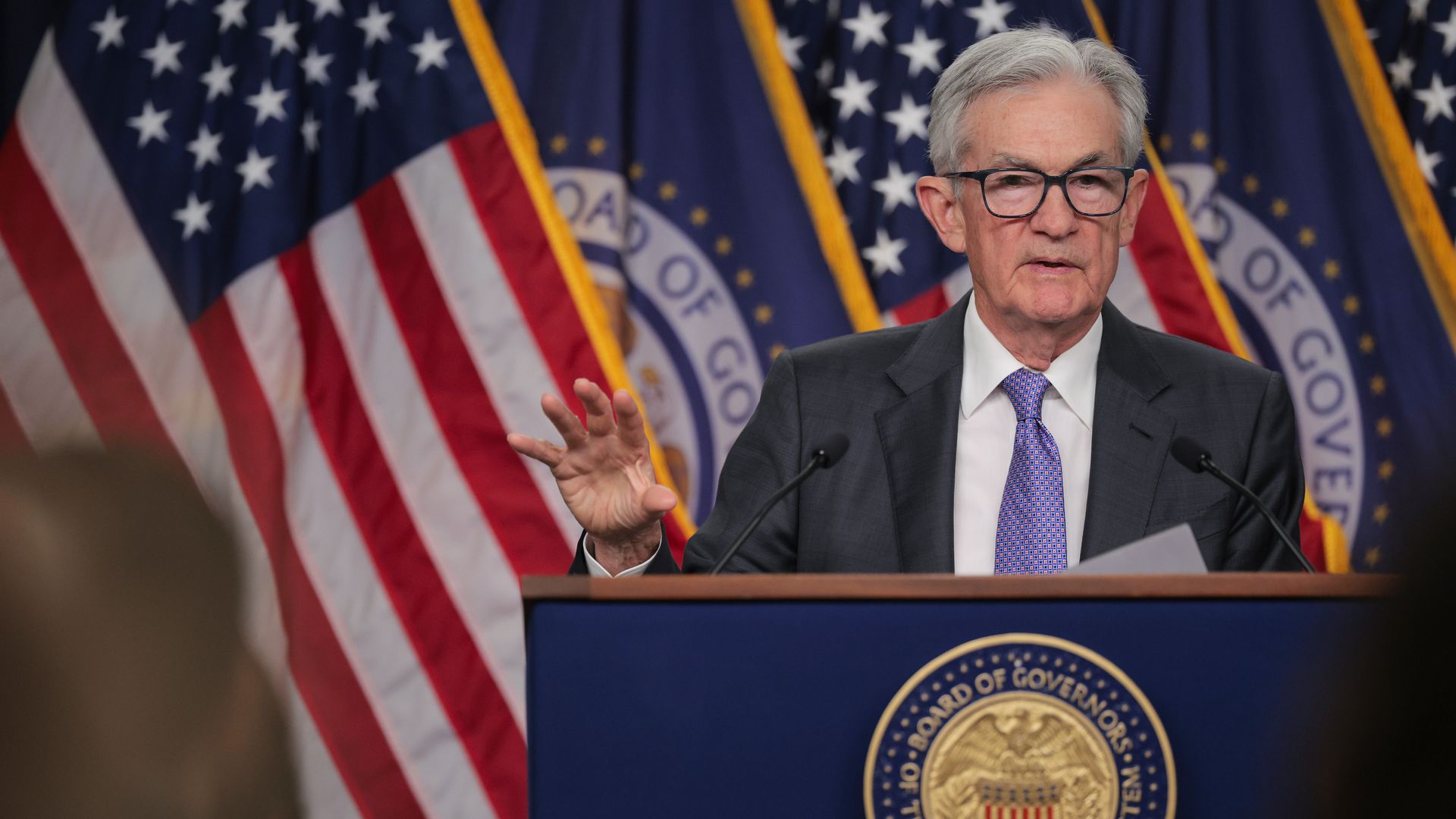
Federal Reserve Chair Jerome Powell speaks during a press conference on Dec. 10, 2025 in Washington, DC. Photo: Chip Somodevilla/Getty Images
The probe into Federal Reserve Chair Jerome Powell comes as the Supreme Court is weighing just how strong President Trump's grip on independent agencies can get.
The big picture: Trump has taken significant steps to reshape the federal bureaucracy to his liking, but the Fed has eluded him. However, the Supreme Court is set to hear a pair of cases — that of Fed governor Lisa Cook and fired Federal Trade Commissioner Rebecca Slaughter — that could expand the president's power to fire.
- So far, Trump has been successful in claiming unprecedented power. Last year, the Supreme Court signed off on many of the president's most sweeping claims, and the court will continue to weigh the limits of his power this year.
What they're saying: Jenny Breen, an associate law professor at Syracuse who researches democracy with a focus on democratic erosion, says the high court has allowed "presidential power to seep into areas in which it was never intended to exist."
- With "the erosion of independent agencies," she says, comes "the erosion of any kind of check on presidential power."
State of play: The Federal Reserve Act of 1913 states that the president can remove a member of the board only "for cause," a threshold Cook contends Trump has not met in her case.
- While the Supreme Court previously green-lit some of Trump's firings, it seems keen on insulating the Fed — though legal scholars have questioned the court's basis for doing so.
- In an order OK-ing ousters from the Merit Systems Protection Board (MSPB) and the National Labor Relations Board (NLRB), the high court's majority essentially said the Fed is special because it is a "uniquely structured, quasi-private entity."
Threat level: Even if the Fed is essentially carved out, eroding protections for agency officials still poses a risk to the central bank, says Breen, arguing the Supreme Court is more broadly "enabling the construction of an unchecked executive power."
- She says it could essentially be a "vibe check" on the breadth of executive power: "It signals to everyone in the government that they're vulnerable."
- While Trump has not tried to fire Powell and says he knows nothing about the Fed investigation, he's said he'd "love to" dismiss him and has long hammered the Fed chair to cut interest rates.
The Supreme Court will hear arguments on Trump's attempt to fire Cook on unproven allegations of mortgage fraud on Jan. 21.
- He was previously blocked from doing so by a federal judge, and the Supreme Court later decided Cook could stay in her role pending oral arguments.
Yes, but: In Slaughter's case, the Supreme Court seems poised to allow Trump to fire members of the FTC — a decision that could further chip away at some nine decades of precedent at the foundation of the administrative state, known as Humphrey's Executor.
- Humphrey's Executor protects independent agency leaders from being fired without cause, but has been weakened by the court in recent years.
What we're watching: Breen does not predict the justices — at least, the conservative-leaning ones — will raise the issue of the Powell probe in oral arguments next week, citing "a real refusal to engage with" real-world circumstances.
- But she says the Powell "investigation shows ... just how unburdened the administration feels by democratic norms, so I think any kind of check would be positive."
Go deeper: Trump's push for executive control runs into a hurdle: economic independence
