U.S. dollar dominance could be in danger

Add Axios as your preferred source to
see more of our stories on Google.
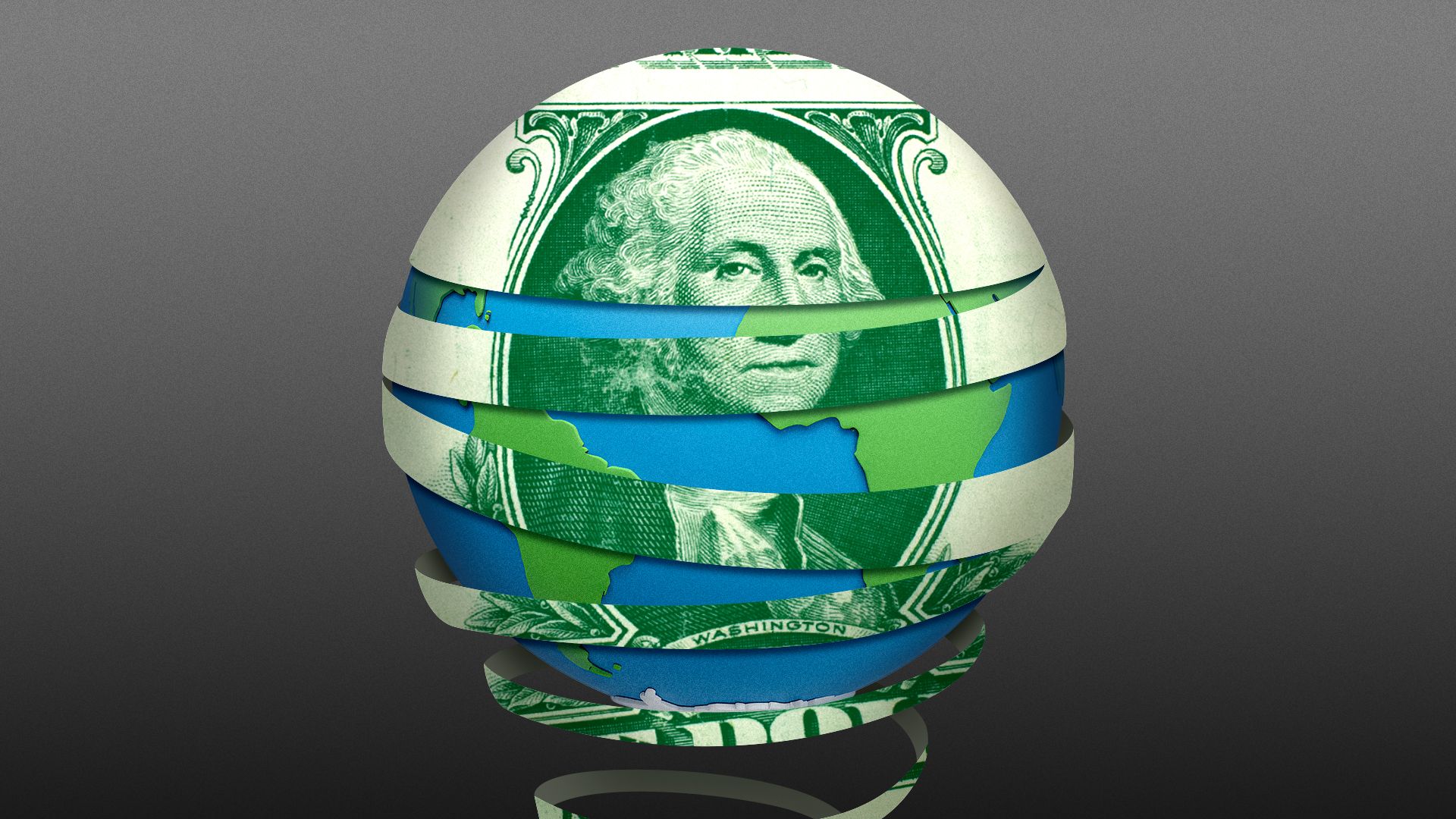
Illustration: Lindsey Bailey/Axios
The status of the U.S. dollar as the global reserve currency is increasingly at risk, as central banks and investors continue to see America prioritizing its own interests, most recently in Venezuela.
Why it matters: It's an advantage to have the world's central banks keep their investments in your currency. Losing that would have broad implications for markets and the economy.
What they're saying: With the U.S. "very much doing whatever it wants…I think there's going to be a real push this year to for people to bring capital home," Jay Pelosky, founder of TPW Advisory, tells Axios.
- "In this environment, the U.S. is becoming less attractive," he adds.
- The seizure of Nicolás Maduro is the latest example of the America First focus of the Trump administration, a departure from the globalization that supported the dollar as the global reserve currency to begin with.
Catch up quick: Central banks are diversifying their holdings away from the dollar, in a move known as de-dollarization, which is also buoying alternative assets like gold.
- The dollar has been the go-to currency because of the dominance of the U.S. economy, the liquidity of its markets and trust in its institutions.
Threat level: Several factors have chipped away at that trust.
- The U.S. froze large portions of the central bank reserves in Russia after it invaded Ukraine and has increasingly used the dollar as a sanctions tool.
- Prolonged political and fiscal uncertainties, including tariff policy and debt-ceiling brinkmanship, raise questions about policy predictability.
- In response, central banks around the world have gradually diversified and shifted some of their reserves into gold and other currencies.
- The U.S. dollar share of global foreign exchange reserves slipped to multidecade lows in 2025, with the dollar falling nearly 9%.
Reality check: The tech rally may have the opposite effect, luring investors who want access to American AI goodness to the states, according to Steve Englander, global head of G10 FX research at Standard Chartered.
- Those inflows into American equities would likely be dollar-positive, since foreign investors typically need to buy dollars to purchase U.S. stocks, often without hedging against currency moves, increasing demand for the dollar.
- Englander says it is too soon to tell whether the capture of Maduro is dollar positive or negative. If the world is further broken into trading blocks, it could be a headwind, but if new leadership in Venezuela is cooperative, that could lift the dollar.
The big picture: There are several important advantages to the U.S. maintaining its global reserve currency status.
- It lowers borrowing costs to run fiscal deficits and spending surpluses.
- It is a source of geopolitical power, enabling the U.S. to exert dominance over countries far from our shores without firing a shot.
- It helps American businesses, which can borrow and trade in their home currency with less risk of losing money due to fluctuations.
The bottom line: Economist Kenneth Rogoff emailed me to say Venezuela is "a clear win for the dollar's reserve currency status, but Trump has so many balls in the air, it is hard to know how important this will prove compared to say, undermining the rule of law and Fed independence (on the minus side) and advancing U.S. leadership in AI (on the plus side)."
- Nobody knows how this will play out. But the outcome is critical for the U.S. if it wants to continue enjoying its reserve currency status.
