Trump unveils his marijuana plan. Here are the next steps to make it a reality

Add Axios as your preferred source to
see more of our stories on Google.
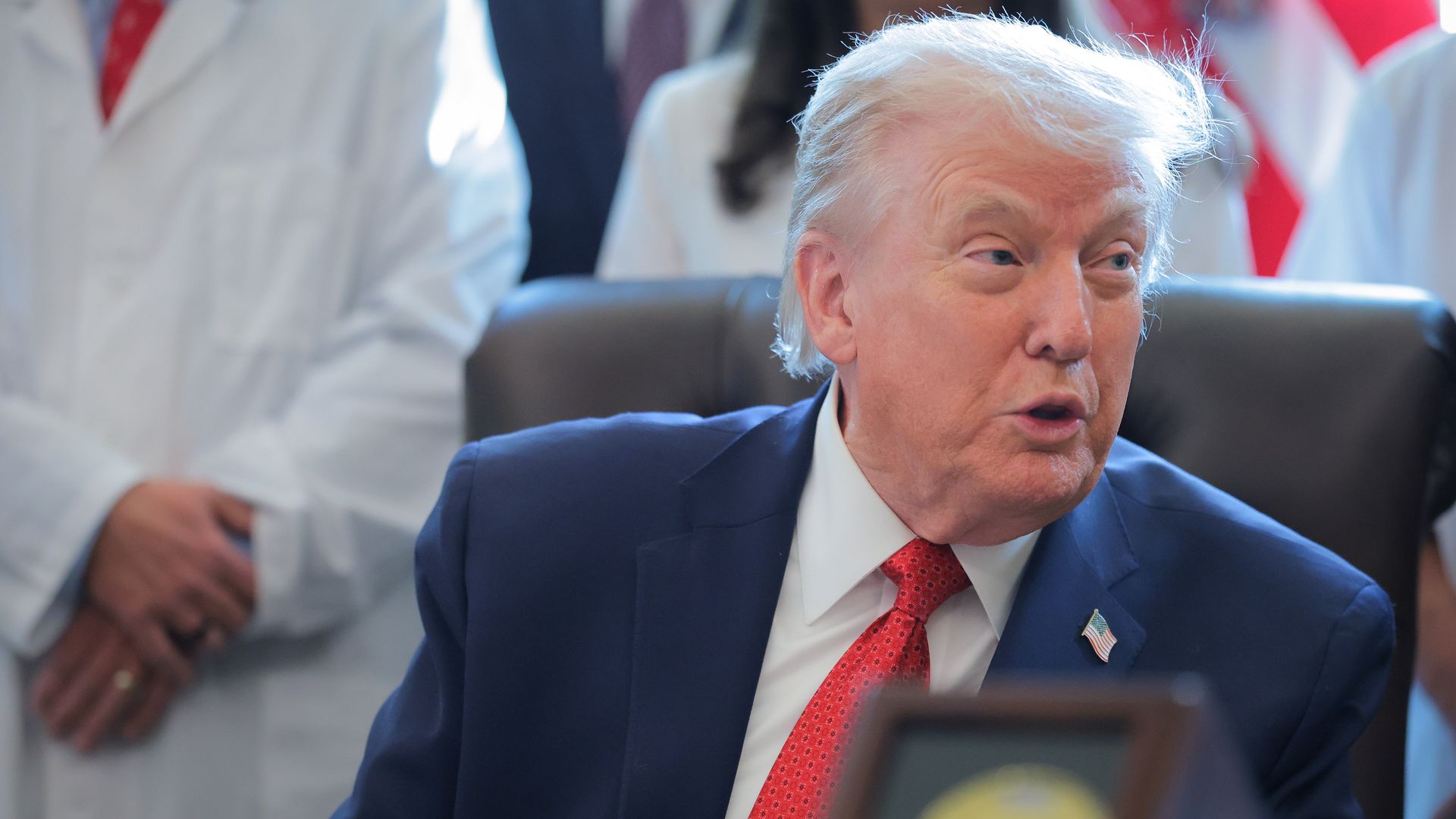
President Trump speaks before signing an executive order reclassifying marijuana as a Schedule III drug in the Oval Office at the White House on Dec. 18, 2025, in Washington, D.C. Photo: Anna Moneymaker/Getty Images
President Trump's executive order to reclassify marijuana into a Schedule III drug is only the beginning.
The big picture: Reclassification is a lengthy process that would change how marijuana can be obtained for medical uses and open the door for more cannabis research. It wouldn't legalize the drug directly.
- For now, marijuana remains a Schedule I drug, which is the same category as LSD, ecstasy and peyote. That classification restricts the manufacturing, distribution, dispensing, and possession of those substances — except for federal research purposes.
- A Schedule III reclassification would open the doors for potential medicinal uses and research, but that wouldn't happen anytime soon.
Catch up quick: Trump announced an executive order Thursday to reclassify marijuana as a Schedule III substance, which would put it within the same category as ketamine and steroids.
- Trump's new executive order directs the attorney general to continue the process of rescheduling marijuana. The president said previously he was open to picking up where Biden left off.
- "This action has been requested by American patients suffering from extreme pain, incurable diseases, aggressive cancers, seizure disorders, neurological problems, and more," Trump said Thursday.
How it works: The process to reclassify a drug can take years and requires some heavy lifting from the U.S. Drug Enforcement Administration. That includes seeking input from the government agencies, the general public and scientific groups.
- The federal government, by putting reclassification into motion, puts itself at risk of lawsuits and court rulings, too.
Here's what to know about the next steps.
How the marijuana reclassification process works
Marijuana is currently classified as a Schedule I drug under the federal Controlled Substances Act, which regulates all substances under one of five different schedules.
- The placements are "based upon the substance's medical use, potential for abuse, and safety or dependence liability," per the Drug Enforcement Administration.
The CSA gives the Attorney General, who leads the Department of Justice, the ability to authorize changes.
- But that power has effectively been given to the DEA, which is within the DOJ.
- The DEA and the Department of Health and Human Services (HHS) both make requests to add, delete or change the schedule of a drug.
- Separately, a petition filed by an interested party — including, but not limited to, drugmakers, a medical society or individual citizens — can call for a change to a drug's regulation schedule, the DEA says.
To determine which schedule drugs should be categorized under, the CSA requires specific factors to be considered, including:
- Potential of abuse, and the history of abuse.
- The scope or duration of any abuse.
- Any health risks to the public.
- Scientific knowledge and evidence about the drug and its pharmacological effects, if known.
- Any psychic or physiological dependence.
- If the drug is "an immediate precursor of a substance already controlled" under the CSA.
Next steps for DEA and HHS
The rescheduling process follows a "formal rulemaking" procedure under the CSA, per the Ohio State University's Drug Enforcement and Policy Center.
Here's how it works.
- The DEA, HHS, or a petition from an interested party initiates the rescheduling process.
- The HHS then must provide a scientific and medical evaluation of the substance, as well as a recommendation of how the drug should be scheduled.
- The DEA must then decide if it wants to reschedule the drug.
If the DEA still wants to reschedule the drug, the agency must publish a notice of proposed rulemaking in the Federal Register, while proposing the rescheduling and inviting any public comments.
- A public comment period begins, allowing the public to submit their opinions on the rule change, which the DEA must consider in its decision over rescheduling the drug.
- Any interested party can also request a hearing on the proposal.
After all the public comments and any potential hearings, and if the DEA still requests a rescheduling, then the DEA, under the attorney general, can publish a final rule change in the Federal Register.
- That rule would determine the new status of the substance.
Marijuana reclassification process timeline
President Biden moved to reclassify marijuana as a Schedule III drug in 2022, which offers a glimpse at the timeline for how long Trump's move might take.
- In all, Biden's plan began two years before he left office, and it was stalled before any rescheduling happened.
- Biden called on the HHS and DEA to review marijuana's placement as a Schedule I drug in October 2022.
- It wasn't until August 2023 that HHS recommended the change. In May 2024, the DEA proposed a new rule and invited public comment. In August 2024, the DEA announced a hearing over the matter.
- A series of court filings and DEA hearings happened throughout the rest of the year.
- The case has been stalled since Trump took office.
The bottom line: Trump's executive order is the spark. But it's unclear if the fuse will burn long enough.
More from Axios:
