How top companies are unifying brand and reputation

Add Axios as your preferred source to
see more of our stories on Google.
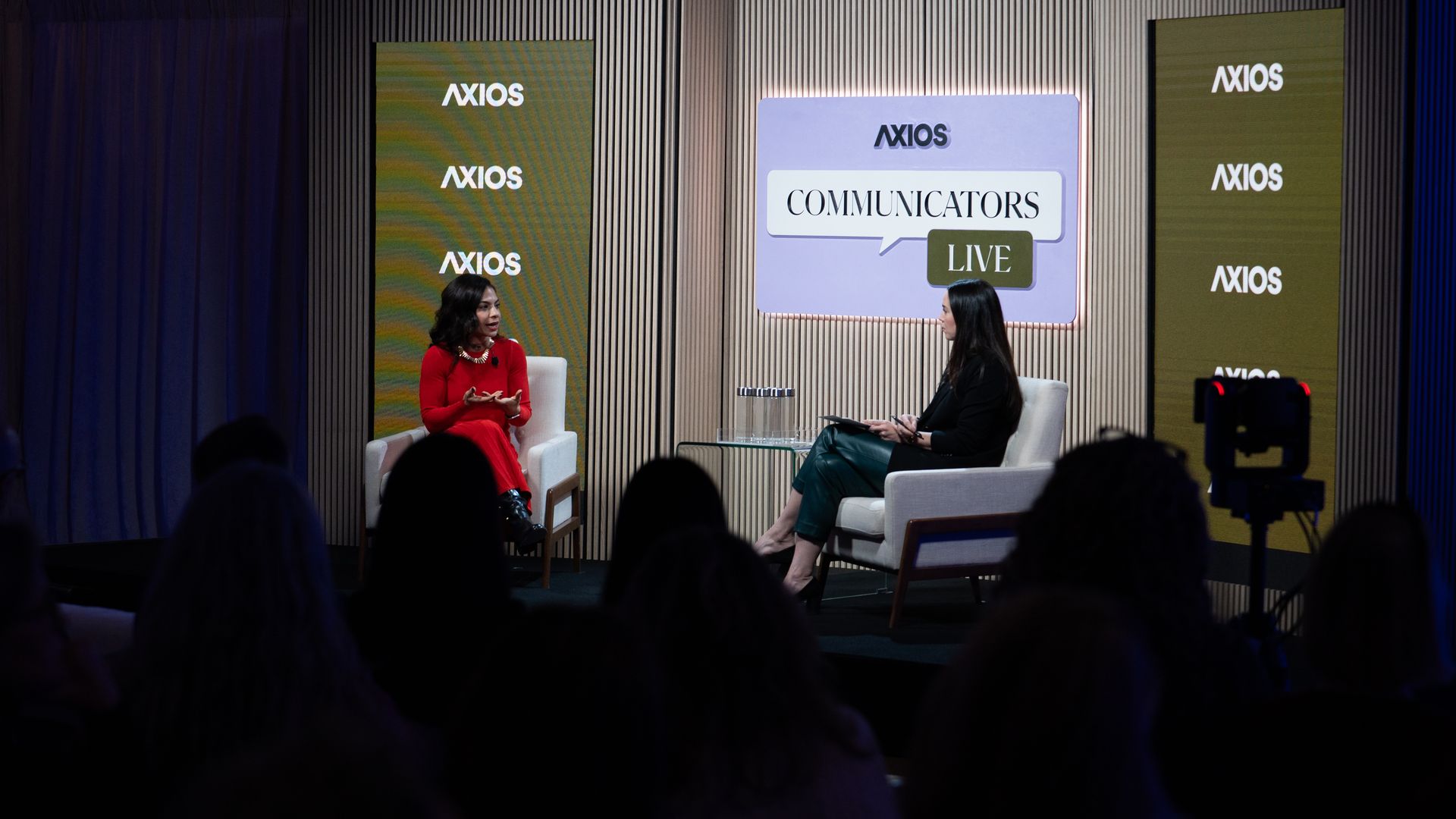
Figma's Nairi Hourdajian (left) and Axios' Eleanor Hawkins at Axios Communicators Live. Photo: Sam Popp for Axios
In 2026, brand and reputation will no longer sit in different lanes, communication chiefs from Estée Lauder, Figma and Anthropic said at a recent Axios Communicators event.
Why it matters: In the mind of the audience, reputation and brand are the same — with one building credibility and the other building loyalty.
State of play: Whether it's a B2B company trying to win over end users, a fast-growing startup seeking credibility, or a global corporation managing a portfolio of brands, the lines separating what you say, how you show up and what people believe about you have never been thinner.
- Companies that fail to connect their brand and reputation strategies risk confusing consumers, losing trust and ceding ground to competitors.
Zoom in: Anthropic has ramped up its comms efforts to clearly position it in the minds of users, talent, regulators and investors.
- Anthropic's chief communications officer Sasha de Marigny said its brand story starts with the company's structure and founding philosophy.
- "It's not so much that we're trying to differentiate ourselves. … We are different," she told an audience of more than 400 people at Axios Communicators Live. "The public benefit mission is what grounds everything Anthropic does."
- "The transformative potential of AI is not short-form video and treating it as a glorified search engine. It's to advance human intelligence and what we're capable of as a species," she added.
Zoom out: Estée Lauder also relies on its products and corporate mission to help connect with consumers, chief communications and public affairs officer Meridith Webster said.
- "People like our products … but they also want to be a part of something that actually means something at the end of the day," she said.
- "A corporate story is meant to drive a credibility message, and a brand story is meant to really drive connection. You can't have one without the other. They all need to live in harmony."
Between the lines: For companies that might traditionally be viewed as B2B, taking a more consumer-friendly tone and establishing hyper-engaged user communities are major assets.
- "Your buyers are humans too," Figma's chief communications officer Nairi Hourdajian said. "At Figma, my team knows I have trigger words — 'leverage,' 'enable,' 'empower.' ... There are much clearer ways to say what you mean. And so we really try to avoid jargon."
- "I do think it's really important to have that cohesion across both what I call our consumer patina and our B2B brand."
Plus, in-person events have become a major tenet of the brand-building strategy.
- Anthropic hosted Claude cafe pop-ups in New York City and London, Estée Lauder took over a street in New York's SoHo neighborhood for its fragrance brick-and-mortar launch, and Figma hosts Config each year, which gathers creators, designers and superusers.
What to watch: Brand storytelling now shapes corporate reputation and vice versa, and as such, many chief communications officers are taking over the brand portfolio.
- For example, de Marigny oversees communications and brand for the artificial intelligence company, while executives from IBM, Dropbox, Lattice and GM have also merged the functions.
What's next: AI is upending how consumers discover brands, and large language models could soon be the window to a company's reputation.
More on Axios:
