NYT sues Pentagon over controversial press pledge policy

Add Axios as your preferred source to
see more of our stories on Google.
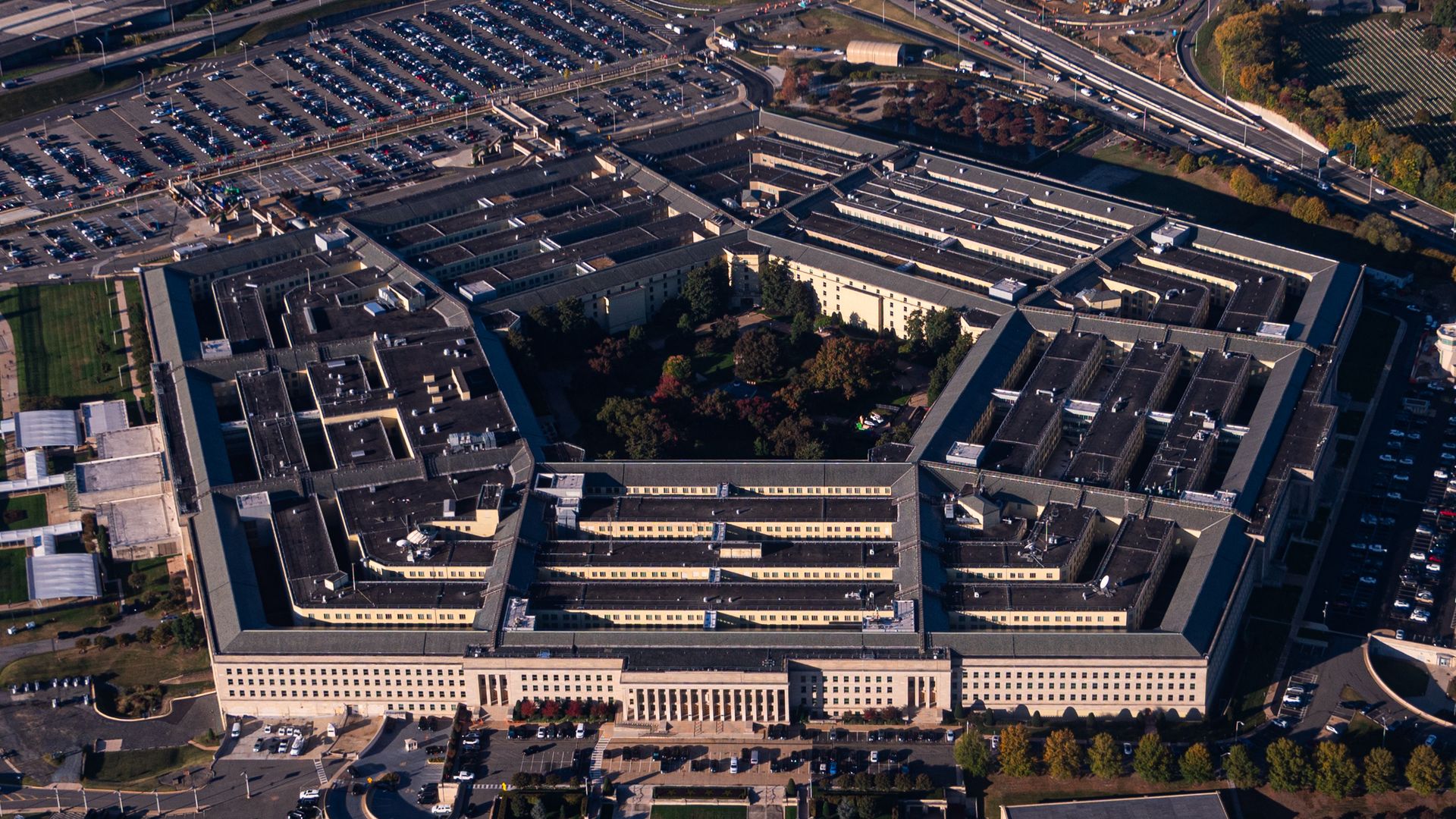
Aerial view of the Pentagon building in Arlington, Virginia on Oct. 22, 2025. Photo: Bill Clark/CQ-Roll Call, Inc via Getty Images
The New York Times and its intelligence reporter Julian E. Barnes on Thursday sued the Pentagon, alleging it violated the First Amendment rights of reporters when it stripped access for journalists who refused to sign a sweeping and unprecedented pledge to not cover unauthorized information.
Why it matters: The lawsuit is the first major legal action taken by a news organization that aims to push back against the Defense Department's new policy and possibly reverse it.
- If successful, dozens of news reporters could see their press access reinstated. The press contingency at the Defense Department now consists mostly of far-right outlets.
Zoom in: The suit, filed in the U.S. District Court in Washington D.C., argues that the Defense Department's restrictions are designed to prevent journalists from doing their jobs.
- "It is exactly the type of speech- and press-restrictive scheme that the Supreme Court and D.C. Circuit have recognized violates the First Amendment," the complaint reads.
- The suit calls for a court order to halt the Pentagon's policy and reinstate the Pentagon Facility Alternate Credentials (PFACs) of its reporters immediately.
The other side: Pentagon spokesperson Sean Parnell said in a statement, "We are aware of the New York Times lawsuit and look forward to addressing these arguments in court."
Zoom out: This is the second legal battle the New York Times is now fighting with the Trump administration.
- President Trump filed a $15 billion defamation suit against the Times in September, which the paper pledged to fight. The administration was forced to refile the lawsuit in October after the original complaint was dismissed for being unnecessarily long.
The big picture: The recent press rules are part of a broader effort to put a tighter lid on the information that comes out of the Pentagon.
- Defense Secretary Pete Hegseth in a September memo cemented restrictions on when, where and how military and Pentagon leaders can engage with the public.
- The Defense Department in February replaced the press offices of several mainstream organizations with mostly conservative outlets.
Editor's note: This story was updated to include comment from the Pentagon.
