Teen phone crackdown goes global

Add Axios as your preferred source to
see more of our stories on Google.
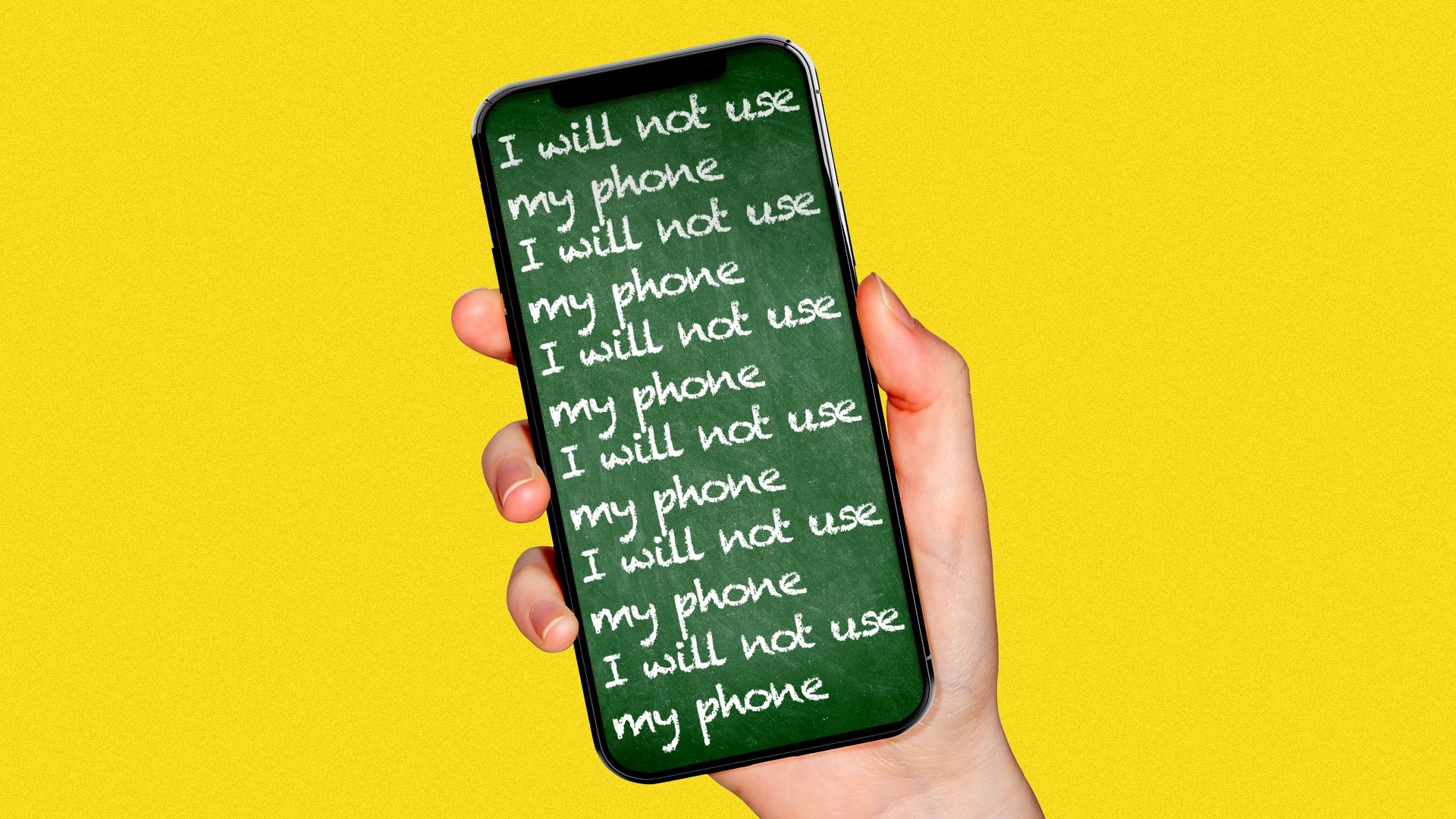
Illustration: Sarah Grillo/Axios
French President Emmanuel Macron on Friday endorsed the idea of cellphone bans in high schools, becoming the latest world leader to back restrictions on teen tech and social media use.
Why it matters: Data continues to suggest a correlation between children's smartphone use and poor mental and physical health.
- On Monday, a new study to be published in a forthcoming issue of the journal Pediatrics found that preteens who own smartphones are likelier to have depression, obesity and insufficient sleep than their peers, per Axios' Maya Goldman.
State of play: Australia this month will become the first major democratic nation to ban children under 16 from popular apps such as TikTok and Instagram.
- Australia's move, which has faced pushback from teens and some consumer groups, has been heralded by other world leaders, who say they are eyeing similar reforms.
- France's Macron has indicated that cellphones would likely be banned from high schools next year. The country already imposed a ban on middle schoolers.
- South Korea earlier this year passed a measure to ban cellphones in schools.
- The European Commission last week passed a nonbinding resolution banning children under 16 from social media without parental consent.
- Denmark's government last month said it also planned to ban access to social media for minors under 15.
- Brazil in September passed a new law that requires children under 16 to link their social media accounts to a verified guardian who can impose restrictions on their accounts.
- New Zealand's parliament passed a measure to ban cellphones in schools in 2024. Its government says research shows the ban is working to deliver better student outcomes.
Zoom in: In the U.S., federal measures meant to protect kids online have failed in recent years to become law, in part due to heavy lobbying and pushback citing kids' First Amendment rights.
- While more than a dozen states have introduced their own measures around ideas such as online age verification, there haven't been any substantial measures passed at the federal level.
- The Supreme Court earlier this year ruled that state lawmakers can keep forcing porn websites to verify users' ages, paving the way for more age-verification efforts to be upheld in courts nationwide.
Yes, but: There's new momentum in Congress around the issue.
- The House Energy and Commerce Committee just last week released a new package of more than a dozen bills designed to protect kids online and will host a hearing Tuesday to debate the measures.
- The package notably includes a measure that would require app stores to verify the ages of users as a signal to app developers.
Editor's note: This story has been corrected to say the study will be published in a forthcoming issue of Pediatrics (not that it was already published).
